2000s cast, AU buyers
BBS CH wheels for Australian owners
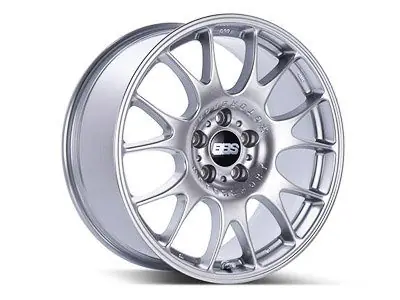
The BBS CH was sold widely in Europe in the 2000s as a cast one-piece wheel for BMW, Audi, Mercedes and Volkswagen cars, and plenty of sets have since found their way to Australia. Most are bought used, often with no record of the car they came from. This page covers what that means locally: checking the markings on an imported set, hub rings and vibration, how state roadworthy rules apply to a wheel change, gravel and country roads, and storing a spare set through hot summers.
- Construction
- One-piece cast aluminium
- Era
- 2000s, later followed by the CH-R
- Typical use
- Aftermarket fitment on European saloons and coupes
- Maker
- BBS (Germany)
The BBS CH in Australia
A CH set in Australia has usually had at least one previous owner, and often more. Sets come in with imported European cars or are bought from overseas, then change hands on Gumtree, Facebook Marketplace, eBay Australia or model forums. Listings often say "BBS CH" when the wheels are actually a CH-R, so check the spoke layout and the markings on the back before you pay. Our guide to identifying BBS wheels explains the codes.
Hub rings and the right hardware
The CH was sold across several bolt patterns and often used a larger centre bore with hub rings. Missing rings are a common cause of vibration on used sets, which shows up quickly on a long highway run. Ask whether the rings and the right bolts are included. If not, measure the bore and hub before ordering, since parts for an older model can take a while to arrive.
Roadworthy and approval
Wheel and tyre changes in Australia are covered by state roadworthy and registration rules, with national guidance in VSB 14 (National Code of Practice for Light Vehicle Construction and Modification), section LA. Check with your state transport authority, such as Transport for NSW, VicRoads or TMR in Queensland, and talk to an engineer or certifier if your planned size, offset or brake setup needs approval. The offset guide covers the numbers.
Gravel and country roads
If the car spends time on gravel or rural roads, expect stone chips on the face and lip. Touch them in early, especially near the coast where salt air gets under the paint. Check the inner lip for flat spots after rough roads or potholes, and spin the wheels on a balancer if anything feels wrong.
Storing a spare set in the heat
Many Australian owners keep the CH as a second set rather than swapping for winter. Store it clean and dry, out of direct sun, stacked flat on cardboard or hung on a rack, and bag each wheel. Tyres age faster in heat, so check date codes and sidewalls before refitting. Clean the hub faces, torque the bolts in a star pattern and re-check after the first 50 to 100 km. See caring for BBS wheels and buying used BBS wheels.
Where the CH fits in the BBS range
BBS has long sold two broad families: expensive forged and multi-piece wheels that trace back to its racing work, and cast one-piece wheels aimed at road cars. The CH belongs to the second group. It was designed to look at home on a BMW, Audi, Mercedes or Volkswagen without the cost or upkeep of a three-piece RS or a forged RF.
The model was later replaced by the CH-R, which kept the name but used a different spoke layout and a more modern casting process. If you are looking at a listing that simply says "BBS CH", check photos carefully, because sellers often mix the two up.
Design and construction
The CH is a single casting: centre, spokes and rim come out of the mould as one part, then get machined and painted. That makes it lighter on the wallet and easy to refurbish, as there are no bolts, seals or separate lips to deal with. The trade-off is weight. A cast wheel of the same size is usually heavier than a forged one, though BBS cast wheels have a reputation for being well made and true.
Exact spoke count and finish options changed over the production run and between markets. We do not list a definitive spec sheet here because we have not been able to confirm one we trust. The safest reference is the marking on the wheel itself.
Reading the markings
Turn the wheel over before you trust any listing. On BBS one-piece wheels the back of the spokes or the inner barrel normally carries the BBS name, a model code, the size (diameter and width), the offset as an ET figure and often a TÜV or KBA reference for the German market. A casting date stamp is common too.
- Check that the width and ET match what the seller has written.
- Look for the bolt pattern on the hub face or in the markings, and measure it if in doubt.
- Compare the centre cap with photos of known originals. Caps get swapped between models a lot.
Our guide to identifying BBS wheels has more on the codes.
Fitment on modern cars
Because the CH was sold across several bolt patterns, a set from one car will not necessarily fit another. Beyond PCD, check the centre bore. Aftermarket BBS wheels often use a larger bore with plastic or alloy hub-centric rings to suit different cars, and missing rings are a frequent cause of vibration on used sets. Brake clearance matters as well: a wheel that cleared standard calipers may not clear a big brake kit. For the maths behind ET and width, see fitment and offset explained.
Buying a used set
Cast wheels crack and bend in different ways to forged ones. On a CH, spin each wheel on a balancer if you can, and look for flat spots on the inner lip, where pothole damage usually shows first. Hairline cracks at the spoke roots are a reason to walk away. Kerb rash on the face is cosmetic and can be refinished, though a deep gouge on a diamond-cut or polished face costs more to fix than on a painted one. The used buying guide covers the checks in more detail.
Care and storage
The CH has fairly open spokes, so it is quick to clean by hand. Use a soft wheel brush and a non-acid cleaner, and dry the wheels after washing to avoid water spots on darker finishes. If you swap to winter wheels, store the CH set clean and dry, stacked flat on cardboard or hung on a wheel rack, with tyres at slightly reduced pressure. Bag each wheel so grit cannot scratch the faces. Before refitting in spring, clean the hub faces on the car and the mating face on the wheel so they sit flat, and re-torque the bolts after the first 50 to 100 km.
If a refurbisher has painted the mating face or the bolt seats, ask them to clean it back. Paint in these areas can compress and let bolts lose tension, which is a common problem after inexpensive refinishes.
Frequently asked questions
Are BBS CH wheels common in Australia?
They turn up on the used market, often from imported European cars or sets bought from overseas, but they are less common than in Europe. Check every listing carefully, because many sets advertised as CH are actually the later CH-R or another cast BBS.
What should I check after driving a CH set on gravel roads?
Look for stone chips on the face and lip and touch them in early, particularly if you live near the coast. Check the inner lip for flat spots, and have the wheels balanced again if you notice any new vibration.
Is the BBS CH forged?
No. The CH is a one-piece cast wheel. BBS sells forged wheels under other model names.
What is the difference between the CH and CH-R?
The CH-R is the later model. It carries a similar name but has a different spoke design, so the two should not be treated as the same wheel when matching a set.
Can I refurbish a CH?
Yes. As a one-piece wheel it can be stripped, straightened if the damage is minor, and repainted by a competent wheel refurbisher.
How do I find the offset?
Look for the ET number cast or stamped on the back of the wheel, near the size marking.