Motorsport mesh, AU
BBS E88 racing wheels in Australia
The BBS E88 is a modular motorsport wheel with a forged mesh centre, designed for endurance and GT racing. In Australia it is of most interest to historic racers and collectors, and many sets arrive as imports with patchy history. Before buying, settle three things: whether the set is genuine and sound, whether it suits the racing category you plan to enter, and what your state requires before a racing wheel goes on a registered car.
- Use
- Motorsport
- Construction
- Modular, forged centre with separate rim parts
- Design
- Cross-spoke mesh
- Mounting
- Centre-lock and stud versions exist
- Maker
- BBS, Germany
BBS E88 wheels in Australia
Where E88s turn up here
Genuine E88s are rare in local classifieds. They tend to change hands through historic racing circles, motorsport clubs and specialist importers, and many sets come from Europe, Japan or the US. The mesh face is widely copied, so an advert on Facebook Marketplace or eBay Australia that uses the name needs close scrutiny: consistent BBS part and serial markings across the set, correct motorsport fasteners and a history someone can back with paperwork. Our identification guide covers general BBS markings.
Imports and freight
Racing wheels shipped from overseas can be damaged in transit, and centre-lock seats and drive pin holes are easy to knock. Inspect every wheel on arrival before signing off the delivery. Then have the set crack tested and checked for run-out by an expert who works on racing wheels, before it goes anywhere near a circuit.
Racing use
For historic and club racing, the category rules and the governing body's technical regulations decide which wheel and tyre combinations are allowed, so read them before you buy. Racing tyres in the sizes an E88 was built for can be hard to source locally. Balancing a centre-lock wheel needs the right adaptor, which usually means a workshop that already looks after race cars.
Fitting E88s to a road car
Racing wheels are not always built or certified for road use. In Australia, wheel changes on a registered vehicle come under state roadworthy and registration rules, with VSB 14 section LA (the National Code of Practice for Light Vehicle Construction and Modification) as national guidance. A competition wheel with no road paperwork and no known load rating raises obvious questions, so talk to your state transport authority (Transport for NSW, VicRoads, TMR in Queensland or the equivalent) and a vehicle engineer before planning any road use.
Storage
Magnesium parts corrode quickly once the finish is broken, and humid coastal air speeds that up. Store the wheels dry and off the floor, keep them out of a damp garage and touch up any chipped finish. Rebuilds follow the process in refurbishing three-piece wheels, and the racing background is in BBS in motorsport.
A racing wheel first
BBS made its name in motorsport before its road wheels became popular, and the company supplied wheels to teams in Formula One, sports car racing and touring cars from the 1970s onward. Our BBS in motorsport guide covers that history. The E88 belongs to this side of the business. It was designed for racing cars and built to motorsport specifications, with size and mounting chosen for each car and series.
It is best known from endurance and GT racing, where the mesh face became a familiar sight on prototypes and GT cars. Exact team histories for individual wheels are rarely documented, so treat claims that a set came off a particular car with caution unless paperwork backs them up.
Construction
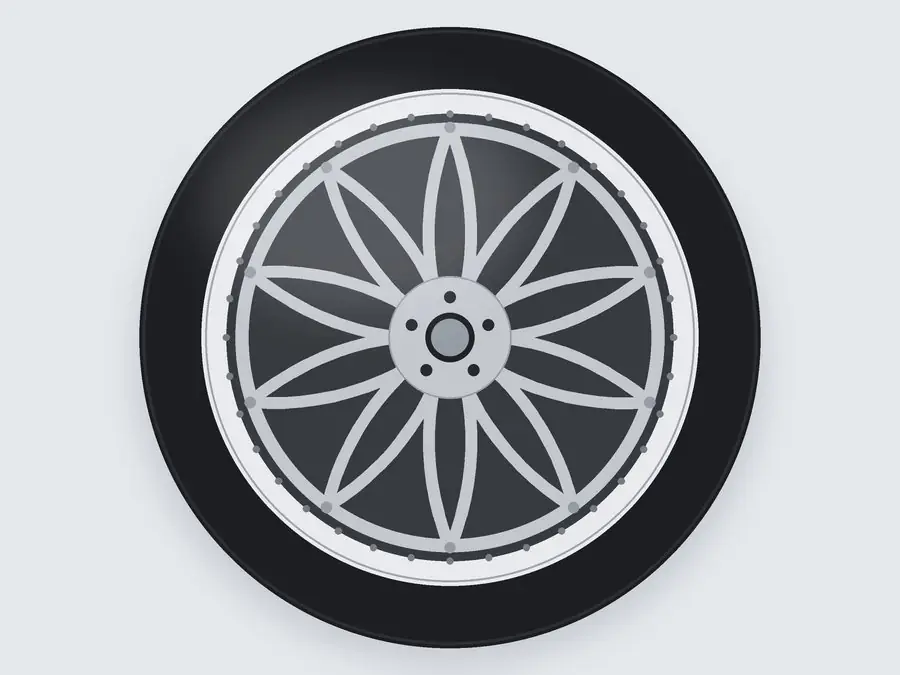
The E88 uses a forged mesh centre joined to separate rim parts. Building the wheel in sections lets a team change width or offset by swapping rim parts and makes it possible to replace a damaged barrel without replacing the centre. That is the same logic as the road-going RS, applied to racing loads and materials.
Centres were made in lightweight alloys suited to racing, and fasteners were specified to motorsport standards. Many E88s were built for centre-lock hubs, which use a single large nut. Others were made for conventional studs. A wheel built for one type cannot simply be converted to the other.
Sizes and typical cars
Sizes were set by the car and the racing rules, and wide rims and large diameters for the period were normal. Because each set was made for a particular car, offsets and widths vary widely. A pair from a front axle and a pair from a rear axle are often quite different.
Owners of historic racing cars use E88s to keep a car in period specification. Some people fit them to road cars for the look, but that needs care: racing wheels are not always built or certified for road use, and road approval rules differ by country.
Identifying an E88
Genuine racing wheels carry markings on the centre and rim parts, including the BBS name, a part or drawing number and often a serial number. Rims may be marked by their own maker if BBS sourced them separately. Teams often added their own paint marks or numbers to track wheels through a season, and those can help with provenance.
The mesh design is widely copied. Copies and reproduction wheels styled like the E88 are sold, some openly and some not. Look for proper fasteners, consistent markings across the set and evidence of motorsport use such as crack-testing marks. An expert who knows racing wheels can confirm a set before you pay serious money. Our identification guide covers general BBS markings.
Buying, inspection and refurbishment
Racing wheels work hard. Before using an E88 on track, have it crack tested by an expert, check the run-out and inspect the centre-lock or stud seats closely. Wheels with unknown history should be treated as unproven until tested.
Refurbishing a modular wheel means splitting it, cleaning and inspecting each part, refinishing the centre and replacing seals and fasteners where needed. Fasteners in a racing wheel are safety parts, so use correct new ones and the specified torque. Our guide to refurbishing multi-piece wheels explains the process.
Tyres and setup
Racing wheels are often matched to slick or treaded racing tyres in sizes that have no road equivalent. If you buy a set from a racing car, find out which tyres it was run on and whether those tyres are still made. For historic racing, series rules may limit both the wheel and the tyre, so read the regulations before you buy. Balancing a centre-lock wheel needs the right adaptor, and not every tyre shop has one.
Care and storage
Clean with a pH-neutral cleaner and avoid strong acids, which can attack lightweight alloys and fasteners. Store wheels dry and off the floor. Magnesium parts in particular need an intact finish, since bare magnesium corrodes quickly. See caring for BBS wheels.
Frequently asked questions
Can I register a car in Australia on BBS E88 wheels?
It depends on the wheel and on your state. Wheel changes on registered vehicles fall under state roadworthy and registration rules, with VSB 14 section LA as national guidance. A racing wheel without road paperwork or a known load rating needs careful checking, so speak to your state transport authority and a vehicle engineer first.
How should I check an imported E88 set?
Inspect each wheel for freight damage as soon as it arrives, paying attention to centre-lock seats, drive pin holes and stud seats. Then have the set crack tested and checked for run-out by a racing wheel expert, and confirm that the BBS part and serial markings are consistent across the set.
Are E88 wheels allowed in Australian historic racing?
That is set by the rules of each category and the governing body's technical regulations, which can limit both the wheel and the tyre. Read the regulations for the car and class you plan to race before buying a set, and check that suitable tyres are still made in the sizes you need.
Is the BBS E88 a road wheel?
It was designed for motorsport. Some are fitted to road cars, but road certification depends on the wheel and the country.
Is the E88 a one-piece wheel?
No. It has a forged mesh centre joined to separate rim parts, so width and offset can be changed by swapping parts.
Can an E88 be rebuilt to a new width?
In principle yes, because the rim parts are separate. In practice it depends on finding correct parts and an expert who works on racing wheels.
Do all E88 wheels use centre-lock hubs?
No. Centre-lock versions are common, but stud-mounted versions were also made.
How can I check a set is genuine?
Look for consistent BBS part and serial markings, correct motorsport fasteners and a documented history. Ask a racing wheel expert to inspect them.