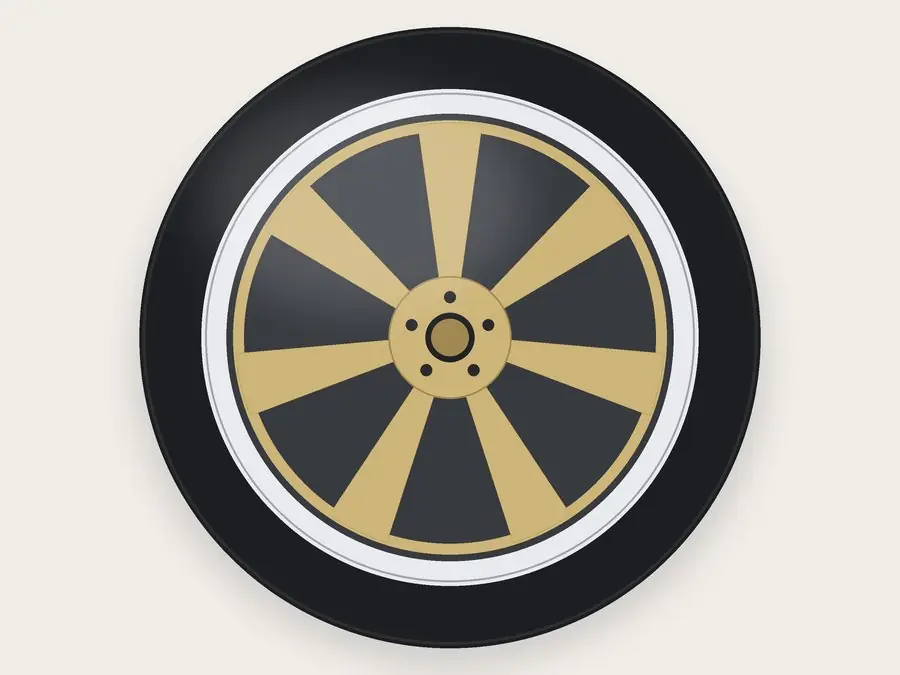
RE-V7 in the UK
BBS RE-V7 forged wheels in the UK
BBS Japan added the RE-V7, a forged seven-spoke monoblock for sports cars and hot hatches, in the early 2020s. On British roads it is most often fitted to the Honda Civic Type R (FK8 and FL5), Toyota GR Yaris and GR86. Used sets are only a few years old, so the main risks are copies and track wear.
- Construction
- One-piece forged aluminium
- Spokes
- Seven, crossing design
- Made in
- Japan
- Introduced
- Early 2020s
- Sibling
- RE-V (split fourteen-arm design)
The BBS RE-V7 in the UK
Type R, GR Yaris and GR86 owners have busy clubs in Britain, and their cars are a regular sight at track days at Brands Hatch, Castle Combe and Oulton Park. With the wheel on sale only since the early 2020s, the used sets coming up for these cars are young, and a fair number have done some circuit miles.
Sizes and fitment
The 18 and 19 inch versions are among the most common. Widths, offsets and bolt patterns are set per car, and the lists vary between markets, so use the BBS or UK importer table for your exact model and not a size quoted for a Japanese or US car. On a Type R, find out whether a used set was made for the FK8 or the FL5. If you plan to run wider tyres than standard, check inner clearance to the suspension and make sure the tyre stays inside the arch. The offset guide explains how.
Buying used and spotting copies
Used RE-V7s are listed on eBay UK, Gumtree, Facebook Marketplace and Type R or GR forums. Cast copies appeared soon after launch, so a cheap set of a recent wheel deserves a hard look. Ask for photos of the back of all four wheels showing the BBS name, size, inset, bolt pattern, model code and JWL and VIA marks. Copies usually have rounded edges where the spokes cross and painted spoke faces where the original is machined. If the boxes come with the set, match the labels to the wheels. See identifying BBS wheels.
Track days and British winters
Load concentrates where the spokes cross and where they join the hub, so look at those points after every track session. Hot brake dust bakes onto the finish if left, so wash it off once the brakes are cool. The machined spoke faces scratch easily on a tyre machine and suffer badly from road salt, which is why many owners keep the RE-V7s for summer and use a cheaper winter set. Pothole damage on low-profile tyres is common; reject any wheel that has been welded or heat straightened. Our used buying guide and care guide go further.
MOT and insurance
There is no approval scheme for wheels in the UK, but at the MOT the tester checks condition, wheel nuts, tread depth and tyre clearance. Declare the wheels to your insurer as a modification. On a modified hatch with wider rubber, make sure nothing protrudes beyond the bodywork. Compare with the RE-V and the RG-R.
Background
BBS Japan announced the RE-V7 as an addition to its forged range, released around the same time as an expanded RG-R line-up. The name links it to the RE-V, and the two share the same basic method, but the faces look quite different. The RE-V spreads its load over fourteen slim arms. The RE-V7 uses seven heavier spokes that appear to cross over one another as they leave the hub.
BBS presents the wheel as drawing on its racing wheel technology. That claim refers mainly to the forging and machining process the company uses for competition parts. The company's long racing record is described in our motorsport guide.
Construction
The RE-V7 is forged from a single aluminium billet and machined to shape. There is no separate barrel and no assembly bolts, so it has none of the sealing or maintenance issues of a multi-piece wheel. The spokes are machined on their faces and sides, and the gaps between them are sized to let air pass to the brakes.
Forged wheels are generally lighter and stronger than cast wheels of the same size. The difference is most noticeable in larger diameters, where a cast wheel needs extra material to pass the same load tests. See forged versus cast for more on this.
Sizes and fitment
At launch the RE-V7 was offered in sizes aimed at sports cars and performance hatchbacks, with 18 and 19 inch versions among the most common. Widths, offsets and bolt patterns are chosen per car, and the list differs between markets. BBS and its dealers publish fitment tables by vehicle, and those are the safest source.
It is popular on the Honda Civic Type R (FK8 and FL5 generations), the Toyota GR Yaris and GR86, and similar cars. Owners of these cars often run wider tyres than stock, so check both the inside clearance to the suspension and the outside clearance to the arch. Our offset guide explains how to work this out.
Identifying a genuine RE-V7
On the RE-V7 the markings sit on the back of the hub, between the roots of the seven spokes. Look for the BBS name, the size and inset, the bolt pattern and a code for the model. Being a BBS Japan product, it should also carry the JWL and VIA marks used for wheels sold in Japan. The text is cut into machined metal and is clean and even.
The model is recent and popular on cars like the Civic Type R, so copies appeared quickly. A cast copy usually has softer edges where the spokes cross, and the machined faces on the spokes may look painted rather than cut. If the seller still has the boxes, the labels should match the size marked on each wheel. See identifying BBS wheels for more on markings.
Buying used
Most used RE-V7 sets are only a few years old, which helps, but a low price on a young wheel deserves suspicion. Ask for photos of the back of all four wheels and check the markings match.
Many of these wheels have been on track-day hatchbacks. Inspect the points where the spokes cross and where they meet the hub, since that is where loads concentrate. The cut faces on the spokes are easy to scuff during tyre fitting or on a kerb, and a proper repair needs a lathe and fresh clear coat. Avoid any wheel that has been straightened with heat or welded. On a Civic Type R, check whether the set was made for the FK8 or FL5, because widths and insets were chosen per car. Our used buying guide covers the rest.
RE-V7 or RE-V?
Both wheels come from the same factory and use the same forging method, so the choice is mostly about looks and the sizes offered for your car. The RE-V7's seven spokes look heavier and more modern. The RE-V's split arms give a busier, more traditional racing look. Compare the fitment lists for your car, as one model may offer a size the other does not.
Care and maintenance
Wash with a pH-neutral cleaner and rinse well. Avoid harsh acid products and stiff wire brushes. If you run the car on track, check the wheels for cracks around the hub and spoke roots at each tyre change, and keep the wheel nuts torqued to the car maker's figure. Caring for BBS wheels has more detail.
Frequently asked questions
Does the RE-V7 suit a UK Civic Type R?
Yes, it is a popular choice on both the FK8 and FL5. Widths and insets were chosen per car, so make sure a used set was made for your generation, and check clearance if you want wider tyres than standard.
How do I tell a genuine RE-V7 from a copy?
On the back of the hub, a genuine wheel shows the BBS name, size, inset, bolt pattern, model code and the JWL and VIA marks, cut cleanly into machined metal. Copies tend to have softer spoke crossings and painted spoke faces. Be wary of a low price on a wheel this recent.
Should I run RE-V7s through a UK winter?
Many owners don't. Road salt and grit damage the machined spoke faces, and potholes are a risk with low-profile tyres. Storing the set clean and dry over winter and using separate winter wheels keeps them in better shape.
What does the 7 in RE-V7 mean?
It refers to the seven-spoke design, which separates it from the earlier RE-V with its fourteen split arms.
Is the RE-V7 a one-piece wheel?
Yes. It is a forged monoblock made from a single piece of aluminium.
Which cars commonly use the RE-V7?
It is often fitted to the Honda Civic Type R, Toyota GR86 and GR Yaris, and other compact sports cars, though fitments exist for many models.
Where is the RE-V7 made?
It is produced by BBS Japan.