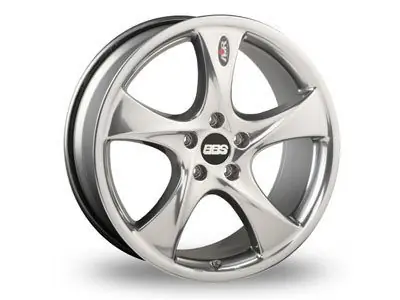
Uncommon BBS, UK buyers
BBS AI wheels in the UK: what to check before you buy
A BBS AI set appears on the British market only occasionally, usually off a Japanese import or bought in from Europe, and it rarely comes with any paperwork. Published data on the model is thin, which leaves the castings as your main evidence. For a UK buyer that means reading the date stamp and codes, judging how an older wheel will suit a newer car, knowing what the MOT and your insurer care about, and pricing a set realistically if you later sell it.
- Maker
- BBS
- Documentation
- Limited; specs not confirmed here
- Best reference
- Markings on the back of the wheel
The BBS AI in the UK
Most AI sets for sale here come with a back story. The seller on eBay UK, Gumtree or Facebook Marketplace might say they arrived on a JDM import or were brought back from Germany years ago. That may be true, and the wheels still need checking. Ask for sharp photos of the back of every wheel, showing the date stamp and any part code, and work through our guide to identifying BBS wheels.
Wheels posted from Japan or the EU
If you buy an AI from abroad, budget for the extra costs. Since Brexit, wheels bought from the EU may add import VAT and handling charges on arrival, and the same applies to sets from Japan. Couriers are hard on loosely packed wheels, so check the outer lip and the barrel for new dents and the bolt seats for crushing when the box arrives. If your AI turns out to be multi-piece, ask whether the assembly bolts have been disturbed and whether the seals hold air. The three-piece refurbishing guide explains a rebuild.
Older wheels, newer cars, MOT and insurance
Brake clearance, centre bore, load rating and tyre availability all matter more when the wheel is older than the car it is going on. In Great Britain there is no approval scheme for aftermarket wheels, but the MOT will fail cracked or distorted wheels, loose or missing nuts and bolts, worn tyres and tyres that foul the body or suspension. The tyres also need load and speed ratings that suit the car. Declare the wheels to your insurer before you drive on them. The offset guide covers the numbers.
Winter wear and old refurbishments
An older wheel that has done British winters often has blistered paint where road salt got under a chip, and corroded bolt heads if it is multi-piece. A previous refurbishment can hide a lot. Thick paint, filler on the face or paint on the hub mating face are reasons to get the wheel checked by a refurbisher. Pothole damage to the inner barrel is common too, so spin each wheel on a balancer.
Selling an AI set in the UK
British buyers pay for condition and for a size that fits their car, and a rare name on its own adds little. List the full markings, PCD, offset, the car the wheels came from and any refurbishment, with photos of the backs. An owners' club forum or a PistonHeads classified can reach the right buyer better than a general listing. Compare the AI with the better-documented wheels in the UK catalogue and read buying used BBS wheels first.
What is known
BBS was founded in 1970 in Schiltach, in Germany's Black Forest, by Heinrich Baumgartner and Klaus Brand, and moved into wheels during the 1970s. Over the following decades it built up a long list of model names, some sold worldwide and some only in single markets or through car makers. The AI is one of the less visible ones. We have not found a source we trust for its production years, construction or size range, and we have chosen not to guess. If you have the wheels to hand, the casting will tell you more than we can.
For background on how the company and its ranges developed, see the BBS history guide.
Working out the age of a set
Older BBS wheels can usually be dated in three ways. A date stamp on the casting gives the month or year of manufacture. The style of markings changes over time, with older wheels often carrying simpler cast lettering and newer ones showing more detailed codes and approval marks. The cars the wheels were sold for also give a clue: bolt patterns and centre bores tie a set to a group of models and years. Put these together and you will have a reasonable idea of when the wheel was made, even without a factory catalogue.
Checking construction
Before anything else, find out whether the wheel is one piece or several. A multi-piece BBS has a ring of small bolts joining the centre to the rim, and possibly a visible seam between outer and inner rim halves. A one-piece wheel has none. This matters because the two need very different care and repair. Multi-piece wheels have seals that can leak and bolts that need correct torque, which is covered in refurbishing three-piece wheels. If the AI you are looking at has no bolts and no seam, it is a one-piece wheel and can be treated like any other alloy.
Fitment on older and newer cars
Older wheels were often designed around narrower tyres, smaller brakes and different offsets to modern cars. If you want to fit an older BBS to a newer car, check:
- Brake clearance, which is often the deciding factor.
- Centre bore, since older wheels may have a bore that is too small for some modern hubs.
- Load rating, which should suit the weight of the car. Heavier modern cars put more load on each wheel.
- Availability of tyres in the size you need, which can be a problem for unusual older sizes.
The offset guide helps with the numbers.
Condition and repair
The older a wheel, the more likely it has been refurbished, and the quality of past work varies. Look for paint runs, filler on the face, and paint on the hub mating surface or bolt seats, all of which point to a quick job. Very thick layers of paint can also hide cracks. If a wheel has been heavily repaired more than once, it is safest to have an expert check it before use. Original, unrestored wheels in fair condition are often a better starting point than a set someone has covered up.
Selling or valuing an AI set
Uncommon does not automatically mean valuable. Buyers pay for condition, sizes that suit popular cars and good photos of the markings. If you are selling, list the full markings, the bolt pattern and offset, the car they came from and any refurbishment history. If you are buying, compare the asking price with better-documented BBS wheels in the catalogue that would also fit your car.
Frequently asked questions
How can I find out where a UK-listed AI set came from?
You usually cannot prove it. The date stamp, codes and bolt pattern on the back point to an era and the cars the wheel was made for. A seller saying the set came off a Japanese import is useful background, but trust the castings over the story.
Will older BBS AI wheels pass the MOT?
The MOT has no approved-wheel list. The tester checks for cracks or distortion, loose or missing nuts and bolts, tyre tread and condition, and tyres fouling the body or suspension. A sound wheel with suitable tyres should be fine on those points.
Is a rare AI set worth more in the UK?
Not on its own. Buyers here pay for condition, sizes that fit popular cars and clear photos of the markings. An awkward size can make an uncommon set slow to sell, so compare it with better-documented BBS wheels before you agree a price.
When was the BBS AI made?
We have not confirmed its production years from a reliable source. Check the date stamp on the wheel for that example's casting date.
Is the AI a three-piece wheel?
Check the wheel. A multi-piece BBS has a ring of assembly bolts; a one-piece wheel does not.
Will older BBS wheels fit a modern car?
Sometimes. Brake clearance, centre bore and load rating are the usual limits.
How do I value a rare BBS?
Condition, size and fitment demand matter more than rarity. Compare with similar BBS wheels for your car.