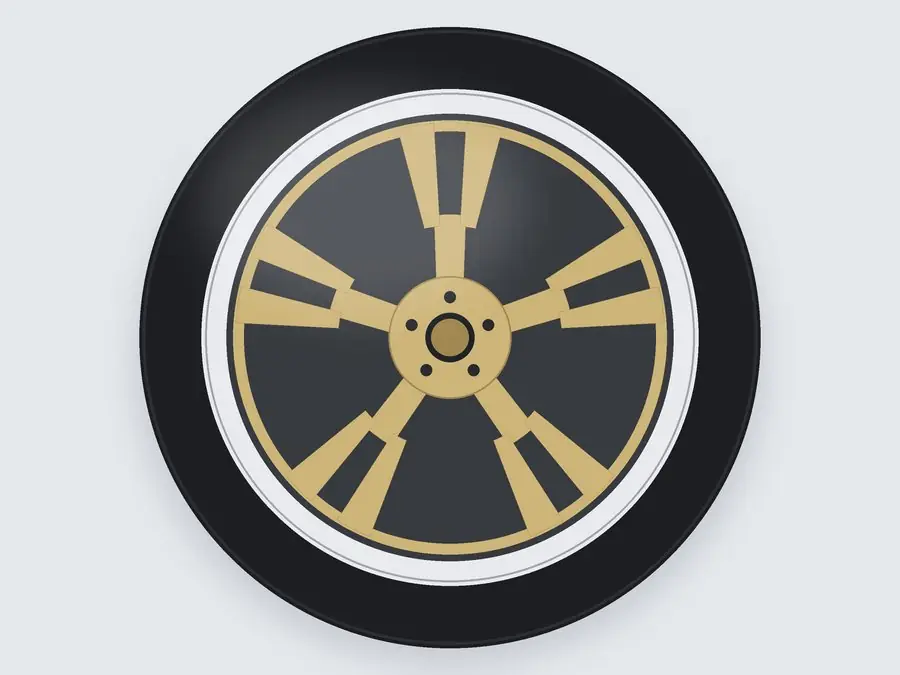
Concave cast, UK
BBS CC-R wheels in the UK: fitment, MOT and winter care
The CC-R is the concave cast BBS with a contrasting rim edge, and its face looks deeper as width goes up and offset comes down. British owners mostly put it on Golfs, BMWs and Audis, many of them lowered. For a UK car that raises a few specific points: tyre clearance on lowered suspension, what the MOT checks, a dished centre that holds salt and grime through winter, low-profile tyres meeting potholes, and how to judge a used set.
- Construction
- One-piece cast aluminium
- Predecessor
- BBS CC
- Face
- Concave
- Typical cars
- BMW, Audi, VW and others
- Finishes
- Varied by market
The BBS CC-R in the UK
In Britain the CC-R mostly ends up on German saloons, hatches and coupes, plenty of them lowered. Buyers tend to want the low offsets and wide rears that make the face look deepest, and that is the fitment that needs the most care.
Lowered cars, the MOT and insurance
A wide concave wheel on lowered suspension moves the tyre closer to the arch and the suspension. The MOT will fail a tyre that fouls the body or a suspension part, so check clearance at full lock and under compression, and remember that a fitment that clears on a ramp can still rub over a speed bump. Keep the tyre inside the bodywork; wheels that stick out far enough to be unsafe fall foul of the Construction and Use Regulations. Declare both the wheels and the lowering to your insurer. The offset guide explains how offset and width move the tyre.
Salt, grit and brake dust
The dished area round the hub traps brake dust, and from autumn onwards it also collects road salt and grit. Rinse the wheels often in winter, use a pH-neutral cleaner and keep a sealant on the face so the muck comes off more easily. Many owners take the CC-R off for winter and run a cheaper set until spring. If you do, clean and dry the wheels before storing them indoors. For track days at Brands Hatch or Donington Park, check the torque afterwards and wash off the dust before it sets. See caring for BBS wheels.
Potholes and low-profile tyres
A wide CC-R usually wears a low-profile tyre, which leaves the lip and barrel exposed on broken British roads. After a hard hit, look for a flat spot on the inner barrel and a new vibration at motorway speed. Straightening a cast wheel needs a specialist who knows the limits, because cast aluminium can crack if pushed too far, and the curved spokes make the job harder.
Buying a used CC-R in the UK
Sets come up on eBay UK, Gumtree, Facebook Marketplace, PistonHeads and model forums. Ask which car the wheels were fitted to, as sizes and offsets were matched to particular cars. Check every lip for kerb rash, look for rub marks inside the spokes on cars with big brakes, and rule out copies with a flatter face. A set posted from the EU may add VAT and handling charges, and can pick up courier damage. Compare it with the older CC, which lacks the contrasting edge, and go through buying used BBS wheels. A specialist wheel refurbisher can tell you whether a damaged CC-R is worth repairing before you agree a price.
Background
BBS made the CC as a concave cast wheel and then refined it into the CC-R, adding the contrasting rim edge seen on the CH-R and CI-R. The aim was a deep-looking wheel at cast-wheel prices.
Construction
The CC-R is cast in one piece, machined and back-milled. The concave profile is set in the casting, and BBS varies it with width and offset so wider rear wheels look deeper. A cast wheel is heavier than a forged one of the same size. For deeper, lighter options the forged FI-R is the comparison. See forged vs cast.
Fitment
Sizes and offsets were matched to specific bolt patterns and cars, and varied by market. With concave designs, check clearance to large calipers on the inside face, which can be closer than on a flat wheel. The offset guide explains why.
Identifying a CC-R
The CC-R has a concave face whose depth changes with width, so a front and rear wheel from the same staggered set can look quite different. The back carries the model code, size, offset and approval marks. Compare with the earlier CC, which lacks the contrasting rim edge. Copy concave wheels are common, and many have a flatter face than the real wheel in the same size.
Choosing the CC-R over a forged concave wheel
The CC-R gives a concave look at a cast-wheel price. The forged FI-R goes further with depth and weight but costs much more. For a road car where appearance is the main reason for changing wheels, the CC-R is the more practical choice, and a damaged wheel is less costly to replace.
Concave cast wheels are heavier than flat ones of the same size, because the curved spokes are longer. The difference is small but worth knowing if you are comparing weights across models. Finishes have usually been dark with a contrasting rim edge. Check the current list for colours, since they have changed over time.
Many owners fit the CC-R with lowered suspension, where low offsets and wide rears are common. On these cars, check clearance at full steering lock and full compression, since a wheel that fits on a lift may rub on the road.
Storing a second set
CC-R wheels are often kept as a summer set and swapped off in autumn. Before storing them, clean the dished centre properly, because brake dust left in there over winter is much harder to shift in spring. Dry the wheels fully, mark each one with its corner so a staggered set goes back on the right way round, and store them flat or hung, with the tyres at normal pressure. Check the lip for any chips you missed during the season and get them touched in before they spread. When the wheels go back on, torque the bolts in a star pattern and check them again after a short drive.
Keep the wheel bolts in a labelled bag with the wheels, and the hub rings too, so the set is complete when it goes back on next season.
Used CC-R checks
A concave face sits further back from the kerb, which gives the spokes a little protection. The lip still takes the first hit, so check it on every wheel. With large brakes, look at the inside of the spokes for rub marks; concave spokes run closer to the caliper than flat ones at the same offset. Check that sizes and offsets match what your car needs, since concave wheels are often bought for low offsets that may not suit every car.
If a wheel needs straightening, use a shop with experience of cast wheels. Cast aluminium can crack if it is bent back too far, and the curved spoke shape makes the job harder.
Cleaning and tyre changes
The dished area round the hub collects brake dust, so give it attention when washing. A wheel sealant makes later washes quicker. Ask the tyre fitter to place balance weights behind the spokes, where the concave shape gives room to hide them. Wide rear CC-Rs with stretched or low-profile tyres need a fitter who takes care with the bead.
Frequently asked questions
Will a low-offset CC-R on a lowered car pass the MOT?
It can, as long as the tyres do not foul the body or suspension, the wheels are free of cracks and distortion and the tyres are in good order. Check clearance at full lock and under load before the test, and keep the tyre within the bodywork.
How do I protect a CC-R through a British winter?
Rinse salt and grit off often, paying attention to the dished centre, and keep a wheel sealant on the finish. Many owners store the CC-R clean and dry indoors over winter and fit a cheaper set until spring.
Is the CC-R forged?
No, it is cast in one piece.
What does the R mean?
BBS uses the suffix on revised versions of earlier designs. On the CC-R it marks the update of the CC with a contrasting rim edge.
Do all CC-R wheels look equally concave?
No. Concavity depends on width and offset, so wider wheels with lower offsets look deeper.
Is it suitable for big brakes?
Some fitments are. Check caliper clearance with a template before buying.