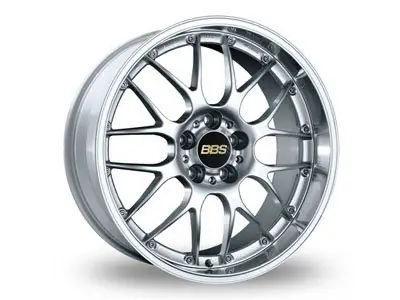
Two-piece mesh
BBS RS-GT wheels for Australian cars
The RS-GT is the two-piece mesh wheel BBS built for the bigger brakes and larger arches of 2000s performance cars. In Australia it mostly turns up on European saloons and coupes. The one fully specified part number we hold, the RS 909, is an 8.5x18 inch wheel in 5x120, listed for BMW, Audi and VW. Below we look at how an 18 inch wheel copes with local roads, what the roadworthy rules mean for a size change, and how to check a used set before you pay.
- Era
- 2000s onward
- Construction
- Two-piece: mesh centre bolted into a rim
- Design
- Cross-spoke mesh
- Lineage
- Follows the RS and RS II
- Typical diameters
- Larger sizes, commonly 18 inch and up; varies by market
- Identification
- Part number marked on the centre
The BBS RS-GT in Australia
The RS-GT is not a common wheel here, and our records hold only two part numbers, one of them with a full specification. Treat any set you find as something to verify wheel by wheel. The RS 909 is listed as 8.5x18 inch, 5x120, ET38, for BMW, Audi and VW. The listing names three makers against one bolt pattern, so read the marking on the wheel and check it against your own car before you buy.
Low-profile tyres on Australian roads
An 18 inch wheel on a low-profile tyre leaves little sidewall between the rim and a pothole. A patched country highway or a stretch of gravel can bend an inner barrel, and on a two-piece wheel a hard hit can also disturb the joint between centre and rim. After a big impact, watch the tyre pressure for a few days and have the wheel checked on a balancer if it loses air or the steering starts to shake. Where the arch allows, a slightly taller tyre gives the rim more protection on long highway runs.
Heat, brake dust and salt air
Cars that wear these wheels usually have large brakes, and dust baked on in summer heat is harder to shift. Wash it off often with a pH-neutral cleaner. Near the coast, salt air does the job road salt does in Europe and works its way around the bolt heads, so look at the hardware each time you clean. Our care guide covers the routine.
Rules and paperwork
Wheel and tyre changes in Australia fall under state registration and roadworthy requirements, with national guidance in VSB 14, the code of practice for light vehicle modifications (section LA covers wheels and tyres). If an RS-GT set changes your car's diameter, width or offset from standard, check with your state transport authority, such as Transport for NSW, VicRoads or TMR in Queensland, and talk to an engineer or certifier where needed.
Buying a set here
Used RS-GT wheels show up on Gumtree, Facebook Marketplace, eBay Australia and in marque forums and car clubs, and some sets come in from Europe. Ask for photos of the backs with the part numbers, check imported sets for freight damage, and make sure the bolts holding each centre are original and complete. The used buying guide and identification guide go further, and the RS and RS II pages cover the earlier mesh wheels.
Where the RS-GT fits in
BBS, founded in 1970 in Schiltach by Heinrich Baumgartner and Klaus Brand, had built its road wheel business on the look of its racing wheels. The three-piece RS of 1983 put the cross-spoke mesh on European saloons and coupes. The two-piece RS II carried it into the 1990s. The RS-GT continued the line for a newer generation of cars.
Cars of the 2000s had much larger brakes than their predecessors, lower tyre profiles and arches built around 18, 19 and 20 inch wheels. A mesh wheel for those cars needed a centre shape that cleared big calipers and a range of sizes that matched modern bolt patterns and offsets. The RS-GT was BBS's answer for buyers who wanted the traditional mesh look on a current performance car. It sat alongside the company's other road and motorsport wheels of the period. More background is in BBS history.
For owners, the appeal was straightforward. A modern car could wear a wheel with the same basic look as the RS that had been on its predecessors, in sizes that filled the arches and cleared the brakes. Many RS-GT sets were bought for German saloons, coupes and estates, though the range of bolt patterns meant they were fitted to cars from other makers too. Because they were sold through the aftermarket rather than as factory options, the specification on any given car depends on what the first owner ordered.
Construction
The RS-GT is a two-piece wheel. The mesh centre is fixed into the rim with a ring of bolts near the outer edge, and the rim is a single part. That gives fewer seals and less maintenance than a three-piece wheel while still letting a single centre design be built into different widths and offsets.
On a two-piece wheel the width is set by the rim, so it cannot be changed later by fitting a different lip, as you can with an RS. If you want a different size, you need different wheels or a different rim. That is worth knowing if you are buying a set intended for another car.
The centre profile matters for brake clearance. Mesh centres on older wheels can sit close to the caliper, and owners of modern cars often find that a classic RS will not clear. Designs from the RS-GT's era were drawn with larger brakes in mind. Even so, clearance depends on the exact specification and the brakes fitted, so check before buying. For how construction methods compare across ranges, see forged and cast BBS wheels.
Recognising an RS-GT
Three mesh wheels from the same company share a family look, and the RS-GT is easiest to recognise by elimination and by its markings.
- Its size. RS-GT wheels are usually larger in diameter than the classic RS.
- Its construction. Unlike the RS, it has no joint between an inner and outer rim half.
- Its part number on the centre, which is the definitive check.
Centre caps are often missing or swapped between sets, so do not rely on them. Mesh copies are widespread, including copies of BBS designs in large sizes. Copies are often one-piece wheels with decorative bolts moulded in, and they usually lack the markings found on a genuine wheel. Turning the wheel over and reading the back will usually settle any doubt. Our guide to identifying BBS wheels has more on markings.
Part numbers and what they tell you
RS-GT wheels are listed by part number in the tables below. The number is marked on the centre, usually on the back, and it maps to a specification: diameter, width, offset, bolt pattern and centre bore. Some specifications were intended for particular car makers and models.
Remove the wheel, clean the back and photograph the markings before you look anything up. You may also find size and production information and approval marks that depend on where the wheel was sold. If a set has different numbers front and rear, it may be a staggered set, which was common for rear-drive cars. If the numbers differ within an axle, the set has been mixed.
Sizes, offsets and fitment
The RS-GT was made in the larger sizes that 2000s cars used, with 18 and 19 inch diameters common and other sizes depending on market. It was offered in bolt patterns used by European makers such as 5x112, 5x120 and 5x130, among others. Check the tables for the specification of each part number.
Before fitting a set:
- Confirm bolt pattern and centre bore. Use hub rings where the bore is larger than the hub.
- Compare the offset with your car's original wheels. A difference of a few millimetres changes where the tyre sits in the arch.
- Check brake clearance with the brakes actually fitted to your car.
- Use bolts or nuts with the right seat type and thread length.
Our fitment and offset guide explains how width and offset work together.
Living with large mesh wheels
Large diameter wheels with low-profile tyres change how a car rides and how vulnerable the wheels are. There is less sidewall to absorb a pothole, so the rim takes more of the impact. Bent inner barrels are the most common result, and on a two-piece wheel a hard hit can also disturb the joint between centre and rim. If you hit something hard, check the tyre pressure over the following days and have the wheel looked at on a balancer if it starts to lose air or the steering develops a vibration.
Tyre choice matters as much as wheel size. Fitting a tyre with a slightly taller sidewall, where the arch allows it, gives the rim more protection and usually a better ride. Run the pressures the car maker recommends for the tyre size you have fitted, because low pressures make rim damage more likely.
Winter use is hard on any bolted wheel. Road salt finds its way around the bolt heads and into the joint between centre and rim, and corrosion there is hard to deal with without splitting the wheel. Many owners keep a separate set of winter wheels and store their mesh wheels clean and dry until spring. If you do drive on them through the winter, wash them more often and check the bolts at each tyre change.
Locking wheel bolts are worth fitting on any desirable wheel. Keep the key in the car, and note its code somewhere safe so you can get a replacement if it goes missing.
Buying a used set
Because these wheels are larger and were often fitted to performance cars, check them carefully for damage from potholes and kerbs. Ask for photographs of the backs and the inside of each rim. Bends in the inner barrel are common on low-profile tyres and are hard to see in pictures of the face. Ask whether the wheels have been straightened or welded, and if possible see them spun on a balancer.
Look at the bolts that hold the centre to the rim. Corrosion around the bolt heads, missing bolts or mismatched hardware suggest the wheel needs attention. Check that the part numbers match the car you intend to fit them to. A set built for one make may need a different centre bore or offset for another. The used buying guide has a full checklist.
Refurbishment
A two-piece RS-GT can be refurbished assembled or split. Splitting the wheel allows the refurbisher to strip both parts fully, deal with corrosion between the centre and rim, fit new hardware and reseal the joint. It costs more but gives a better result on wheels with corrosion around the bolts. After reassembly the wheel should be leak-tested and balanced.
Choose a refurbisher who has worked on bolted multi-piece wheels and who tightens hardware to the correct torque in sequence. The process is described in more detail in our guide to refurbishing multi-piece wheels, and most of it applies to two-piece wheels.
Care
Large mesh wheels on cars with big brakes collect a lot of brake dust. Clean them often with a pH-neutral wheel cleaner and a soft brush that reaches between the spokes. Strong acid cleaners can damage the finish and the bolts. While cleaning, check the bolt heads and look for any new damage on the inner barrel.
Monitor tyre pressures. A wheel that loses air faster than the others may have a seal issue or a bent bead seat. Clean and dry wheels before storing them. There is more in caring for BBS wheels.
Using the variant tables
The listings below this introduction give the specification for each RS-GT part number. Use them to check what a wheel was built for or to find a size for your car, and measure the actual wheel before you rely on the table. If you are looking at mesh wheels for an older car, the RS and RS II pages cover the earlier designs. The full catalogue is at all rim models.
Photographed models
1 of 2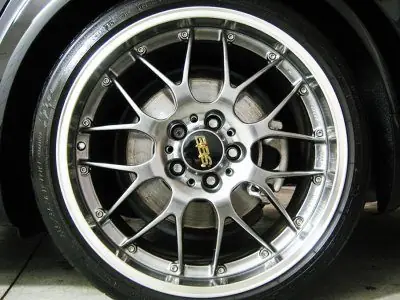
All BBS RS-GT models
2 models| Model | Size | PCD | Offset | CB (mm) | Fitment |
|---|---|---|---|---|---|
| RS 909 | 8.5x18" | 5x120 | ET38 | — | BMW, Audi. Vw |
Where a model has several size versions, the first is shown here; the model page lists them all.
Also catalogued without recorded specs
Frequently asked questions
Do I need an engineer to fit RS-GT wheels in Australia?
It depends on your state and how far the wheels differ from the car's original diameter, width and offset. National guidance is in VSB 14, section LA, but each state applies its own registration and roadworthy rules. Check with your state transport authority, such as Transport for NSW, VicRoads or TMR, and ask an engineer or certifier if the change goes beyond standard.
Will an RS-GT suit a BMW?
The one fully specified part number we hold, RS 909, is 8.5x18 inch in 5x120 with ET38, and BMW is among the makers it is listed for. Bolt pattern alone does not settle fitment, so compare the centre bore and offset with your car's original wheels and check brake clearance before you buy.
What should I check on an imported RS-GT set?
Look for freight damage to the lips and inner barrels, ask for photos of the part number on the back of each centre, and check the bolts that hold centre to rim for corrosion or mismatched hardware. A spin on a balancer will show bends that photos hide.
Is the RS-GT a three-piece wheel?
No. It is a two-piece wheel, with a mesh centre bolted into a one-piece rim.
How is the RS-GT different from the RS II?
Both are two-piece mesh wheels. The RS-GT is the later design, generally made in larger sizes for cars with bigger brakes. The part number on the centre tells you which one you have.
Will an RS-GT clear big brakes?
It was designed for cars of its era with larger brakes, but clearance depends on the exact specification and the brakes fitted. Check before buying.
Where is the part number?
Marked on the centre, usually on the back. Clean off brake dust to read it.