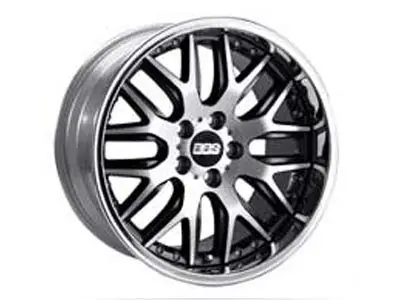
Lesser-known cast line
BBS CY II wheels
The CY II is a BBS cast wheel that carries a second-generation suffix, but reliable details on it are hard to find. This page explains how to confirm a set and plan sizes and parts around it.
- Construction
- One-piece cast aluminium (C-series)
- Name
- Second-generation suffix (II)
- Documentation
- Limited; specs not confirmed here
- Maker
- BBS
What the II tells you
The II suffix in BBS names usually means a revised version of an earlier model, as with the RS and RS II. For the CY II we have not been able to confirm what the first CY was or what changed. Advert titles also drop or add the II at random, so the name in a listing is not proof of which version you are getting. Check the markings on the casting before buying.
Plus sizing with a used set
People often buy a used BBS set in a bigger diameter than their factory wheels. The aim is to keep the overall rolling diameter close to standard, so the speedometer, ABS and traction control behave normally. Each step up in rim diameter generally means a lower tyre profile. Tyre size calculators make this easy: enter your factory size and the new one, and keep the difference within a couple of per cent. A lower profile tyre gives sharper steering but a firmer ride and more risk of rim damage on potholes.
Matching parts
For any less common BBS cast wheel, collect the following before you start:
- Centre cap diameter and fixing method.
- Hub ring size (wheel bore and car hub diameter).
- Bolt thread, length and seat type.
- Valve type, and TPMS sensor compatibility if your car uses them.
With these written down, a parts supplier can usually help even if they have never heard of the model name.
Fitment checks
Check bolt pattern, centre bore, offset, width and brake clearance. If the set came off a different car, look at the inside of the barrel for rub marks from suspension parts, which show it was close to touching before. The offset guide explains how changes in ET and width move the wheel in and out.
Buying used
Inspect for cracks, bends and kerb damage as you would on any cast wheel. Ask whether all four wheels have the same markings, since mixed sets are common with lesser-known models where one wheel has been replaced. A mismatch in width or offset between left and right on the same axle is not acceptable. Our used buying guide lists further checks.
Refinishing
The CY II, as a one-piece cast wheel, can be refurbished by any good alloy wheel expert. If you want to keep the original look, take a clear photo of the finish beforehand. Ask for a sample or swatch for colour matching if only one or two wheels are being done.
Storage between seasons
If the CY II set is a summer or winter set, clean it fully before storage, including the inner barrel and bolt holes. Store wheels lying flat in a stack of no more than four, or hung on a wall rack, in a dry place away from heat sources and direct sunlight. Tyre bags keep dust off and make the wheels easier to move. Before refitting, clean the hub faces on the car, check the bolts for damaged threads and inspect each wheel for corrosion that may have started while stored. Re-torque after the first short drive.
Label each wheel with its position on the car when you remove it. Rotating tyres is fine where sizes allow, but knowing which wheel came from where helps track wear and any vibration that comes back.
Frequently asked questions
Is the CY II an updated CY?
The II suffix usually marks a revised design, but we have not confirmed the details for this model. Check the markings.
Can I fit bigger CY II wheels than standard?
Yes, if bolt pattern, offset and brake clearance suit and you keep the overall tyre diameter close to standard.
What parts do I need to fit a used set?
Usually hub rings, the right bolts, centre caps and, on some cars, TPMS sensors.
Is the CY II forged?
No. It belongs to BBS's cast one-piece range.