
Buyer's guide
Buying used BBS wheels
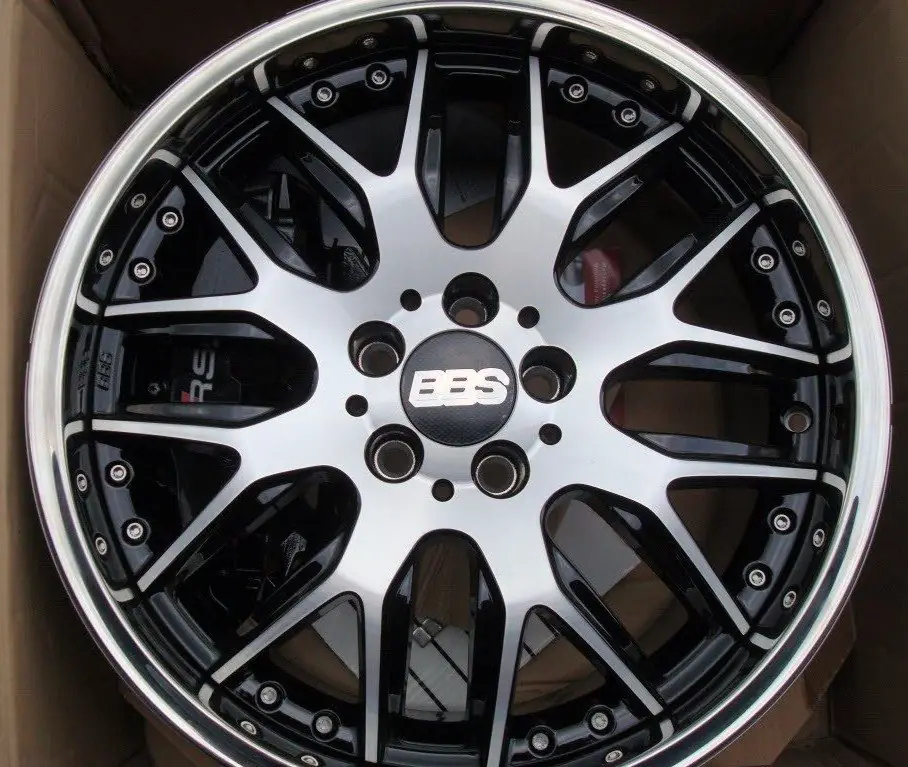
Used BBS wheels are everywhere, and so are copies and wheels that have had a hard life. A careful inspection and a few direct questions will rule out most bad buys before money changes hands.
- Biggest risks
- Copies, cracks, poor repairs, wrong sizes
- Check first
- Markings on the back of every wheel
- Inspect
- Spoke roots, bolt holes, barrel, lip
- Test
- Spin on a balancer for runout
- Paperwork
- Approval documents may matter in some countries
Decide what you are buying first
Before looking at listings, know the exact size, PCD, offset range, centre bore and seat type your car needs. The fitment guide explains each number. Many disappointing purchases are genuine wheels in good condition that simply do not fit, or need adapters, spacers and different bolts that add cost and compromise.
Also decide whether you want a wheel to use daily or a collector piece. Rare sizes of classic three-piece wheels such as the RS command high prices, and a set that needs a full rebuild may still be worth it for a restoration. For a daily car, a sound one-piece wheel like a CH or CK may be far less costly to own.
Copies and fakes
Popular BBS designs have been copied heavily. Some copies are sold openly as styled or inspired wheels, which is legal in many places; the problem arises when they are resold as genuine. Copies of mesh multi-piece wheels and of the LM are especially common.
Signs that a wheel is not genuine:
- No BBS name, model code, size and ET on the back of the centre, or text that is shallow, blurry or oddly spaced.
- Fake rivets or assembly bolts on a one-piece casting. Try to see behind the bolt heads; on many copies there is no nut or the bolt is moulded in.
- Approval marks missing or inconsistent with where the wheel was supposedly made.
- Weight noticeably above published figures for the genuine size.
- Spoke profiles, window shapes and lip steps that do not match photos of known genuine wheels.
- A price that is much lower than comparable sets.
Stickers and centre caps prove nothing either way, since both are sold separately. The identification guide covers markings in detail.
Questions to ask the seller
- Can you send clear photos of the back of each wheel, including the markings?
- Have the wheels been refurbished, straightened or welded, and by whom?
- Do they hold air without topping up?
- Were they balanced recently, and did any need a lot of weight?
- For multi-piece wheels, have they been dismantled, and were lips or barrels changed?
- What car were they last on?
Vague answers are not proof of a problem, because many sellers simply do not know a wheel's history. They are a reason to inspect in person or budget for repair.
Finding cracks
Cracks are the most serious defect and the one most likely to be hidden. They tend to start where stress concentrates:
- At the roots of the spokes where they join the hub or the rim.
- Around wheel bolt holes and the centre bore.
- On the inner barrel, often near the bead seat, after hard pothole impacts.
- On multi-piece wheels, around the assembly bolt holes in the centre.
Clean the wheel and look closely with a torch at a low angle. Fresh paint can hide a crack, and a heavy coat of powder over a previously welded area is a warning sign. Dye penetrant kits are inexpensive and reveal fine cracks well. A crack in a spoke or the centre usually means the wheel should be scrapped. Cracks in the barrel are sometimes welded, which leads to the next question.
Straightened and welded wheels
Bent wheels are common, and straightening is a normal repair. A wheel with a slight bend at the inner lip can often be returned to true by a competent shop with the right equipment. Problems start when wheels are straightened repeatedly, heated aggressively, or bent far beyond a small deformation. Aluminium alloys become harder and more brittle where they are worked, and overheating can permanently reduce strength.
Welding a crack is more controversial. Cast aluminium can be welded, but the area around the weld loses some of its heat treatment, and many experts and carmakers advise against welding structural cracks in road wheels at all. A welded barrel on a show car that is driven gently is a different case from a welded wheel on a heavy daily car. Ask for full disclosure and price the wheel as a part that may need replacing.
Signs of repair include uneven paint texture on the barrel, grinding marks, bulges or flat areas near the bead seat, and a ring of new paint on one section of an otherwise original finish.
Checking for bends and runout
The best check is a balancing machine. Fit each wheel without a tyre if possible and spin it while watching the inner and outer bead seats. Radial runout (up and down) and lateral runout (side to side) show as movement against a pointer or gauge. Small amounts are normal. A visible hop or wobble needs investigating.
Without a balancer, roll each wheel on a flat floor and sight along the lip, or lay it face down on a flat surface and check for gaps. These are rough tests but they catch serious damage.
Multi-piece specifics
Three-piece and two-piece wheels add their own checks. Look at the condition of the assembly bolts: heavy corrosion suggests the wheel has never been dismantled and will need a full rebuild with new hardware and sealant. See whether all wheels in a set carry matching lip and barrel stamps, or whether parts have been swapped. Measure each wheel's actual offset rather than trusting the centre stamp. And check the joint between lip and barrel for signs of leaking sealant or recent resealing.
The refurbishing guide describes what a proper rebuild involves, which helps you price one.
Tyres, centre caps and extras
Tyres on used wheels are often old even when the tread looks good. Read the DOT date code on the sidewall (the last four digits give week and year). Tyres several years old may be hard and should not be counted as value. Missing centre caps can be expensive for some older designs. Original bolts, hub rings and locking bolt keys add value if they come with the set.
In some countries, aftermarket wheels need approval paperwork for road use, such as the German ABE or a TÜV entry. If that applies where you live, ask for the documents or check whether they can still be obtained.
Pricing a set honestly
Add up what the set will really cost: purchase price, transport, refurbishment, new hardware, sealing, tyres, bolts, hub rings and any approval or inspection. A inexpensive set needing a full three-piece rebuild can end up costing more than a sound set at a higher price. Equally, a fairly priced set with one cracked centre is a set of three until you find a replacement, and finding one centre in the right size and finish can take a long time.
Buying at a distance
Many sets are sold online, often by private sellers far away. If you cannot inspect in person, ask for close-up photos of each wheel's back, the inner barrel all the way round, the bead seats and any repaired areas. A short video of each wheel spinning on a balancer is even better. Ask for the weight of one wheel if you know the published figure for the genuine size.
Pay with a method that offers some protection, and agree in writing what condition is being described. Arrange proper packing for shipping, as wheels damaged in transit are a common source of disputes. When the set arrives, inspect it promptly and before fitting tyres, so any problem can be raised while the seller is still easy to reach.
When to walk away
Some findings should end the conversation. A crack in a spoke or the centre, a wheel that leaks from a weld, markings that do not match the claimed model, or a seller who will not show the back of the wheels are all good reasons to keep looking. Plenty of sound BBS sets come up for sale, and patience usually costs less than repairing a bad one.
Frequently asked questions
How can I tell if used BBS wheels are fake?
Check the back of each centre for proper BBS text, model code, size, ET and approval marks, and look for fake assembly bolts on one-piece copies. Caps and stickers prove nothing.
Is a straightened BBS wheel safe?
A single, competent straightening of a minor bend is a normal repair. Repeated straightening, heavy heating or large bends are reasons for caution.
Should I buy a welded wheel?
Many experts advise against welding structural cracks in road wheels. If you buy one, treat it as a wheel that may need replacing and avoid it on heavy or hard-driven cars.
What is the most important check on used wheels?
Looking for cracks at spoke roots, bolt holes and the barrel. A cracked centre is usually not repairable.