
Maintenance guide
Caring for BBS wheels
Most damage to wheels comes from brake dust left too long, harsh cleaners and kerbs. A simple routine keeps painted, machined and polished BBS wheels looking right for years, and a few extra checks matter on multi-piece wheels.
- Cleaner
- pH-neutral wheel cleaner for most finishes
- Avoid
- Acid cleaners, strong alkalis, hot wheels
- Protection
- Wheel sealant or wax after cleaning
- Polished lips
- Metal polish if bare, gentle care if clear coated
- Multi-piece
- Watch assembly bolts and pressure loss
Know your finish
Different finishes need different handling, so start by working out what you have.
- Painted or powder coated centres, the most common type, usually with a clear coat over the colour.
- Diamond-cut or machined faces, where the bare metal is cut on a lathe and protected by clear coat. Damage to the clear lets moisture under it and causes white filiform corrosion.
- Polished aluminium lips, either bare or clear coated. Bare polished aluminium dulls and oxidises without care.
- Anodised or chromed parts on some older or special wheels.
If you are not sure whether a polished lip is bare or coated, try a small amount of metal polish on a hidden area. On bare aluminium the cloth turns black quickly. On a clear coat, it does not, and you should stop.
Routine cleaning
Clean wheels when they are cool. Spraying cleaner on hot wheels after a drive can cause staining, especially on bare metal, and the cleaner dries before it can be rinsed away.
- Rinse thoroughly with water to remove loose dirt and dust.
- Apply a pH-neutral wheel cleaner, or a car shampoo for lightly soiled wheels.
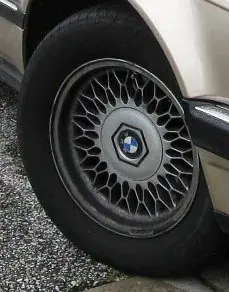
- Use soft brushes: a long brush for the barrel, a smaller brush for the spokes, and a detail brush around assembly bolts and bolt holes. Mesh designs have many small corners, and a soft detail brush reaches them better than a mitt.
- Rinse again, working from the top down.
- Dry with a microfibre towel or air blower to avoid water spots, especially on polished lips.
Keep separate brushes and mitts for wheels. Brake dust contains hard metal particles that scratch paint if they end up on the bodywork.
Cleaners to avoid
Strong acid wheel cleaners remove heavy brake dust quickly, but they can etch bare and polished aluminium, attack anodised finishes and damage worn clear coat. Strong alkaline cleaners can also stain some finishes. If you need stronger products for heavy contamination, test on a small hidden area first, follow the dilution instructions, and rinse quickly.
Iron remover products, which change colour as they react with embedded brake dust, are popular and usually safe on painted and clear-coated wheels when used as directed. Avoid abrasive pads, wire brushes and household scouring products altogether.
Protecting the finish
After cleaning, a wheel sealant or wax makes brake dust less able to bond to the surface and makes the next wash easier. Ceramic-type wheel coatings last longer and resist heat better. Apply any protection to clean, dry wheels, ideally after removing them from the car so you can reach the barrel and the inside of the spokes.
Bare polished lips need metal polish from time to time to keep them bright. Polish leaves a thin protective layer, but it wears off quickly in rain and winter conditions. Some owners prefer to have bare lips clear coated for a daily car and accept a slightly less bright finish.
Dealing with heavy brake dust and tar
Performance brake pads produce a lot of dust, and if it is left on the wheel for weeks it bakes on under heat and moisture. At that point a normal wash will not move it. Start with an iron remover on cool wheels, let it dwell for the time stated on the product, agitate with a soft brush, then rinse thoroughly. Repeat rather than reaching for a stronger product.
Tar spots and road grime on the barrel come off with a dedicated tar remover or a solvent-based cleaner suitable for paint. Apply it to a cloth rather than spraying the whole wheel, and wash the area afterwards with shampoo to remove residue.
If dust keeps building up fast, consider a lower-dust pad compound for road use, if one suits your car. It makes cleaning much easier and helps finishes last longer, especially on gold and white centres where dust staining shows most.
Small repairs between refurbishments
Stone chips on painted centres can be touched in with a matching paint pen after cleaning the area with a panel wipe. Keep the repair small and build it up in thin layers. Light scratches in clear coat can sometimes be reduced with a fine polish by hand. Deeper damage, lifted clear coat and corrosion under the paint need a proper refinish, because the corrosion will continue spreading beneath a patch.
Winter use and road salt
Salt and grit are hard on any alloy wheel, and particularly on bare polished lips, diamond-cut faces and older wheels with worn finishes. Salt gets under chipped paint and starts corrosion that spreads beneath the coating. Rinse wheels often in winter, including the barrel, and touch in stone chips before they spread.
Many owners of classic or multi-piece BBS wheels run a separate set of winter wheels. That keeps the expensive set away from the worst conditions and spreads wear across two sets.
Storing wheels
Clean and dry the wheels thoroughly before storage, and apply protection. Store them in a dry, cool place away from direct sunlight. If the tyres are fitted, either stack the wheels flat with a piece of cardboard between them and rotate the stack occasionally, or hang them on a wall hook. Reduce tyre pressure somewhat for long storage but keep enough to hold the bead. Wheel bags help keep dust off.
For three-piece wheels stored for a long time, check pressures when you bring them out. Sealant that has been in place for many years can harden, and long storage sometimes reveals a slow leak.
Extra care for multi-piece wheels
Three-piece and two-piece wheels like the RS, RS II and E88 need a few additional checks.
- Look at the assembly bolts when cleaning. Corrosion around the heads is a sign the wheel needs attention at its next rebuild.
- Do not attempt to tighten assembly bolts without the correct torque figure for that design. Over-tightening can do as much harm as a loose bolt.
- Check pressures more often than on one-piece wheels. A gradual loss can mean the lip joint seal is failing.
- Avoid high-pressure washer jets aimed directly at the lip joint at close range, which can lift old sealant.
The refurbishing guide covers what a rebuild involves when one is needed.
Regular checks
Every few months, and whenever you clean the wheels thoroughly:
- Look for cracks or kerb damage at the lip and spoke roots.
- Check tyre pressures and look for uneven tyre wear that might point to alignment problems or a bent wheel.
- Feel for new vibration at speed, which may mean a lost balance weight or a bend.
- After wheels are refitted, recheck wheel bolt or nut torque after a short drive.
When having tyres fitted, ask the tyre shop to use a machine that does not touch the face of the wheel, and to take care around polished lips and assembly bolts. Many good wheels are scratched during tyre changes. Tell them where to put balance weights, as stick-on weights inside the barrel avoid marks on the outer lip.
Avoiding kerb damage
Most cosmetic wheel damage happens at low speed. Wide wheels with stretched or low-profile tyres leave the lip unprotected, so take extra care parking parallel to kerbs. Some tyres have a rim protector rib on the sidewall, which helps a little. If the lip is scraped, have it repaired before the damage gets worse; on three-piece wheels, a badly damaged lip can often be replaced rather than repaired.
Fitting and removing wheels
Use the correct bolts or nuts with the right seat type, start them by hand to avoid cross-threading, and tighten in a cross pattern with a torque wrench rather than an impact gun. Impact guns can over-tighten fasteners and damage the seats in soft alloy. A thin smear of anti-seize on the hub spigot, kept away from the threads and seats, helps prevent the wheel corroding onto the hub. The fitment guide explains seat types and torque in more detail.
Frequently asked questions
What is the safest cleaner for BBS wheels?
A pH-neutral wheel cleaner or car shampoo with soft brushes suits almost every finish. Avoid strong acids, especially on polished or bare aluminium.
How do I keep polished lips shiny?
If they are bare aluminium, use metal polish regularly and dry them after washing. If they are clear coated, treat them like paint and avoid metal polish.
Should I use BBS three-piece wheels in winter?
They can be used, but salt and grit speed up corrosion of bolts, lips and seals. Many owners keep a separate winter set.
Why are my three-piece wheels losing air?
The most common cause is an ageing seal at the lip joint, though valves and tyre beads can leak too. A soapy water test shows where the air escapes.