
Racing history
BBS in motorsport
BBS made its name in racing before it was widely known on the street. From touring cars in the 1970s to forged magnesium wheels in Formula 1, motorsport shaped both the company's reputation and the way its road wheels were designed.
- Entry to racing
- 1970s, multi-piece wheels for touring and sports cars
- Formula 1
- Major supplier for decades, forged magnesium
- Endurance
- Le Mans prototypes and GT cars
- Touring cars
- German and other national championships
- Japan
- Long presence in GT and touring series
Why racing teams wanted BBS wheels
Racing wheels in the 1970s had to do several jobs at once. They had to be light, because unsprung weight hurts grip and handling. They had to be stiff enough to keep the tyre's contact patch consistent under heavy cornering loads. And teams needed to change sizes quickly as tyre technology, regulations and car setups changed from race to race.
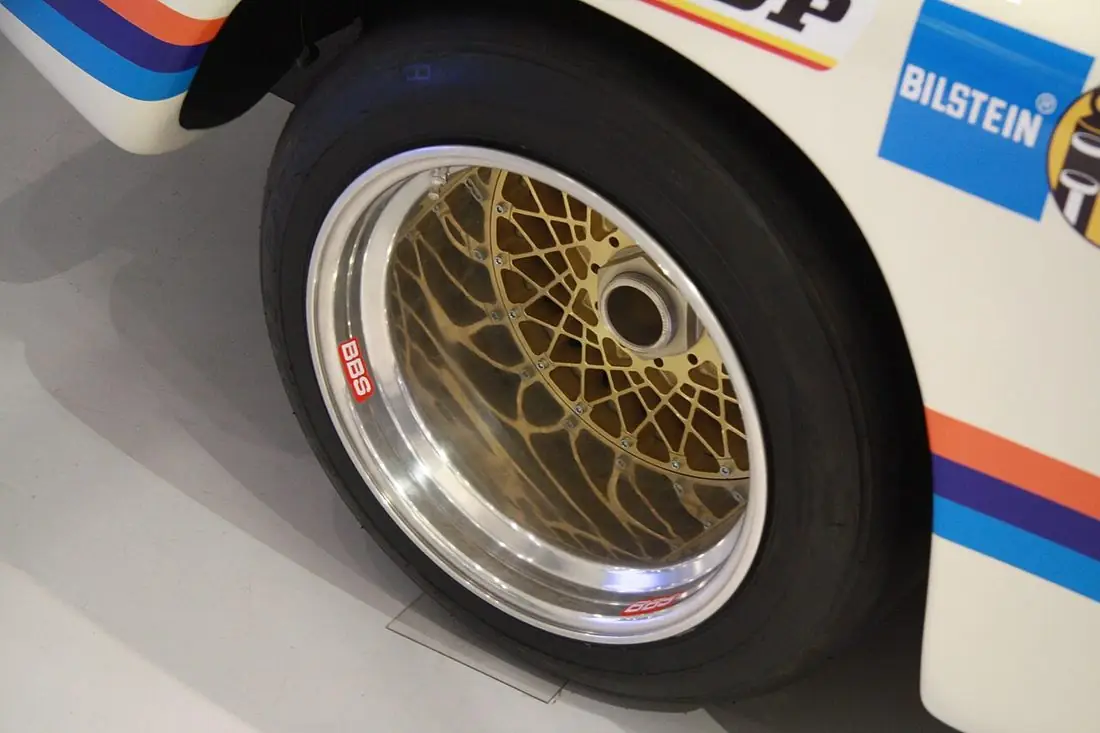
The multi-piece wheel answered the last problem neatly. A team could keep a stock of centres and build them into rim halves of different widths, changing offset and width without ordering new wheels. A damaged rim half could be swapped at the track. BBS's mesh centres were stiff and open enough for brake cooling, and the company was willing to build to order in small runs. That combination won it customers among touring car and sports car teams through the 1970s.
Touring cars
Touring car racing in Europe was an early shop window. German saloons competing in national and European series ran BBS wheels in the 1970s and 1980s, and the visual link between a racing BMW or Volkswagen and a road car on similar-looking wheels did a lot for sales. The look of a mesh wheel with a polished lip became part of what a fast German car was expected to wear.
In the German touring car championship, the DTM, BBS wheels have been used by many teams across different eras of the series, from the Group A based cars of the late 1980s and 1990s to later silhouette-style cars. Supply arrangements changed over time as series introduced control parts and manufacturers signed their own deals, so not every season or team ran BBS. Still, the brand is closely linked with the series in the minds of many fans.
Endurance racing and Le Mans
Sports prototype and GT racing suited BBS well. Long races put huge loads on wheels through braking, kerb strikes and hours of high-speed running. BBS wheels were used on a series of Porsche Group C prototypes, the 956 and 962 among them, which dominated endurance racing in the 1980s. Images of those cars, with their mesh or turbofan-covered wheels, are some of the best-known pictures of the company's racing work.
BBS wheels have appeared on many other Le Mans entrants since, in both the prototype and GT classes, with various manufacturers and private teams. Endurance racing also placed weight on reliability and quick wheel changes, with centre-lock hubs becoming standard at the top level, and BBS produced forged centre-lock racing wheels for that market.
Formula 1
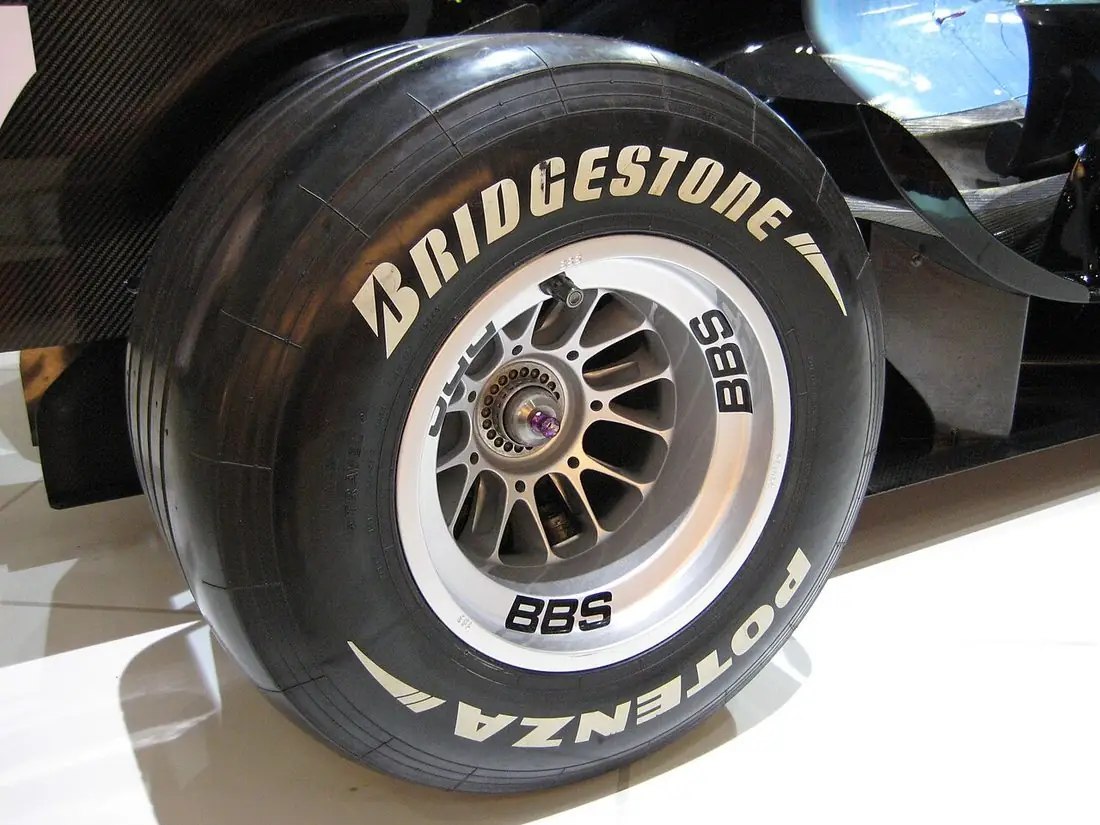
Formula 1 is where BBS's forged wheel technology was pushed hardest. Starting in the 1980s and continuing for more than two decades, BBS supplied forged wheels, often magnesium, to a number of F1 teams. Ferrari used BBS wheels for a long period, including the years of its run of championships around the turn of the century, and several other front-running and midfield teams were customers at various points.
F1 wheels are extreme parts. They have to be as light as the regulations and safety margins allow, survive high braking temperatures, and fit a single central nut for pit stops measured in seconds. Forged magnesium was the material of choice in that period because of its low density. In later years, F1 moved to a single wheel supplier under control rules, and BBS's role in the sport changed accordingly.
Japanese racing
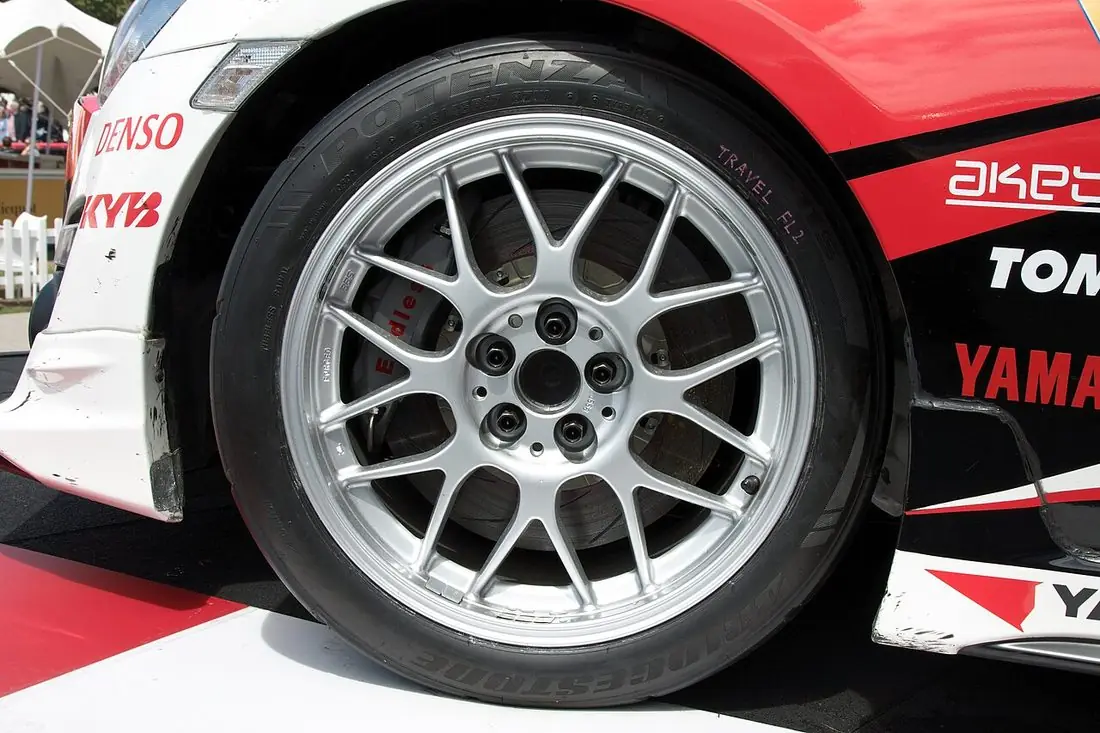
In Japan, BBS wheels have long been common in GT and touring car racing, including the series now known as Super GT, and in single-seater categories. The Japanese operation's forging work, carried out with its forging partner in Toyama prefecture, served both race teams and the road market. That shared base is one reason Japanese forged BBS road wheels such as the LM and RI-A are so closely associated with motorsport looks and engineering.
Rally and other disciplines
BBS wheels have also appeared in rallying, hill climbs, one-make cup series and club racing. In grassroots motorsport the appeal is often practical: older BBS multi-piece and forged wheels are strong, widely available second-hand, and easy to find in sizes that suit popular race cars. Club racers commonly use used BBS forged wheels rather than new ones, which keeps a steady demand for good second-hand sets.
What racing gave the road wheels
The links between race and road products were real, though often marketed loudly. Several things moved across:
- The cross-spoke mesh pattern and the multi-piece build, first on racing cars and then on road wheels such as the RS from 1983.
- Forging expertise, which led to forged one-piece road wheels with high strength for their weight. See the forged versus cast guide.
- Attention to stiffness and brake clearance, which matters on modern performance cars with large brakes.
- Racing-inspired designs such as the RS-GT, FI and FI-R, which take visual and structural cues from competition wheels.
Road wheels are designed to different rules. They need higher load margins for poor roads and potholes, longer corrosion life and compliance with road approval standards. A racing wheel is designed for a short life with frequent inspection. That difference is one reason ex-race wheels should be bought with care for road use.
Buying ex-racing wheels
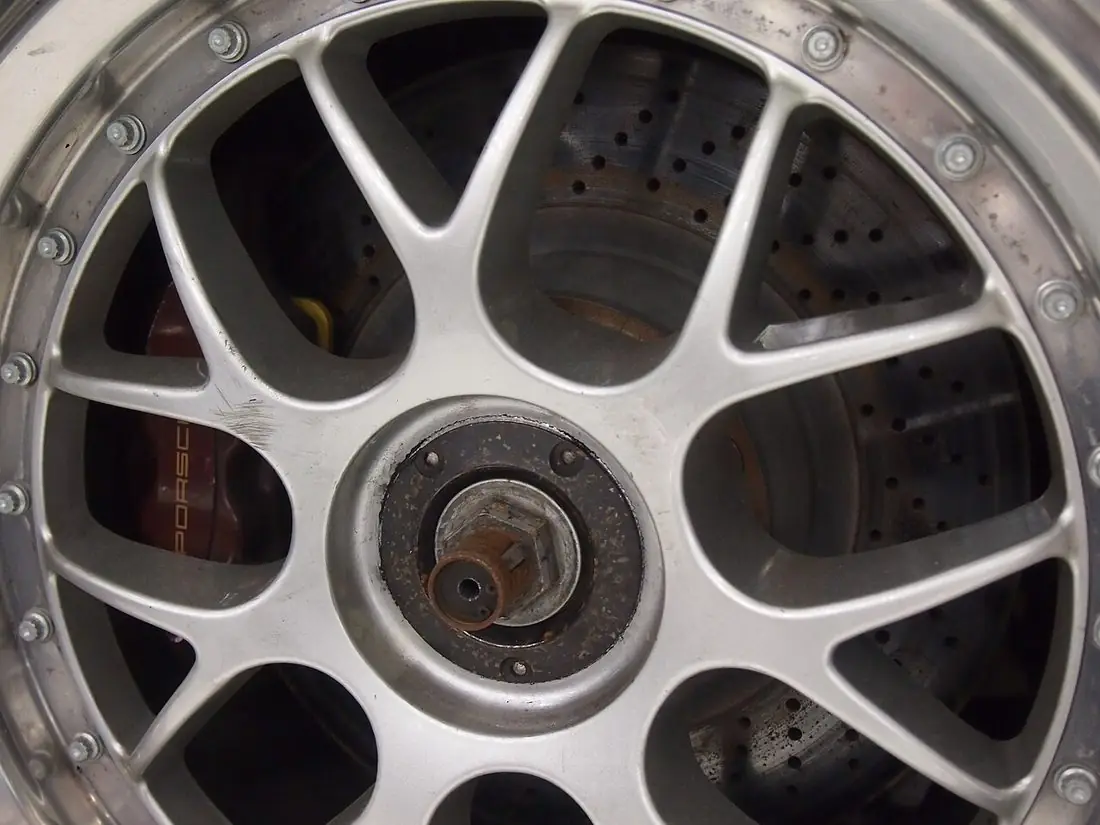
Ex-race BBS wheels turn up on the used market, sometimes with interesting history. They can be lovely objects, but they are not always suitable for road cars. Racing wheels may lack road approval marks, may have been used well past their intended life, and are often centre-lock or built for racing hubs. Magnesium wheels in particular can corrode internally and should be crack tested before any use. For display, history matters most. For driving, treat them like any used wheel and inspect carefully, as described in the used buying guide.
Recognising racing heritage on road cars
Many road cars wear wheels with a direct racing connection without saying so. Factory performance models from several manufacturers have used BBS wheels whose designs echo the race cars of the same brand. Owners sometimes discover this only when they read the back of the wheel and see a BBS mark next to the carmaker's part number. The identification guide explains where to look.
Wheels as racing equipment
From the outside a racing wheel looks like a light road wheel, but teams treat it as a consumable part with a service life. Wheels are crack tested at intervals, tracked by serial number, and retired after a set amount of use or after a heavy impact. Centre-lock wheels have their hub interface and driving pegs inspected as part of the routine. Tyre fitting is done with care to avoid scoring the bead seats, because a scratch can become the start of a crack under racing loads.
This approach is one reason BBS developed close working relationships with teams rather than simply selling them catalogue parts. Race wheels were often designed for a single car, with spoke shapes and offsets chosen around the brake package and suspension geometry, then revised when the car changed. The knowledge built up from failures and test data fed into how the company specified strength and fatigue testing for its road wheels.
For enthusiasts, it explains why ex-team wheels sometimes carry painted serial numbers, inspection marks or stickers on the inner barrel. Those marks are part of the history, and they say something about how hard the wheel has been used.
Turbofan covers and aero
On some endurance prototypes of the 1980s, flat aerodynamic covers were fitted over the wheels to cut drag and manage airflow around the brakes. The turbofan look, with curved vanes in a disc, came out of the same thinking about pulling hot air away from brakes. Road wheels later borrowed the style in designs sold by several makers. For BBS, the more lasting influence of this era was the focus on brake cooling and stiffness, which shows in the open mesh and spoke shapes used on many of its road wheels.



Frequently asked questions
Did BBS make Formula 1 wheels?
Yes. BBS supplied forged wheels, often magnesium, to several F1 teams over more than two decades, including a long period with Ferrari.
Which Le Mans cars used BBS wheels?
Among the best-known are the Porsche 956 and 962 Group C prototypes of the 1980s. Many later prototypes and GT cars have used them too.
Are racing BBS wheels legal on the road?
Often not without approval. Many race wheels lack road approval marks or use centre-lock fittings, so check local rules before using them on the road.
Why are BBS wheels linked to DTM?
Many DTM teams ran BBS wheels across several eras of the series, and the look of German touring cars on mesh wheels became strongly associated with the brand.