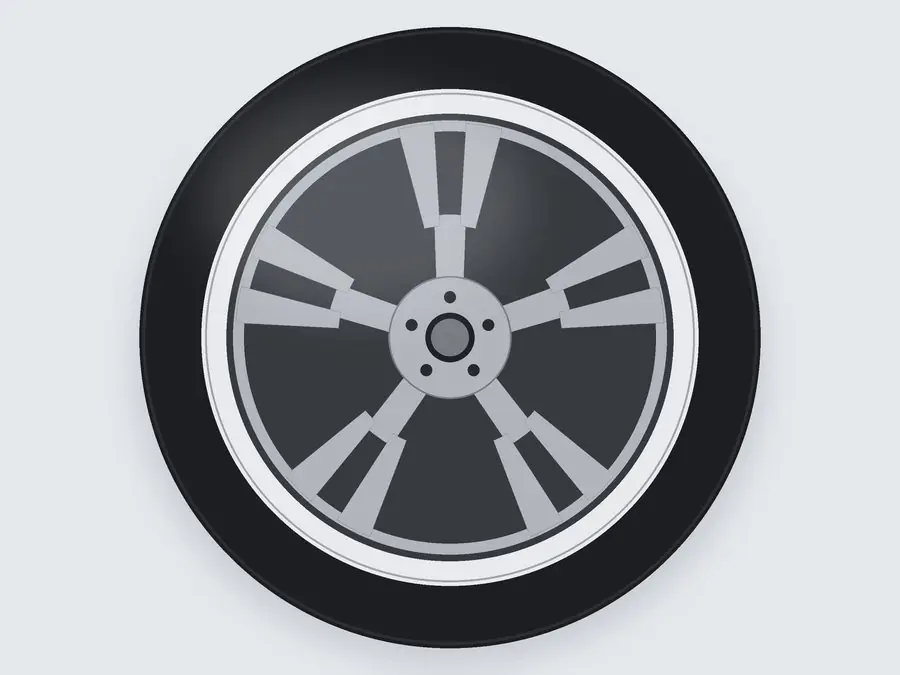
Forged one-piece, Japan
BBS RI-A wheels
The RI-A is a one-piece forged aluminium wheel made by BBS Japan, styled after the company's racing wheels and aimed at drivers who want low weight on a road or track car.
- Construction
- One-piece forged aluminium
- Made by
- BBS Japan
- Spoke style
- Twin spokes forming a Y pattern
- Typical use
- Performance road cars and track days
- Related models
- RI-D, RE-V, RG-R
Background
BBS has run a forging operation in Japan for decades, and many of its lightest wheels come from there rather than from the German plants. The RI-A belongs to that line. It borrows its look from the wheels BBS supplied to racing teams in Japanese touring car and GT series, where a forged centre with thin, deep spokes was the norm.
The RI-A sits below the RI-D in the range. The RI-D uses a more exotic alloy and costs more; the RI-A uses forged aluminium and is aimed at a wider group of owners. Both share the same basic idea of a light wheel with a racing profile that still works on a road car. For the wider story see BBS history and BBS in motorsport.
Construction and design
Forging starts with a solid billet of aluminium that is pressed under very high load into the rough wheel shape, then machined to the final profile. The process gives a denser grain structure than casting, so the same strength can be reached with less material. That is where the weight saving comes from. Our guide to forged vs cast BBS wheels explains the difference in more depth.
The RI-A face uses pairs of spokes that join near the hub, giving the Y shape that runs through much of the BBS racing catalogue. The spokes are machined on the back to remove material that does not carry load. A raised rim lip and a centre-lock style cap complete the motorsport look, though the wheel bolts on with ordinary lug nuts or bolts.
Fitment and typical cars
Sizes and offsets varied by market and changed over the production run, so check the current BBS Japan or importer listing rather than relying on old forum posts. The wheel has been popular on Japanese sports cars and on European performance models, and owners often choose it for track use because a lighter wheel reduces unsprung and rotating mass.
Brake clearance matters. Big-brake kits and some factory performance calipers need a specific spoke profile and offset to clear, so confirm the fit with the caliper template for your car. The fitment and offset guide explains how offset, width and backspacing interact.
Checking an RI-A is genuine
Turn the wheel over. An RI-A from BBS Japan has the model name, size and offset machined or cast into the rear of the hub area, along with the JWL mark Japanese law requires and usually a VIA stamp. The spoke backs show deep, clean milling pockets. Many RI-A lookalikes copy the twin-spoke face well enough from the front, but they tend to have flat, unmachined spoke backs and a much heavier feel when you lift them. A forged 18 inch wheel of this type is light enough that most people notice the difference straight away. More on reading the markings is in identifying BBS wheels.
What goes wrong on used RI-A wheels
Because so many RI-A sets end up on track cars, the wear pattern is different from a road wheel. Look for scuffs on the outer lip from track-side kerbs, heat discolouration near the hub from hard braking, and worn lug seats from wheels being swapped between road and track tyres many times. Damaged seats let the nuts sit unevenly, so run a finger round each one. Check that the centre caps are present; the racing-style caps are easy to lose and not always inexpensive to replace.
Forging tolerates a small bend better than a casting does, and experts can often straighten a lip. Be wary of any wheel that has been welded, since heat changes the temper of forged aluminium. Buying used BBS wheels has a general checklist.
Running RI-A wheels on track
Swap between track and road tyres on a second set of RI-As rather than having the same wheels remounted every weekend; each tyre change is a chance for a tool to bite the lip. Ask the tyre shop to use adhesive weights on the inner barrel. After a session, let the brakes cool before washing, as cold water on a hot wheel and caliper does neither any good. Brake dust from track pads is more aggressive than road dust, so clean it off within a day or two. Use the correct lug nut seat for your car and torque with a wrench, rechecking after the first outing on new wheels.
Frequently asked questions
Is the BBS RI-A forged or cast?
It is a one-piece forged aluminium wheel made by BBS Japan.
How does the RI-A differ from the RI-D?
The RI-D uses a more expensive, lighter alloy and is positioned above the RI-A. The RI-A is forged from aluminium and costs less.
Can I use RI-A wheels on track?
Many owners do. Check brake clearance, tyre size and the load rating for your car, and inspect the wheels regularly for damage.
What sizes were offered?
Sizes and offsets varied by market and over time. Check the current BBS Japan listing or an authorised importer for the specific fitment for your car.