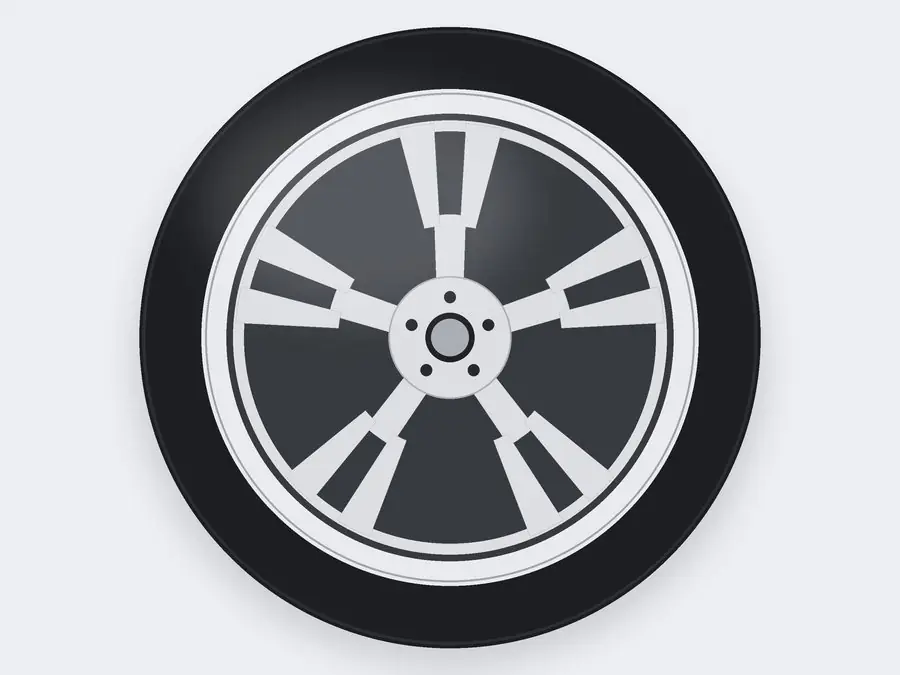
Forged duralumin, Japan
BBS RI-D wheels
The RI-D is one of the lightest road wheels BBS has made. BBS Japan forges it from a high-strength duralumin alloy, a material more often associated with aircraft parts than with wheels.
- Construction
- One-piece forged
- Material
- Extra super duralumin alloy
- Made by
- BBS Japan
- Spoke style
- Thin twin spokes in a Y layout
- Positioning
- Top of the BBS forged range
What makes the RI-D unusual
Most forged wheels are made from 6000-series aluminium alloys. The RI-D uses a duralumin alloy, an aluminium alloy with copper and zinc that reaches much higher strength. Higher strength allows thinner sections, which brings the weight down. The trade-off is cost: the alloy is harder to work, and forging and machining it takes more time. That puts the RI-D at the top of the BBS price list.
BBS Japan presented the wheel as a road wheel developed from its racing work. It sits above the RI-A, which follows a similar idea in standard forged aluminium.
Construction
The wheel is forged as one piece and then machined. The spokes are slim and deep, joining in pairs near the centre, and the backs are milled out to remove weight. The rim is a single piece with the face, so there are no bolts or seals to maintain as there would be on a three-piece RS.
Finishes have usually been darker tones, with a machined or contrasting lip on some versions. Exact finishes changed over time and differ between markets.
Fitment
The RI-D has been offered for popular sports and performance cars, with sizes and offsets matched to specific hub patterns. Because the spokes are thin and close to the caliper on some fitments, brake clearance needs checking with the correct template. Sizes varied by market; the BBS Japan catalogue or an authorised importer will have the current list. Read the offset guide if you plan to change width or tyre size.
Checking an RI-D is genuine
The RI-D is copied often because the face is simple and the original is expensive. A genuine wheel carries BBS Japan markings on the back, including the model name, size, offset and JWL and VIA marks, and the material reference that sets it apart from the less costly RI-A. The weight gives most fakes away. Ask a seller to put a wheel on a scale; a cast copy in the same size will be clearly heavier. Listings using the words 'RI-D style' or 'RI-D copy' are, as the words say, not the real thing.
RI-D or RI-A?
For a car used mostly on the road, the extra cost of the RI-D over the RI-A buys a weight saving that few drivers will feel on a public road. On a car built for time attack or regular circuit days, where every kilogram at the corners is counted, the gap is easier to justify. The RI-A is also more forgiving if it gets damaged, since ordinary forged aluminium is easier to refinish and repair.
Corrosion and repair limits
High-strength aluminium alloys with copper content are less resistant to corrosion than the alloys used for most wheels. In practice the paint and clear coat do the protecting, so a chip in the finish matters more on an RI-D than on an ordinary cast wheel. When inspecting a used set, look for bubbling under the paint around the lug holes, the valve hole and the inner bead seat, which are the usual places for corrosion to start.
Many wheel shops decline to weld or heat-straighten duralumin because it loses strength when heated. Cosmetic refinishing is fine if the shop avoids high oven temperatures; ask what curing temperature they use before handing the wheels over. A bent RI-D is often a case for a replacement wheel rather than a repair.
Living with RI-D wheels
If the car is used through winter, a separate set of winter wheels saves the RI-Ds from road salt. Before storing them, wash and dry each wheel, touch in any chips, and keep them in bags away from damp. Fit tyres only at a shop with a touchless or protected machine, since a gouge through the finish is the start of the corrosion problem described above. Torque the nuts or bolts by hand with a wrench; impact guns can damage the seats on a light wheel.
Frequently asked questions
What is duralumin?
It is a family of high-strength aluminium alloys containing copper and other elements, first developed for aircraft. Its strength lets the RI-D use thinner sections than a normal aluminium wheel.
Is the RI-D the lightest BBS wheel?
It is among the lightest road wheels BBS sells. Exact weights depend on size, so compare figures for the same size.
Can a damaged RI-D be repaired?
Minor cosmetic damage can be refinished. Structural repair such as welding is generally not advised for this alloy. Ask an expert.
Where is the RI-D made?
It is forged by BBS Japan.