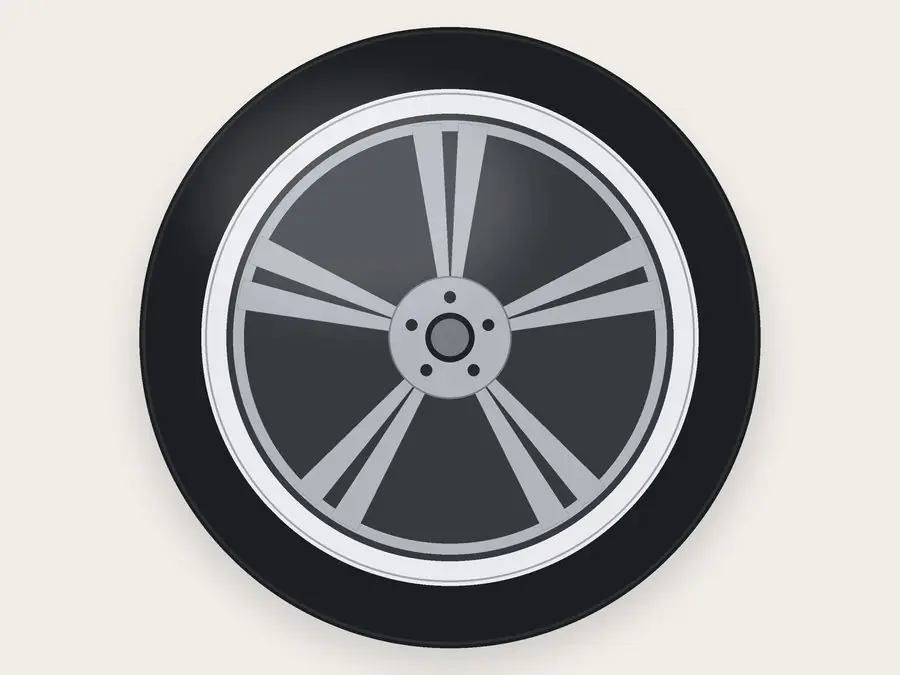
Forged one-piece, Japan
BBS RE-V wheels
The RE-V is a forged aluminium monoblock from BBS Japan, with seven pairs of thin spokes that split and run out to the rim edge. It sits in the lightweight sport part of the range and is a common choice for Japanese and European performance cars.
- Construction
- One-piece forged aluminium
- Spokes
- 14, arranged as seven split pairs
- Made in
- Japan
- Typical use
- Road and track day performance cars
- Related model
- RE-V7 (seven-spoke successor design)
Where the RE-V fits in the range
BBS has used the RE prefix for several forged one-piece wheels built in Japan. The RE-V is the version most buyers outside Japan see. It shares its basic method with the RI-A and RG-R: a single forging, machined to shape, with no bolts or separate barrel.
In the BBS line-up it sits below the very light pieces such as the RI-D. Buyers tend to pick it for the open spoke design, which shows off big brakes, and for weight that is low for a road wheel without the price of the top models.
Design and construction
Each of the seven spokes leaves the hub as one piece and divides into two arms before it reaches the rim. That gives a fourteen-spoke look from a distance and a very open face. The spokes are machined after forging, and many finishes leave a cut edge or machined lip that catches the light.
Forging presses a heated aluminium billet into a die under very high pressure. The grain of the metal follows the shape of the part, so a forged wheel can be made thinner than a cast one for the same strength. Our page on forged versus cast BBS wheels explains the trade-offs. On the RE-V the result is a stiff wheel that does not flex much under cornering loads, which matters on track.
Because it is a monoblock, width and offset are fixed at the factory. You cannot rebuild it to a new width the way you can with a three-piece RS. Choose the size carefully.
Sizes and typical cars
The RE-V was offered in a range of common performance sizes, with diameters in the high teens and above and both five-stud patterns used by Japanese and European makers. The exact list of widths and offsets has changed over the years and differs by market, so check the current BBS fitment list for your car rather than relying on a forum post.
You will often see it on cars such as the Toyota GR86 and Subaru BRZ, Honda Civic Type R, Nissan GT-R, Porsche 911 and various BMW M cars. The wheel is designed to clear larger brake callipers, but clearance always depends on the calliper and the offset. A test fit with one wheel before mounting tyres saves a lot of trouble.
How to identify a genuine RE-V
Turn an RE-V over and look between the spoke pairs on the back of the hub. A genuine wheel from BBS Japan has the BBS name, the size, the inset, the bolt pattern and a model or part code. You should also see the Japanese JWL and VIA marks. On a forging these are machined or stamped into a smooth surface and look sharp. Raised, grainy lettering suggests a casting.
The split spokes make the RE-V easy to copy from the front, and cast copies exist. Check the inner face of each split. BBS machines these surfaces, so they should be smooth and even from one spoke to the next. Uneven gaps between the two arms of a pair, or arms that differ in thickness, point to a copy. Weigh one wheel if you can and compare it with the figure BBS lists for that size. More tips are in identifying BBS wheels.
Buying a used set
The thin split arms are the first place to look on a used RE-V. Shine a torch along each one, front and back, and look for hairline cracks where the arms join the main spoke and where they meet the rim. A wheel that has hit a pothole hard can bend at the rim edge between two spoke pairs, so spin each one on a balancer and watch the lip.
The narrow gaps between the split arms also make refinishing slower than on a simple five-spoke. Masking and painting fourteen arms properly takes time, so a set with scuffed faces will cost more to put right than it looks. Forged aluminium should not be welded, and a repaired RE-V is best avoided. Check that the four wheels you are buying share the size and inset you expect, because front and rear sizes often differ on cars like the 911 and GT-R. The used buying guide has a full checklist.
Care
Use a pH-neutral wheel cleaner and a soft brush. Acid cleaners can mark machined and clear-coated surfaces. Brake dust is abrasive and hot, so wash it off regularly on a car that sees track use. Torque the nuts or bolts to the car maker's figure with a torque wrench, in a star pattern, and check them again after the first drive. More advice is in caring for BBS wheels.
Frequently asked questions
Is the BBS RE-V forged or cast?
It is forged. The wheel is a one-piece forging made in Japan and then machined to its final shape.
What is the difference between the RE-V and the RE-V7?
The RE-V has seven spokes that each split into two, giving fourteen arms at the rim. The RE-V7 uses seven bolder spokes in a crossing pattern. Both are forged one-piece wheels.
Can an RE-V be rebuilt to a different width?
No. It is a monoblock, so the width and offset are fixed. Only multi-piece wheels can be rebuilt with new barrels.
Will an RE-V clear big brakes?
It was designed with an open face and is often fitted over upgraded brakes, but clearance depends on the calliper and the offset. Test fit one wheel first.