Company history, 1970 to now
A history of BBS wheels
BBS started in 1970 in Schiltach, a small town in the Black Forest, making plastic body parts for cars. Within a decade it was building racing wheels, and the three-piece mesh designs it developed went on to define what a German performance wheel looked like for a generation.
- Founded
- 1970, Schiltach, Germany
- Founders
- Heinrich Baumgartner and Klaus Brand
- Name
- Baumgartner, Brand, Schiltach
- First products
- Plastic body parts and spoilers
- Known for
- Mesh wheels, multi-piece construction, forged motorsport wheels
- Main German sites
- Schiltach and Herbolzheim
Two founders and a town
Heinrich Baumgartner and Klaus Brand set up the company in 1970. The initials of their surnames and of their home town, Schiltach, gave the business its name. Schiltach sits in the Kinzig valley in Baden-Württemberg, and the firm has kept a presence there ever since, which is unusual for a wheel company that later had factories and partners on three continents.
The early business had nothing to do with wheels. BBS made plastic add-on parts for cars: front spoilers, rear wings and similar aerodynamic pieces. This was the period when tuning in Germany was taking off and owners of everyday saloons wanted their cars to look closer to the racing versions. Glass-fibre and plastic bodywork was a sensible place for a small firm to start, because the tooling costs were modest and demand was growing.
From body kits to racing wheels
By the early to mid 1970s BBS had moved into wheels, and racing was the route in. Teams needed light, strong wheels that could be rebuilt or resized quickly between events. A multi-piece wheel, with a centre bolted between an inner and outer rim half, suited that need well. A team could change width or offset by swapping rim halves, and a damaged lip could be replaced without throwing the whole wheel away.
BBS built its reputation on exactly this type of wheel. The cross-spoke mesh centre, which became the company's visual signature, gave a stiff centre with a lot of material near the hub and plenty of openings for brake cooling. Racing success with touring cars and sports prototypes through the 1970s and early 1980s turned the name into something road car owners wanted too.
The RS and the road car boom
The BBS RS, introduced in 1983, brought the three-piece mesh look to the street in large numbers. It used a cast centre bolted to spun aluminium rim halves with a ring of small assembly bolts around the lip. Because the parts could be combined in many ways, the RS was produced in a very wide range of widths and offsets, and it was fitted to everything from Volkswagen Golfs to BMWs, Porsches and Japanese cars.
Through the 1980s and 1990s BBS added more designs. Some were two-piece or three-piece wheels following the RS idea, such as the RS-GT, while others were one-piece cast wheels that kept the mesh styling at a lower price, like the RX and RT families. The RF series and many later cast designs were aimed squarely at the volume market.
Original equipment work
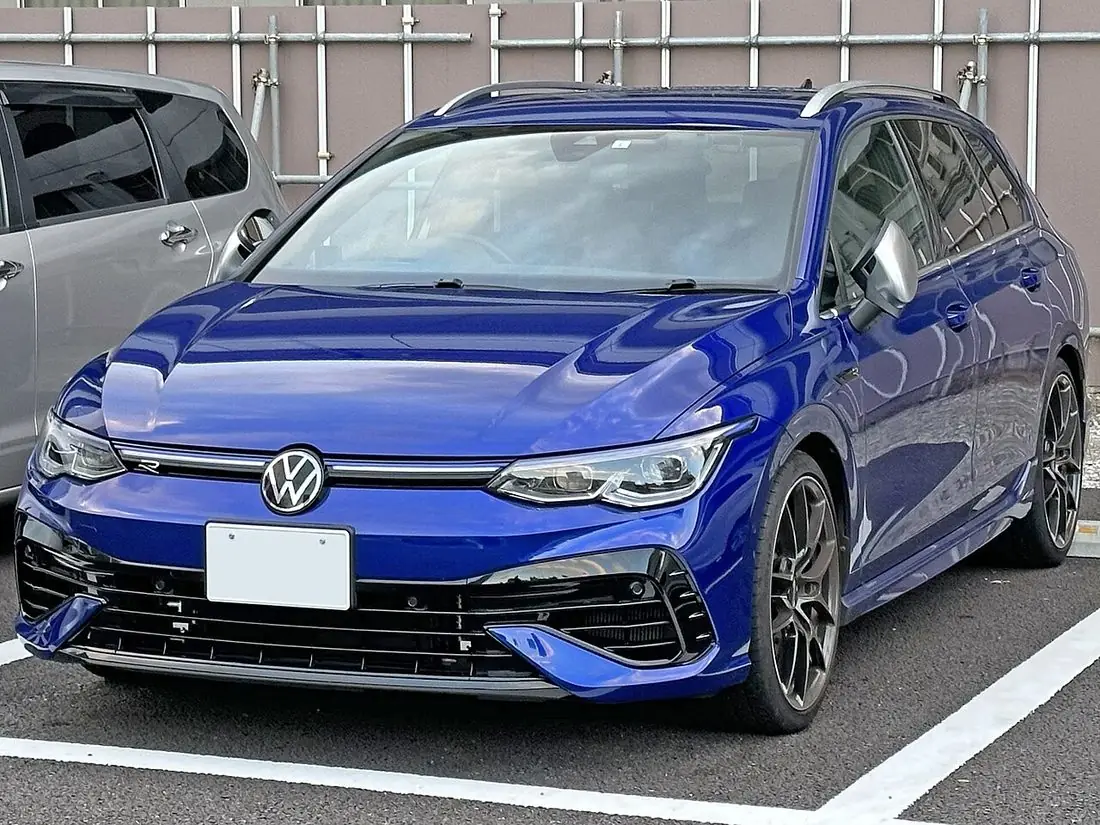
An important part of the BBS story is supply to carmakers. BBS-made or BBS-designed wheels have appeared as factory fitments or factory options on a long list of cars from German and Japanese manufacturers, among others. On many of these the wheel carries the carmaker's part number as well as BBS markings on the back, which matters when you try to identify one later (see the identification guide).
OEM contracts gave the company volume and steady income that pure aftermarket and racing work could not. They also meant that a lot of BBS wheels on the road today were never bought as aftermarket parts at all. A buyer can find a genuine BBS wheel at a scrapyard on a car whose owner never knew the name.
BBS in Japan and the forging story
BBS has a strong separate history in Japan. A Japanese licensee, working with the forging expert Washi Kosan in Toyama prefecture, began producing forged BBS wheels. BBS Japan became known for one-piece forged aluminium wheels, including the LM and the RI-A, as well as forged magnesium designs. Many enthusiasts treat Japanese-made forged BBS wheels as a category of their own, with their own catalogue and sizing.
Forging produces a denser, stronger structure than casting, so a forged wheel can use less material for the same strength. The forged versus cast guide covers the differences in more detail.
Motorsport at the top level
BBS became one of the main wheel suppliers in Formula 1, with forged magnesium wheels used by a number of leading teams over several decades, Ferrari among them for a long stretch. The brand also has a long record in sports car racing at Le Mans, in German touring cars, and in many national championships. Those programmes are covered in the motorsport guide.
Racing work fed back into road products. Low-pressure casting methods, flow-forming and forged designs for road cars all borrowed ideas from the race wheels, and BBS often marketed road wheels by pointing to their racing relatives.
Harder years
The company's finances were not always as solid as its products. From the late 2000s onward BBS GmbH went through insolvency proceedings more than once and changed hands between owners. Production capacity in Germany was reorganised, and at times parts of the range were made by partners abroad. The Japanese operation continued on its own path through most of this period.
For owners, the practical effect is that availability of spare parts, centre caps and replacement lips for older designs has varied over the years. Some three-piece models are still supported with new components, while others rely on the used market or on independent experts who make compatible parts.
Where BBS stands today
BBS continues to make wheels in Germany and Japan, for the aftermarket, for carmakers and for racing. The current ranges mix one-piece cast and flow-formed wheels for everyday cars with forged one-piece wheels at the top end, and some multi-piece designs such as the RS-GT and E88 remain in the catalogue in some markets.
The classic three-piece wheels from the 1980s and 1990s have become collector items. Original sets in good condition, especially in rare sizes, sell for far more than they cost new, and an entire trade of refurbishers has grown up around them. The refurbishing guide and the used buying guide deal with that side of the story.
How the design language developed
The cross-spoke mesh is the shape most people picture when they hear the name, but BBS used it for practical reasons first. A mesh centre spreads load across many thin spokes, so no single spoke has to be very thick. That kept weight down on the early racing wheels and gave a lot of open area for air to reach the brakes. When the same pattern moved onto road cars it also happened to look busy and technical, which suited the tuning fashion of the 1980s.
Gold centres with polished lips became a recognisable combination, as did silver centres with a diamond-cut finish. Later decades brought more spoke designs, wider use of black and gunmetal finishes, and one-piece wheels that imitate the look of multi-piece construction. The LM, with its stepped lip and mesh face, is a good example of a later design that kept the old visual cues while changing how the wheel was made.
Through all of this, the company kept the habit of reusing successful ideas across many sizes and fitments rather than launching a fresh look every year. That is why a design like the RS appears in so many variants, and why identifying an exact version often depends on small codes rather than the overall shape.
A rough timeline
- 1970: BBS founded in Schiltach by Heinrich Baumgartner and Klaus Brand, making plastic body parts.
- Mid 1970s: move into multi-piece racing wheels.
- 1983: the RS three-piece road wheel arrives and sells in very large numbers.
- 1980s to 1990s: expansion into OEM supply and a wide cast range; forged production grows in Japan.
- 1980s onward: BBS forged wheels become common in Formula 1 and endurance racing.
- Late 2000s onward: financial difficulties, insolvency proceedings and changes of ownership in Germany.
- Today: production continues for aftermarket, OEM and motorsport customers.
Exact dates for individual models varied by market, and many designs stayed in production far longer in one country than another. If a model page on this site gives a range rather than a single year, that is the reason.

Frequently asked questions
What does BBS stand for?
It comes from the founders' surnames, Baumgartner and Brand, plus Schiltach, the town in the Black Forest where the company started in 1970.
Did BBS always make wheels?
No. The company began by making plastic body parts such as spoilers. Wheels came a few years later, through motorsport.
When did the BBS RS come out?
The RS three-piece wheel was introduced in 1983 and became one of the best-selling multi-piece wheels ever made.
Are BBS Japan and BBS Germany the same company?
They share the name and history, but the Japanese operation has long run with its own forging partner and its own product range, so some models were only sold in Japan or were made only there.
Is BBS still in business?
Yes. Despite insolvency proceedings and ownership changes from the late 2000s onward, BBS still makes wheels for the aftermarket, carmakers and racing teams.