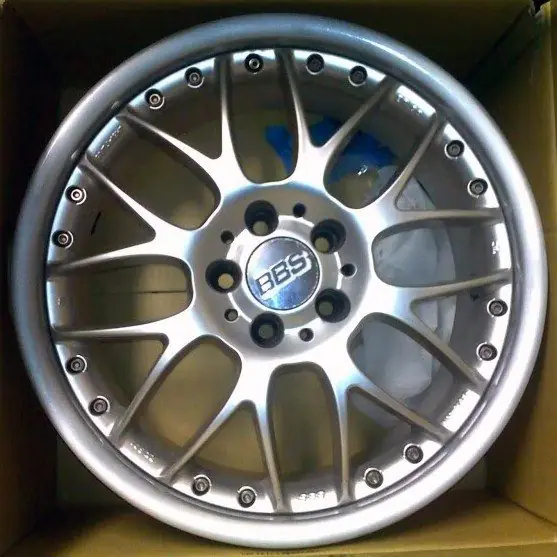
Cast cross-spoke, 1990s
BBS RX wheels
The RX is a one-piece cast mesh wheel from the period when BBS was bringing its racing look to ordinary road cars. It is a common find on older European cars and a practical choice for period builds.
- Construction
- One-piece cast aluminium
- Design
- Cross-spoke mesh face
- Era
- 1990s; production details varied by market
- Typical cars
- European cars of the period, VW, Audi and BMW among them
- Sizes
- Smaller diameters typical of the era; exact sizes varied by market
- Lip
- None; rim and face cast as one piece
Background
BBS began in 1970 in Schiltach, Germany, founded by Heinrich Baumgartner and Klaus Brand. Its early fame came from motorsport, and its multi-piece cross-spoke wheels became a common sight on race cars through the 1970s and 1980s. The road-going RS carried that look to private owners, but a three-piece wheel was expensive to make and to keep.
Through the late 1980s and 1990s BBS offered several one-piece cast wheels that kept the mesh pattern while costing less. The RX belongs to that family, along with designs such as the RF. These wheels were sold in the aftermarket, and BBS's close relationships with German car makers meant cast mesh designs also reached factory option lists in various forms. For a brief account of the company, see BBS history.
Construction
The RX is cast in a single piece. Spokes, face and barrel are one part, with no bolts, seals or separate lip. That makes it simple to own: nothing can leak at a joint, and refinishing is a single operation.
A cast mesh wheel carries extra material at the points where the spokes cross, because casting cannot match the grain structure of forging. The RX is therefore heavier than a forged wheel of the same size would be, although for most road cars of its era the difference is unimportant. The forged versus cast guide explains the trade-offs.
The face of the RX is relatively flat. If you want the stepped lip of a classic multi-piece BBS, look at the RS or the two-piece LM instead.
Sizes and fitment
Sizes for the RX followed the cars it was made for, so most are small by current standards. Widths, offsets and bolt patterns varied by market and application. Because so many different cars used them, you will find RXs drilled for several bolt patterns. Always read the markings on the wheel itself.
When fitting RXs to a car they were not designed for, the usual problems are brake caliper clearance, centre bore size and offset. A wheel that bolts on may still touch the caliper or sit too far in or out. The guide to fitment and offset explains how to work this out.
- Check the PCD and the centre bore. Use hub-centric rings if the bore is larger than the hub.
- Use the correct seat type for the wheel nuts or bolts.
- Trial fit with the brakes in place before buying tyres.
Identifying a genuine RX
Cast mesh wheels have been copied for decades, so take care with identification. Genuine BBS wheels carry factory markings on the back of the face or on the inner spokes. These normally show the BBS name, a design or part reference, the size and production or approval marks. Formats changed over time, so no single code proves authenticity, but clear and crisp markings are a good sign.
Centre caps are easy to swap and do not prove much. Look at the finish of the spoke crossings, the sharpness of the casting and the consistency between wheels. If you can compare weight with a known genuine wheel of the same size, do so.
The RX and other BBS cast mesh wheels look alike from a distance. The differences are in spoke count and shape and in the edge of the face. If a seller cannot say which model they have, check the markings or compare against clear photos. Our identification guide has more detail.
Buying a used set
Most RXs on the market are decades old. Cosmetic wear is normal. Structural damage is the thing to avoid.
- Inspect the rim edge for kerb damage and flat spots.
- Look for cracks at the spoke roots, around stud holes and on the inner barrel.
- Ask about straightening or welding.
- Check for paint bubbling, which often hides corrosion.
- Have each wheel checked for runout on a balancer.
Odd wheels with a different finish may have been replaced or refurbished separately. Confirm they are the same model and size. The used buying guide lists further checks.
Refurbishment
As a one-piece wheel, the RX is easy for a good refinisher. The usual process is stripping, repair of minor damage, priming, painting or powder coating, and lacquer. The mesh face needs a careful hand, because heavy coats fill the corners and soften the edges. Silver is the most common original colour and suits a period car.
Wheels with cracks or major distortion need a professional assessment before any repair. Some damage is not worth fixing on a wheel that carries a car.
Care
The mesh pattern holds dirt and brake dust at every crossing. Clean with a soft brush and a pH-neutral cleaner, rinse well and dry. Strong acid cleaners can damage older lacquer and should be avoided. A wheel sealant after cleaning makes the next wash quicker. The care guide has more suggestions.
After fitting, check torque and recheck after a short drive. Clean hub faces before mounting, as corrosion between hub and wheel can cause vibration.
RX or something else?
Choose an RX if you want a period-correct BBS mesh look on a 1990s car without the upkeep of a multi-piece wheel. If you want a deeper lip, the RS or LM are better options, at a higher price. For a larger, more modern cast mesh wheel, the BBS range has later designs; the catalogue index lists them.
If a wheel has a crack anywhere near the spoke roots or stud holes, treat it as unsafe until an expert has looked at it.
Living with an older cast wheel
An RX bought today has usually been on more than one car. That history matters more than the badge. Wheels that spent years on a daily driver in a salted climate often have corrosion on the inner barrel and around the stud holes, even when the face looks clean. Wheels that sat in storage may look good but can have old tyres that hide flat spots. Ask where the set has been and how it was used.
Tyre choice can also be a constraint. Some of the smaller sizes the RX was made in now have fewer tyre options than they once did. Before you commit to a set, check that a tyre you are happy with is still made in that size and load rating. Ask your fitter to use a machine that will not mark the face, since a mesh wheel scratches easily at the spoke ends.
Balancing can take more weights than on a modern wheel, particularly if the wheels have been straightened in the past. A good balancer will show how much runout there is, and that number tells you more about the wheel than its appearance. Small amounts are normal on old wheels. Large amounts suggest a bend that may need professional straightening or may make the wheel unsuitable.
Finally, wheel bolts and nuts matter. Many cars of the period used specific seat types and lengths. Using the wrong type can stop the wheel seating properly and, in the worst case, let it come loose. If you are moving RXs from one car to another, check the fasteners as carefully as the wheels.
Values and what affects them
Prices for used RXs depend mostly on condition, completeness and size. A matched set of four in the same finish, with no repairs and good markings, is worth more than a set assembled from different sources. Popular bolt patterns sell faster. Wider sizes, which suit modified cars, tend to attract more interest than narrow ones. Refinished sets can be worth as much as original ones if the work is good, but poor refinishing with thick coats or overspray reduces value.
Centre caps in good condition also help, since buyers like a complete set. Missing caps can be replaced, but matching the correct period style can take time.
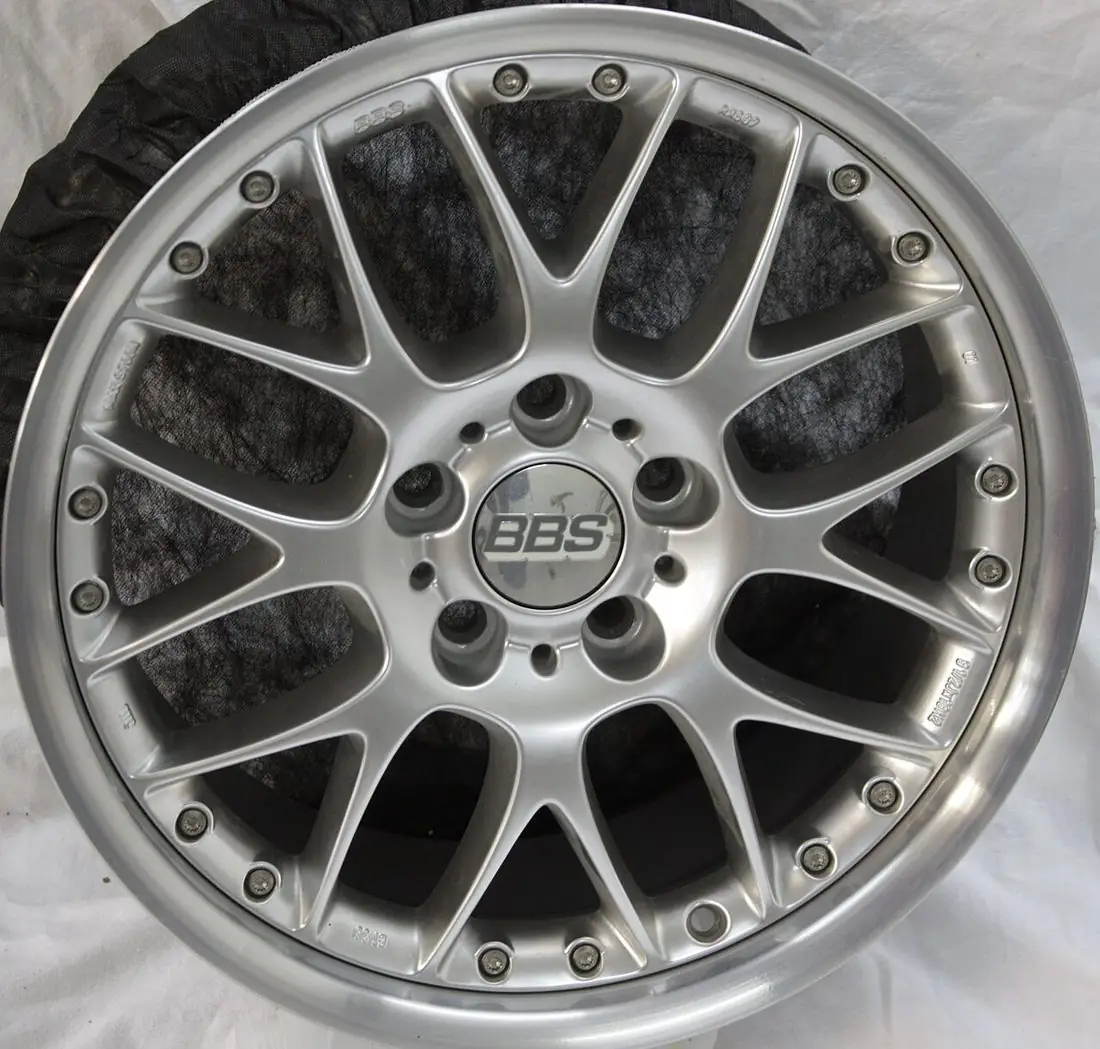
Photographed models
1 of 60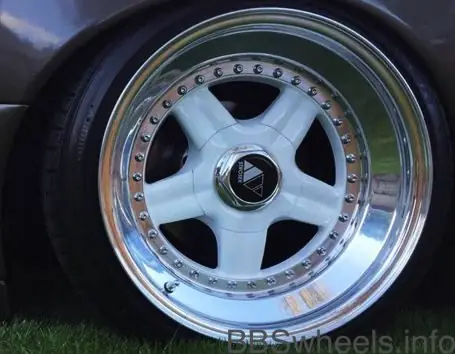


All BBS RX models
60 models| Model | Size | PCD | Offset | CB (mm) | Fitment |
|---|---|---|---|---|---|
| BBS RX001 | 8x17" | 5x120 | ET35 | — | — |
| BBS RX004 | 7x16" | 5x114.3 | ET45 | 60 | — |
| BBS RX006 | 16 | 5x114.3 | — | — | — |
| BBS RX009 | 8x16" | 5x114.3 | ET30 | 60 | — |
| BBS RX010 | 9x16" | 5x114.3 | ET41 | 60 | — |
| BBS RX011 | 7x16" | 5x114.3 | ET33 | — | — |
| BBS RX012 | 8x16" | 5x114.3 | ET33 | — | — |
| BBS RX014 | 8x16" | 5x114.3 | ET45 | — | — |
| BBS RX015 | 9x16" | 5x114.3 | ET58 | — | — |
| BBS RX016 | 8x16" | 5x114.3 | ET7 | — | — |
| BBS RX017 | 9x16" | 5x114.3 | ET20 | — | — |
| BBS RX018 | 8x17" | 5x130 | ET18 | — | Porsche |
| BBS RX019 | 10x17" | 5x130 | ET11 | — | Porsche |
| BBS RX021 | 8x18" | 5x120 | ET35 | — | — |
| BBS RX034 | 8x17" | 5x114.3 | ET30 | 60 | — |
| BBS RX036 | 7x17" | 5x114.3 | ET35 | — | — |
| BBS RX037 | 8x17" | 5x114.3 | ET35 | — | — |
| BBS RX041 | 8x17" | 5x114.3 | ET45 | 60 | — |
| BBS RX042 | 9x17" | 5x114.3 | ET50 | 60 | — |
| BBS RX044 | 8x17" | 5x130 | ET44 | — | Porsche |
| BBS RX055 | 8x17" | 5x120 | ET35 | 72.5 | BMW |
| BBS RX056 | 9x17" | 5x120 | ET35 | 72.5 | BMW |
| BBS RX057 | 9x17" | 5x120 | ET8 | 72.5 | BMW |
| BBS RX058 | 10x17" | 5x120 | ET11 | 72.5 | BMW |
| BBS RX059 | 8x17" | 5x130 | ET24 | — | Porsche |
| BBS RX063 | 8.5x17" | 5x130 | ET56 | — | — |
| BBS RX064 | 9.5x17" | 5x130 | ET52 | — | — |
Where a model has several size versions, the first is shown here; the model page lists them all.
Also catalogued without recorded specs
Frequently asked questions
Is the BBS RX a forged wheel?
No, the RX is a one-piece cast aluminium wheel.
What is the difference between the RX and RF?
Both are one-piece cast BBS mesh wheels from a similar period. They differ in spoke details and face design. Check the markings to confirm which you have.
Do RX wheels fit modern cars?
Sometimes. Check the bolt pattern, centre bore, offset and brake clearance first. Larger modern brakes often foul smaller older wheels.
How do I clean mesh wheels?
Use a soft brush and a pH-neutral wheel cleaner, rinse thoroughly and dry. Avoid strong acid cleaners.
What should I check first on a used RX set?
Look at the inner barrel and stud holes for corrosion and cracks, check the rim edge for flat spots, and have each wheel checked for runout on a balancer. Then confirm the markings show the size and bolt pattern you need.