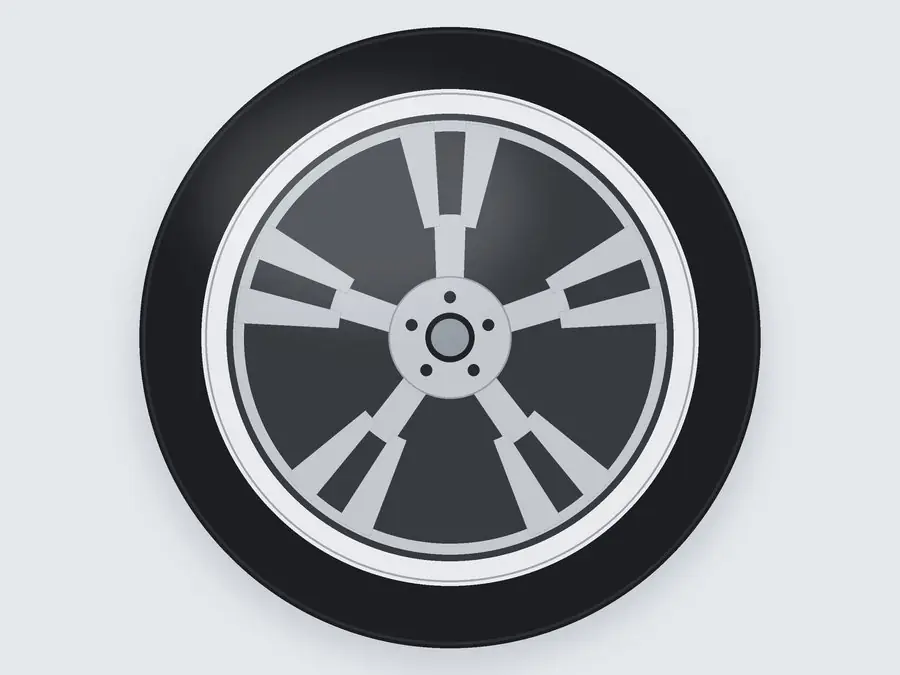
Forged one-piece, UK
BBS FI forged wheels in the UK
The BBS FI is a one-piece forged wheel made for powerful sports cars and closely linked with the Porsche 911 and Cayman. Since the deeper FI-R arrived, used FI sets have become better value, and that's how most UK buyers find them. The main questions are whether a set from another model will fit your car, who should look after centre-lock versions, how to keep the wheels through winter and whether a spare is worth having.
- Construction
- One-piece forged aluminium
- Era
- Introduced in the 2010s
- Spoke style
- Twin spokes forming a Y
- Typical cars
- Porsche, Ferrari, high-performance coupes
- Successor
- FI-R
BBS FI wheels in the UK
Used sets and model matching
Most FI sets started out on a Porsche, often with staggered widths. A set advertised for one model may not suit another with the same bolt pattern, so read size and offset from each wheel's markings and compare them with your original wheels. Porsche owners' clubs, model forums, PistonHeads and eBay UK are the usual hunting grounds. A set bought from the EU may add import VAT and handling charges, and any shipped set should be checked for freight damage.
Centre-lock care
Centre-lock FI wheels need the car maker's procedure: the right grease, a high torque figure and often a dedicated tool. Use a workshop that works on these cars all the time, and have the drive pin holes and nut seat checked for wear or galling whenever the wheels come off. Bolt-on versions need the correct bolt length and seat for the hub.
MOT and insurance
The UK has no approval scheme for aftermarket wheels. The MOT checks wheel condition, missing or loose fixings, tyre tread and fouling, and a set that matches the car's original sizes is the straightforward case. Large brakes may need specific spacers or bolts, so test-fit before tyres go on, and remember spacers change the scrub radius. Declare the wheels to your insurer. See the fitment guide.
Brake dust and winter
Steel brakes coat these wheels fast, and in winter the dust mixes with road salt into a grime that eats at the finish. Clean regularly with a pH-neutral product once the wheels have cooled, and avoid brush car washes, which scuff the lip. Plenty of owners store their FI set from late autumn and run winter wheels and tyres. A heavy run-flat tyre can cancel much of the weight a forged wheel saves, so choose tyres and wheels together. More in caring for BBS wheels.
Why a spare helps
A forged one-piece wheel can't be rebuilt from parts. If one is damaged beyond repair, you need an exact match in size, offset and finish, and finishes changed over the model's life. A deep pothole can end a wheel's life, and a matching replacement can take months to find, so a spare bought with the set saves that search. Inspection points are in the used buying guide, and the deeper successor has its own page: BBS FI-R.
Background
BBS developed the FI for owners of high-powered cars who wanted a wheel lighter than the factory option with a similar or greater load rating. Porsche owners took to it quickly, and the wheel became a familiar sight on 911 and Cayman models as well as on other exotic coupes. The FI was later developed into the FI-R, which uses a deeper face.
Construction
The FI is forged from aluminium in one piece and then CNC machined. Paired spokes run from a compact hub to a thin rim lip, and the spoke backs are milled out. Many versions use a centre-lock style cap or are offered for cars with a real centre-lock hub, depending on market. A one-piece forged wheel needs no assembly bolts and is simpler to keep sealed than a multi-piece RS. Our page on forged and cast wheels explains why forging saves weight.
Fitment
FI sizes were matched to specific cars, often with staggered front and rear widths for rear-drive sports cars. Brake clearance on cars with large ceramic brakes needs particular care, and some fitments require specific spacers or bolts. Sizes and offsets varied by market and model year. See fitment and offset explained for the basics.
Checking an FI is genuine
Genuine FI wheels have BBS markings on the rear face with the model, size and offset, plus test marks. Centre-lock versions have hub machining and drive pin holes that match the car's centre-lock system, and these are hard for copyists to reproduce correctly. Bolt-on versions use a centre cap that sits flush in the hub. Ask for photographs of the back of each wheel and compare the spoke pockets with official images. Identifying BBS wheels explains the general markings.
Why owners choose a forged FI over factory wheels
Factory wheels on high-performance cars are often forged already, so the gain from an FI is smaller than going from a cast wheel to a forged one. Owners usually pick the FI for a combination of lower weight, a different look and BBS's long record with Porsche, which has fitted BBS-made wheels as factory equipment on several models over the years. The deeper style of the later FI-R drew some buyers away, so used FI sets can be good value.
Remember that a forged one-piece wheel is a single part. If one is damaged beyond repair, you need an exact match in size, offset and finish, and finishes change over a model's life. Buying a spare at the same time as the set is one way round this.
Weight and handling
Owners who move from heavier aftermarket wheels to the FI often report lighter steering and a more settled ride over broken surfaces. Coming from factory forged wheels, the change is smaller. Compare published weights for your exact size before deciding what you will gain.
The gain also depends on tyre choice. A heavy run-flat tyre can cancel much of the weight saved by a forged wheel, so consider both together when planning a change.
Things to check on a used set
Many FI sets have spent their life on Porsche 911s and similar cars, often with staggered sizes. Check that front and rear widths match your car, since a set listed for one model may not suit another even with the same bolt pattern. On centre-lock wheels, inspect the drive pin holes and the nut seat for wear or galling, which shows the wheels were fitted without proper lubrication or torque. Low-profile tyres leave the lip exposed, so kerb rash on the outer edge is common and usually cosmetic. Cracks on the inner barrel are rarer but more serious.
Fitting and looking after FI wheels
Centre-lock wheels need the car maker's procedure: correct grease on the threads and seat, a high torque figure and often a specific tool. Have this done by someone who works on these cars regularly. Bolt-on versions need the right bolt length and seat for the hub. Large carbon-ceramic brakes create less visible dust, while steel brakes on these cars can coat the wheels quickly, so clean regularly with a pH-neutral product. Avoid automatic car washes with brushes, which tend to scuff the lip.
Frequently asked questions
Will a used FI set from another Porsche fit my car?
Not always. FI sizes were matched to specific cars, often with staggered widths, so a set from one model may not suit another with the same bolt pattern. Read size and offset from each wheel and compare them with your car's original wheels.
Who should fit centre-lock FI wheels in the UK?
A workshop that regularly handles centre-lock cars. The job needs the correct grease, a high torque figure and often a special tool. Ask them to check the drive pin holes and nut seat whenever the wheels come off.
Should I keep my FI wheels on through winter?
Many owners don't. Salt and brake dust together attack the finish, and potholes are a real risk to a wheel that can't be rebuilt. Storing the FI set clean and dry and running winter wheels avoids both.
Is the BBS FI forged?
Yes, it is a one-piece forged aluminium wheel.
What replaced the FI?
The FI-R developed the design further with a deeper, more concave face.
Is the FI only for Porsche?
No. It was strongly associated with Porsche but fitments were offered for other high-performance cars too.
Are centre-lock versions available?
Some markets offered fitments for cars with centre-lock hubs. Check with an authorised dealer for your specific car.