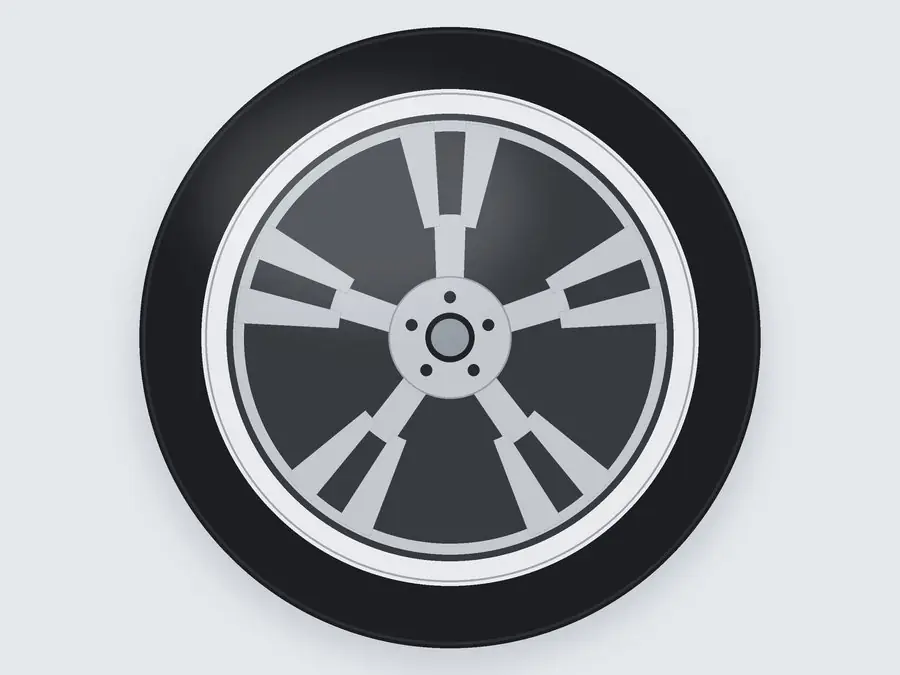
Forged one-piece, AU
BBS FI forged wheels in Australia
The BBS FI is a one-piece forged wheel developed for high-powered sports cars and strongly associated with the Porsche 911 and Cayman. Since the deeper FI-R arrived, used FI sets can be good value, and Australian buyers mostly meet them second-hand. The questions here are whether a set from another model suits your car, who should handle centre-lock versions, what the state rules require and whether to buy a spare with the set.
- Construction
- One-piece forged aluminium
- Era
- Introduced in the 2010s
- Spoke style
- Twin spokes forming a Y
- Typical cars
- Porsche, Ferrari, high-performance coupes
- Successor
- FI-R
BBS FI wheels in Australia
Used sets and model matching
Many FI sets have spent their life on a Porsche, often with staggered widths front and rear. A set listed for one model may not suit another even with the same bolt pattern, so read the size and offset from each wheel's rear markings and compare them with your car's placard and original wheels. Porsche clubs, model forums, Facebook Marketplace and eBay Australia are the usual places to look. Check sets imported from Europe, Japan or the US for freight damage on arrival.
Centre-lock care
Centre-lock FI wheels need the car maker's procedure: the correct grease, a high torque figure and often a specific tool. Use a workshop that works on these cars regularly, and ask for the drive pin holes and nut seat to be checked for wear or galling whenever the wheels come off. Bolt-on versions need the right bolt length and seat for the hub.
Registration and fitment
Wheel changes on an Australian registered car are covered by state roadworthy and registration rules, with VSB 14 section LA (the National Code of Practice for Light Vehicle Construction and Modification) as national guidance. A set that matches the car's original sizes raises fewer questions than one that changes width or offset. Check with your state transport authority (for example Transport for NSW, VicRoads or TMR in Queensland) and a certifier where the change is significant. Large brakes may need specific spacers or bolts, so test-fit before mounting tyres. See the fitment guide.
Heat, dust and long drives
Steel brakes on these cars coat the wheels quickly, and dust baked on by hot summer driving is harder to shift. Clean regularly with a pH-neutral product once the wheels have cooled, and skip brush car washes, which scuff the lip. A heavy run-flat tyre can cancel much of the weight a forged wheel saves, so plan tyres and wheels together. More care tips are in caring for BBS wheels.
Why a spare makes sense
A forged one-piece wheel is a single part. If one is damaged beyond repair, you need an exact match in size, offset and finish, and finishes change over a model's life. Finding that wheel locally can take a long time, so buying a spare with the set saves sourcing one from overseas later. Inspection points are in the used buying guide, and the deeper successor has its own page: BBS FI-R.
Background
BBS developed the FI for owners of high-powered cars who wanted a wheel lighter than the factory option with a similar or greater load rating. Porsche owners took to it quickly, and the wheel became a familiar sight on 911 and Cayman models as well as on other exotic coupes. The FI was later developed into the FI-R, which uses a deeper face.
Construction
The FI is forged from aluminium in one piece and then CNC machined. Paired spokes run from a compact hub to a thin rim lip, and the spoke backs are milled out. Many versions use a centre-lock style cap or are offered for cars with a real centre-lock hub, depending on market. A one-piece forged wheel needs no assembly bolts and is simpler to keep sealed than a multi-piece RS. Our page on forged and cast wheels explains why forging saves weight.
Fitment
FI sizes were matched to specific cars, often with staggered front and rear widths for rear-drive sports cars. Brake clearance on cars with large ceramic brakes needs particular care, and some fitments require specific spacers or bolts. Sizes and offsets varied by market and model year. See fitment and offset explained for the basics.
Checking an FI is genuine
Genuine FI wheels have BBS markings on the rear face with the model, size and offset, plus test marks. Centre-lock versions have hub machining and drive pin holes that match the car's centre-lock system, and these are hard for copyists to reproduce correctly. Bolt-on versions use a centre cap that sits flush in the hub. Ask for photographs of the back of each wheel and compare the spoke pockets with official images. Identifying BBS wheels explains the general markings.
Why owners choose a forged FI over factory wheels
Factory wheels on high-performance cars are often forged already, so the gain from an FI is smaller than going from a cast wheel to a forged one. Owners usually pick the FI for a combination of lower weight, a different look and BBS's long record with Porsche, which has fitted BBS-made wheels as factory equipment on several models over the years. The deeper style of the later FI-R drew some buyers away, so used FI sets can be good value.
Remember that a forged one-piece wheel is a single part. If one is damaged beyond repair, you need an exact match in size, offset and finish, and finishes change over a model's life. Buying a spare at the same time as the set is one way round this.
Weight and handling
Owners who move from heavier aftermarket wheels to the FI often report lighter steering and a more settled ride over broken surfaces. Coming from factory forged wheels, the change is smaller. Compare published weights for your exact size before deciding what you will gain.
The gain also depends on tyre choice. A heavy run-flat tyre can cancel much of the weight saved by a forged wheel, so consider both together when planning a change.
Things to check on a used set
Many FI sets have spent their life on Porsche 911s and similar cars, often with staggered sizes. Check that front and rear widths match your car, since a set listed for one model may not suit another even with the same bolt pattern. On centre-lock wheels, inspect the drive pin holes and the nut seat for wear or galling, which shows the wheels were fitted without proper lubrication or torque. Low-profile tyres leave the lip exposed, so kerb rash on the outer edge is common and usually cosmetic. Cracks on the inner barrel are rarer but more serious.
Fitting and looking after FI wheels
Centre-lock wheels need the car maker's procedure: correct grease on the threads and seat, a high torque figure and often a specific tool. Have this done by someone who works on these cars regularly. Bolt-on versions need the right bolt length and seat for the hub. Large carbon-ceramic brakes create less visible dust, while steel brakes on these cars can coat the wheels quickly, so clean regularly with a pH-neutral product. Avoid automatic car washes with brushes, which tend to scuff the lip.
Frequently asked questions
Will a used FI set from another Porsche fit my car?
Not necessarily. FI sizes were matched to specific cars, often with staggered front and rear widths, so a set listed for one model may not suit another even with the same bolt pattern. Read size and offset from each wheel's markings and compare them with your car's original wheels and tyre placard.
Who should fit centre-lock FI wheels in Australia?
A workshop that regularly works on cars with centre-lock hubs. The procedure needs the correct grease on the threads and seat, a high torque figure and often a specific tool. Ask the workshop to check the drive pin holes and nut seat for wear whenever the wheels come off.
Is it worth buying a spare FI wheel?
Often, yes. A forged one-piece wheel cannot be rebuilt from parts, so a wheel damaged beyond repair needs an exact match in size, offset and finish. Finishes change over a model's life, and a matching wheel can be slow to find in Australia, so a spare bought with the set avoids that search.
Is the BBS FI forged?
Yes, it is a one-piece forged aluminium wheel.
What replaced the FI?
The FI-R developed the design further with a deeper, more concave face.
Is the FI only for Porsche?
No. It was strongly associated with Porsche but fitments were offered for other high-performance cars too.
Are centre-lock versions available?
Some markets offered fitments for cars with centre-lock hubs. Check with an authorised dealer for your specific car.