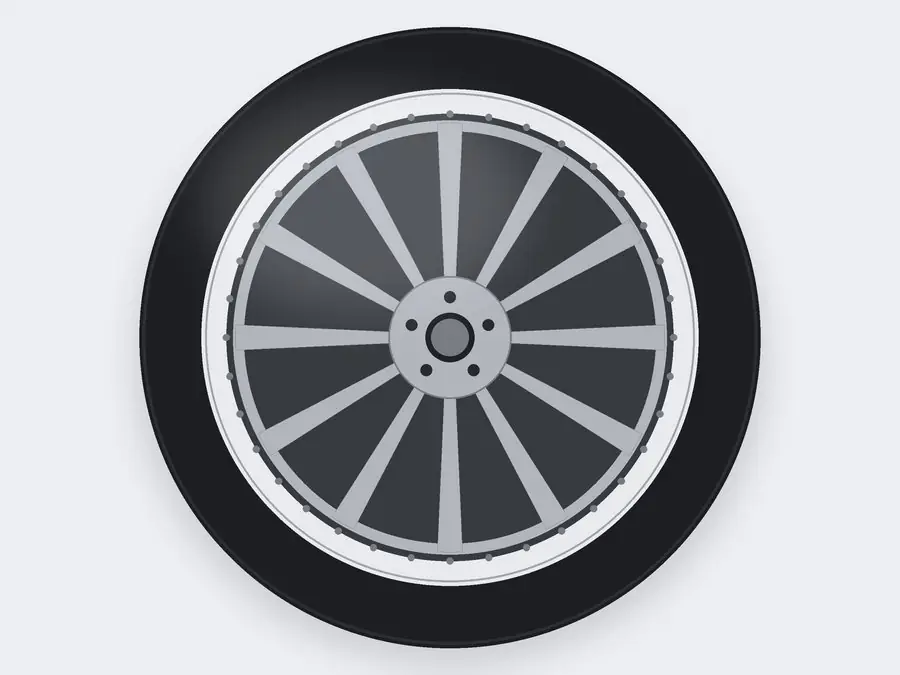
RP in the UK
BBS RP wheels for small cars in the UK
The RP is the small-car member of the 1990s BBS cast family, sized for light hatchbacks such as the Volkswagen Polo and earlier Golf. Those cars sold well in Britain, so RPs still turn up on retro hatches and the odd Japanese small car.
- Construction
- One-piece cast aluminium
- Era
- 1990s
- Sizes
- Small diameters; varied by market
- Typical cars
- Small hatchbacks and city cars
The BBS RP in the UK
Polos and Golfs of the 1990s were everyday cars in Britain, and a fair few RP sets survive on retro hatches or in garages. They show up on eBay UK, Gumtree and Facebook Marketplace, at VW shows and club events, and occasionally from Japan, where small cars on small wheels were common. Whatever the source, check the back of the centre for the RP code. Small four-stud wheels were copied a lot, and a BBS centre cap proves nothing. Identifying BBS wheels explains the marks.
Check the bolt pattern first
The cars RPs were made for mostly used four-stud patterns, and those differ between makers, so a set from one car may not fit another. For a set bought from Japan or the EU, confirm the pattern and centre bore before you pay for shipping, and allow for possible import VAT and handling charges on EU orders. The fitment and offset guide covers the checks.
Tyres in small sizes
Some small RP sizes have a narrow choice of quality tyres now. Ask a tyre fitter what they can get in the exact size before committing to a set for a car you use daily, and choose a load and speed rating that suits the car.
Salt, potholes and old paint
Years of salted winter roads and town brake dust are hard on old paint. Look for bubbling around the bolt holes and at the lip, and spin each wheel on a balancer to find bends from kerbs and potholes. A cracked cast wheel should not be repaired. Our care guide covers cleaning and storage.
MOT and insurance
There is no approval scheme for aftermarket wheels in the UK. The MOT checks wheels for cracks and distortion, bolts for security, and tyres for tread and clearance, which matters if the car is lowered. Tell your insurer about the wheels. Related cast wheels are the RG and RC.
Background
BBS sold several cast one-piece wheels in the 1990s, each aimed at different cars. The RP was the small-car member of that group, sitting alongside the RG and below the multi-piece RS in price.
Precise production years and the full size list are hard to confirm, and they varied by market. The wheel was common on European small cars of the 1990s, and many sets survive, often refinished.
Design and construction
The RP is cast in one piece, with no rim bolts and a BBS centre cap clipped or screwed into the middle. Face designs on small BBS wheels of this period varied, so use the markings on the back, not the look of the face, to confirm you have an RP.
Small cast wheels are fairly light because there is less metal in them. A set of RPs is not a performance upgrade in the way forged wheels are, but they suit the cars they were made for and keep tyre costs low.
Typical cars and fitment
Expect to see RPs on small Volkswagen models such as the Polo and the earlier Golf, on similar compacts from other European makers, and on some Japanese small cars. Four-stud patterns were common on these cars, and the bolt pattern is the first thing to check. A set made for one car's pattern will not fit another.
Offsets were chosen to suit narrow track widths. Fitting these wheels to a different car may need spacers or hub rings, and in some cases they will not fit at all. Our fitment guide explains how to work it out.
Markings and identification
On an RP the markings are cast into the back of the centre, a small area on a small wheel, so you may need a torch and a clean cloth to read them. Look for the BBS logo, the part code, the size and the ET offset. Wheels sold in Germany may also carry TÜV or KBA references. Sets supplied through car makers sometimes carry the car maker's part number.
Four-stud wheels in small sizes were copied by many firms. If the RP code is not on the back, treat the wheel as unconfirmed whatever cap is fitted. See identifying BBS wheels.
Buying and restoring
Small wheels from small cars have often lived hard lives, with kerbs, potholes and winter salt. Look for corrosion under the paint around the bolt holes and the rim lip, and run each wheel on a balancer to check for bends. A crack in a cast wheel cannot be safely repaired.
Tyre choice is worth checking too. Some small sizes now have a limited choice of quality tyres, so see what is available before buying wheels for a car you plan to drive often. The fitment guide helps if the wheels came off a different car.
Running RPs today
Many RP owners keep them on period cars, where the small diameter and tall tyre sidewall match the original ride. On these cars the wheel looks right and gives a comfortable, quiet ride. If you plan to lower the car or fit wider tyres, check that the tyre still sits within the arch at full compression, since small wheels are often paired with soft, older suspension that moves a lot.
Wheel bolts and nuts matter too. Older Volkswagen and other European cars used ball-seat bolts, while many aftermarket wheels used conical seats. Fitting the wrong seat type means the wheel cannot clamp properly. Check the seat shape in each bolt hole and match the bolts to it.
Fitting new tyres
Small rims can be awkward on modern tyre machines built for large wheels. Ask the fitter to take care with the bead and to use plastic protectors on the clamps, since old paint chips easily. New valves are worth fitting at the same time, and so are new balance weights of the stick-on type if the outer face is freshly painted.
Care
Clean often, especially in winter. Small cars tend to be used in towns, and town driving means brake dust and road salt. A soft brush and a pH-neutral cleaner will keep the wheels clean without wearing the paint. See caring for BBS wheels.
Frequently asked questions
Which cars in the UK can use BBS RP wheels?
RPs were made mainly for small hatchbacks, with Volkswagen models such as the Polo and earlier Golf among the most common. Some suit Japanese small cars. Bolt patterns were usually four-stud and vary between makers, so match the markings on the wheel to your car.
Can I get tyres for small BBS RP sizes in the UK?
Usually, but the choice in some sizes is limited. Ask a tyre fitter what they can supply in the exact size, with a suitable load and speed rating, before you buy the wheels.
How do I know an RP for sale is genuine?
Look on the back of the centre for the BBS logo, the RP part code, the size and the ET offset. A torch and a clean cloth help on these small wheels. If the code is missing or unreadable, treat the wheel as unconfirmed whatever centre cap it wears.
Is the BBS RP a forged wheel?
No. It is a one-piece cast aluminium wheel.
What cars did the RP fit?
It was made mainly for small hatchbacks and compact cars, with Volkswagen models among the most common.
How can I check that an RP is genuine?
Look at the back of the centre for the BBS logo, the part code, the size and offset, and approval marks. Blank or blurred backs suggest a copy.
Can RP wheels fit a modern car?
Sometimes, but bolt pattern, centre bore, offset and brake clearance all need checking. Many modern cars have larger brakes than these small wheels can clear.