RG in the UK
BBS RG cast mesh wheels in the UK
The RG put the BBS cross-spoke look on a single casting and sold in huge numbers through the 1990s, as an aftermarket wheel and as original equipment. In Britain they still turn up on Golfs, E30 and E36 BMWs, MX-5s and Civics of that era. Bolt pattern is the first thing to check, and decades of salted roads the second.
- Construction
- One-piece cast aluminium
- Design
- Cross-spoke mesh
- Era
- 1990s to 2000s
- Sizes
- Mostly 15 to 17 inch; varied by market
- Successor
- RG-R (forged)
The BBS RG in the UK
RGs were fitted to Volkswagen Golfs and Jettas, BMW 3 Series of the E30 and E36 generations, Mercedes-Benz compacts and saloons, and Japanese cars including the Honda Civic and Mazda MX-5. All of those were sold here in quantity, and Japanese imports brought more sets in. The catch is that RGs came in several bolt patterns, so a set from an E30 will not bolt onto a Golf, and an MX-5 set fits neither.
Finding a set
Used RGs are listed on eBay UK, Gumtree, Facebook Marketplace and PistonHeads, and BMW, VW and MX-5 owners' clubs are worth asking. Shows such as Japfest and autojumbles are good hunting grounds too. Sets bought from the EU may carry import VAT and handling charges since Brexit. Check the part code on the back includes the RG designation, because 1990s mesh copies are still in circulation. Identifying BBS wheels shows what the genuine marks look like.
Mesh faces after British winters
Every crossing on a mesh wheel holds dirt, brake dust and, in winter, salt. Once the paint chips, corrosion spreads under the lacquer, so look for bubbling where the spokes cross and around the bolt holes. Refinishing a full mesh face takes time, so get a price before you buy. See caring for BBS wheels and the refurbishing guide.
Potholes and tyre choice
RGs in 15 to 17 inch sizes leave room for a proper sidewall, which takes the edge off potholes and broken tarmac better than a thin low-profile tyre and protects the rim at the same time. Check the bolt seat type before buying new bolts, as cars of this period used both ball and conical seats.
MOT and insurance
There is no approval scheme for aftermarket wheels in the UK. The MOT checks wheels for cracks and distortion, bolts for security, and tyres for tread and fouling. Tell your insurer about the wheels, as undeclared modifications can void cover. The offset guide helps compare sizes. For a forged wheel with a similar look, see the RG-R.
History
By the late 1980s the RS had made the BBS cross-spoke pattern famous, but a three-piece wheel was expensive to make and to buy. The RG put a similar face on a single casting. It kept the visual identity while dropping the assembly bolts, the separate lip and much of the cost.
The wheel sold in large numbers through the 1990s. BBS also supplied RG-style wheels to car makers as factory or dealer options, and the design became one of the most familiar BBS shapes of that decade. Our history of BBS places it alongside the other wheels of the period.
Design and construction
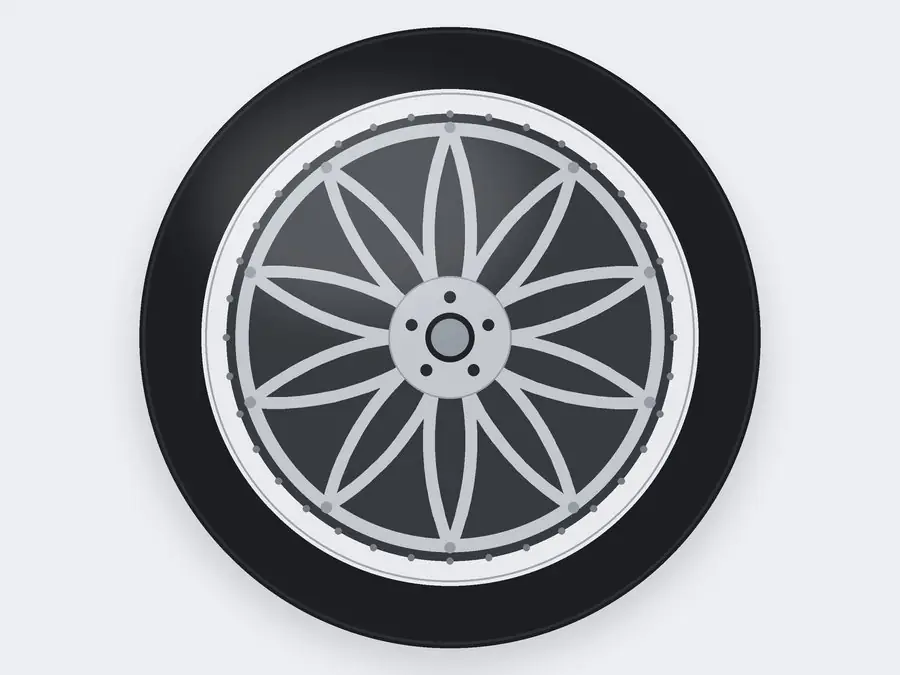
The RG is a low-pressure cast wheel. Molten aluminium is fed into a mould, cooled and then heat treated and machined. The face has the interlaced spokes of the classic mesh design, with a central cap and visible lug holes. There are no rim bolts around the edge, which is the quickest way to tell it from an RS or RS II at a glance.
A cast mesh needs more metal than a forged one to reach the same strength, so the RG is heavier than forged wheels of the same size. For road use this is rarely a problem. If weight matters most, the forged RG-R is the modern answer.
Typical cars
RG wheels were common on Volkswagen Golf and Jetta models, BMW 3 Series of the E30 and E36 era, Mercedes-Benz compacts and saloons, and Japanese cars such as the Honda Civic and Mazda MX-5. Fitment was produced in several bolt patterns, so a set from one car will not always bolt onto another.
Diameters were mostly in the 15 to 17 inch range, which suits these older cars and keeps tyre sidewalls generous. Sizes and offsets varied by market and by the car the wheel was made for.
Markings and identification
RG markings are cast into the back of the centre. You should find the BBS logo, a part code that includes the RG designation, the size and the ET offset. Wheels sold in Germany often carry TÜV or KBA references, and many have a small date wheel showing when the casting was made. RGs supplied to car makers may also carry that maker's own part number.
The mesh face was copied by many other firms in the 1990s, and plenty of those copies are still around. If the back is blank, or the logo and numbers are shallow and blurred, be cautious. A lost centre cap is common and does not make a wheel fake, but a BBS cap on a wheel with no markings proves nothing. Our identification guide shows typical marks.
Buying and restoring
Most RG sets on the market are twenty or thirty years old and have been refinished at least once. Check the crossing points of the mesh, where dirt and salt collect and corrosion starts under the paint. Bubbling paint is the early sign. Ask whether the wheels have been straightened; cast aluminium can be repaired by a good shop, but a crack in a cast wheel is a reason to walk away.
Stripping and repainting a full mesh takes many hours, so an inexpensive set in poor condition can cost more to restore than a good one. Fitment is the other trap. An RG made for an E30 BMW will not bolt straight onto a Golf. Read our offset guide before buying for a different car.
Running RGs today
On the older cars they were made for, RGs give a period look and leave room for a tyre with a decent sidewall, which helps ride comfort on rough roads. Check the bolt seat type before fitting new bolts, since cars of this era used both ball and conical seats.
Care
Mesh wheels collect brake dust in the corners where spokes cross. A soft detailing brush and a pH-neutral cleaner reach these areas without damaging the paint. Dry the wheels after washing in winter so salt does not sit in the joints. More tips are in caring for BBS wheels.
Frequently asked questions
Which cars suit BBS RG wheels in the UK?
The RG was made for cars sold widely here, including the VW Golf and Jetta, BMW E30 and E36 3 Series, Mercedes-Benz compacts, Honda Civic and Mazda MX-5. Each size was made for one bolt pattern and centre bore, so check the wheel markings against your car before buying.
Should I buy RG wheels from Japan or the EU?
Good sets do come from both. Ask for photos of the back of each wheel, check the part code, and inspect the set as soon as it arrives, since a dropped cast wheel can crack at the lip or mesh. EU purchases may add import VAT and handling charges.
Can I run RGs on a lowered car and still pass the MOT?
Yes, as long as the tyres do not foul the bodywork or suspension and the wheels are sound. Check clearance at full compression and full lock. Tell your insurer about both the wheels and the lowered suspension.
Is the BBS RG a three-piece wheel?
No. It is a one-piece cast wheel that copies the mesh look of the three-piece RS.
How do I tell an RG from an RS?
An RS has a ring of small bolts joining the centre to the rim. The RG has no rim bolts because it is cast in one piece.
Is the RG the same as the RG-R?
No. The RG-R is a later forged wheel built in Japan with a different eight-spoke cross design. The name is shared but the construction is not.
Can RG wheels be refinished?
Yes. They respond well to stripping and repainting, though the mesh takes time to prepare properly.