RG in Australia
BBS RG cast mesh wheels in Australia
The RG put the BBS cross-spoke look on a single casting, and it sold in big numbers through the 1990s, both in the aftermarket and as original equipment. Australian owners still fit them to Golfs, E30 and E36 BMWs, MX-5s and Civics from that era. The Australian notes below deal with finding a set that matches your bolt pattern, the effect of UV and salt on an old mesh face, and state rules on changing wheels, followed by the general RG reference.
- Construction
- One-piece cast aluminium
- Design
- Cross-spoke mesh
- Era
- 1990s to 2000s
- Sizes
- Mostly 15 to 17 inch; varied by market
- Successor
- RG-R (forged)
The BBS RG in Australia
RGs were common on Volkswagen Golf and Jetta models, the BMW 3 Series of the E30 and E36 era, Mercedes-Benz compacts and saloons, and Japanese cars such as the Honda Civic and Mazda MX-5. All of those were sold new in Australia, and many have survived as weekend cars, so the RG is one of the BBS wheels you are most likely to see at a local meet. RGs were made in several bolt patterns, though, so a set off an E30 will not bolt onto a Golf, and an MX-5 set will not suit either.
Finding a set
Used RGs appear on Gumtree, Facebook Marketplace and eBay Australia, and BMW, VW and MX-5 clubs are good places to ask. Sets imported from Japan also come up. Freight damage is the main risk with an imported set: check the lip and the crossing points of the mesh for fresh cracks once the wheels land. Confirm the part code on the back includes the RG designation, because mesh copies from the 1990s are still around. Identifying BBS wheels shows what genuine marks look like.
Mesh faces in Australian conditions
The crossing points of a mesh wheel trap dirt and brake dust. On a car parked outside, strong UV breaks down old clear coat, and in coastal areas salt air gets into any chip. Look for bubbling where the spokes cross and around the lug holes. Refinishing a full mesh takes hours, so price it before you buy; see caring for BBS wheels and the refurbishing guide.
Country roads and tyres
RGs in the 15 to 17 inch range leave room for a tyre with a decent sidewall. That suits rough bitumen and gravel on rural roads better than a thin low-profile tyre. Check the bolt seat type before fitting new bolts, as cars of this era used both ball and conical seats.
Rules on wheel changes
Each state applies its own roadworthy and registration rules, guided by VSB 14 section LA. If you fit RGs to a car they were not made for, check the requirements with your state transport authority (Transport for NSW, VicRoads, TMR and so on) and consult an engineer or certifier where needed. The offset guide helps compare sizes. For a forged alternative with a similar look, see the RG-R.
History
By the late 1980s the RS had made the BBS cross-spoke pattern famous, but a three-piece wheel was expensive to make and to buy. The RG put a similar face on a single casting. It kept the visual identity while dropping the assembly bolts, the separate lip and much of the cost.
The wheel sold in large numbers through the 1990s. BBS also supplied RG-style wheels to car makers as factory or dealer options, and the design became one of the most familiar BBS shapes of that decade. Our history of BBS places it alongside the other wheels of the period.
Design and construction
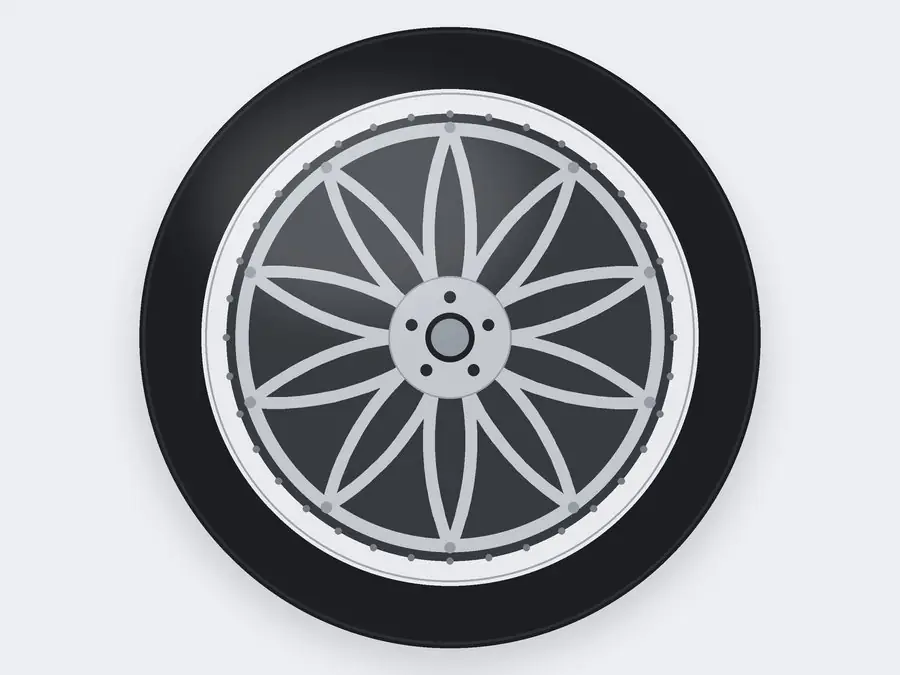
The RG is a low-pressure cast wheel. Molten aluminium is fed into a mould, cooled and then heat treated and machined. The face has the interlaced spokes of the classic mesh design, with a central cap and visible lug holes. There are no rim bolts around the edge, which is the quickest way to tell it from an RS or RS II at a glance.
A cast mesh needs more metal than a forged one to reach the same strength, so the RG is heavier than forged wheels of the same size. For road use this is rarely a problem. If weight matters most, the forged RG-R is the modern answer.
Typical cars
RG wheels were common on Volkswagen Golf and Jetta models, BMW 3 Series of the E30 and E36 era, Mercedes-Benz compacts and saloons, and Japanese cars such as the Honda Civic and Mazda MX-5. Fitment was produced in several bolt patterns, so a set from one car will not always bolt onto another.
Diameters were mostly in the 15 to 17 inch range, which suits these older cars and keeps tyre sidewalls generous. Sizes and offsets varied by market and by the car the wheel was made for.
Markings and identification
RG markings are cast into the back of the centre. You should find the BBS logo, a part code that includes the RG designation, the size and the ET offset. Wheels sold in Germany often carry TÜV or KBA references, and many have a small date wheel showing when the casting was made. RGs supplied to car makers may also carry that maker's own part number.
The mesh face was copied by many other firms in the 1990s, and plenty of those copies are still around. If the back is blank, or the logo and numbers are shallow and blurred, be cautious. A lost centre cap is common and does not make a wheel fake, but a BBS cap on a wheel with no markings proves nothing. Our identification guide shows typical marks.
Buying and restoring
Most RG sets on the market are twenty or thirty years old and have been refinished at least once. Check the crossing points of the mesh, where dirt and salt collect and corrosion starts under the paint. Bubbling paint is the early sign. Ask whether the wheels have been straightened; cast aluminium can be repaired by a good shop, but a crack in a cast wheel is a reason to walk away.
Stripping and repainting a full mesh takes many hours, so an inexpensive set in poor condition can cost more to restore than a good one. Fitment is the other trap. An RG made for an E30 BMW will not bolt straight onto a Golf. Read our offset guide before buying for a different car.
Running RGs today
On the older cars they were made for, RGs give a period look and leave room for a tyre with a decent sidewall, which helps ride comfort on rough roads. Check the bolt seat type before fitting new bolts, since cars of this era used both ball and conical seats.
Care
Mesh wheels collect brake dust in the corners where spokes cross. A soft detailing brush and a pH-neutral cleaner reach these areas without damaging the paint. Dry the wheels after washing in winter so salt does not sit in the joints. More tips are in caring for BBS wheels.
Frequently asked questions
Which Australian cars suit BBS RG wheels?
The RG was made for cars that were also sold here, including the VW Golf and Jetta, BMW E30 and E36 3 Series, Mercedes-Benz compacts, Honda Civic and Mazda MX-5. Each size was made for one bolt pattern and centre bore, so check the markings on the wheel against your car before buying.
Is it worth importing RG wheels from Japan?
Plenty of RG sets come from Japan, and some are in good condition. Freight is the risk: a dropped cast wheel can crack at the lip or the mesh. Ask for photos of the back of each wheel, check the part code, and inspect the set as soon as it arrives.
Can I run RGs on a car with lowered suspension in Australia?
Possibly, but a lowered car with different wheels may need checking under your state's roadworthy rules, which follow VSB 14 section LA. Confirm clearance at full compression and speak to your state transport authority or a certifier before you register or inspect the car.
Is the BBS RG a three-piece wheel?
No. It is a one-piece cast wheel that copies the mesh look of the three-piece RS.
How do I tell an RG from an RS?
An RS has a ring of small bolts joining the centre to the rim. The RG has no rim bolts because it is cast in one piece.
Is the RG the same as the RG-R?
No. The RG-R is a later forged wheel built in Japan with a different eight-spoke cross design. The name is shared but the construction is not.
Can RG wheels be refinished?
Yes. They respond well to stripping and repainting, though the mesh takes time to prepare properly.