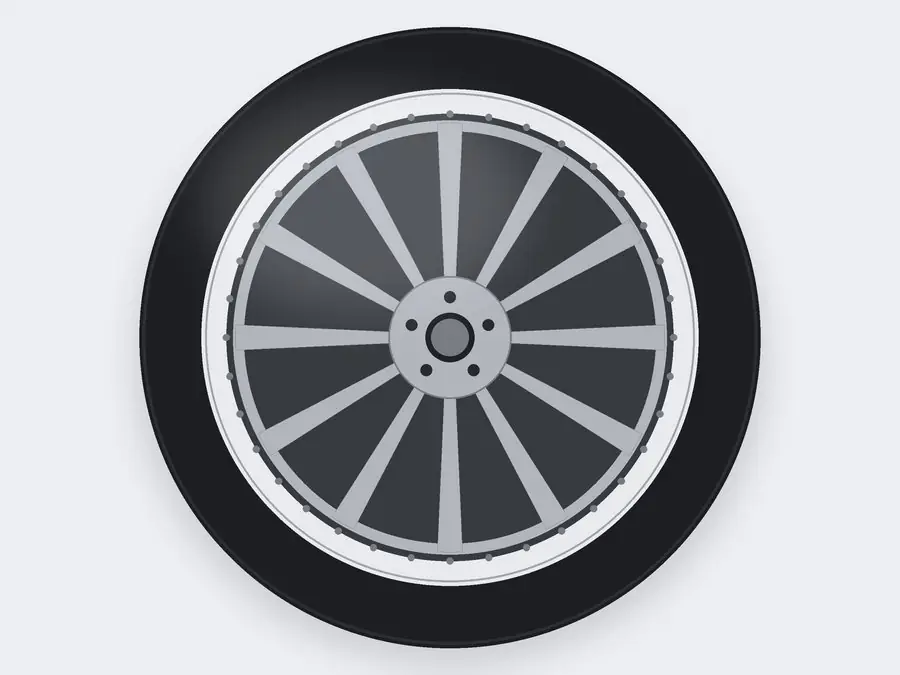
RP in Australia
BBS RP wheels for small cars in Australia
The RP is the small-car member of the 1990s BBS cast family, sized for light hatchbacks such as the Volkswagen Polo and earlier Golf. In Australia it is a niche wheel, kept alive by owners of period hatchbacks and the odd Japanese small car. The Australian notes below cover where sets come up, tyre choice in small sizes and how state roadworthy rules apply to a wheel swap, ahead of the general RP guide.
- Construction
- One-piece cast aluminium
- Era
- 1990s
- Sizes
- Small diameters; varied by market
- Typical cars
- Small hatchbacks and city cars
The BBS RP in Australia
Small European hatchbacks from the 1990s were never sold here in the numbers seen in Europe, so RP sets are thin on the ground. When they appear, it is usually on an older Golf or Polo, at a VW club event, or as a loose set on Gumtree, Facebook Marketplace or eBay Australia. Some come in from Japan, where small cars and small wheels were common. Whatever the source, read the back of the centre for the RP code. Four-stud wheels in small sizes were widely copied, and a BBS centre cap proves nothing on its own. Identifying BBS wheels explains the marks.
Check the bolt pattern first
Four-stud patterns were common on the cars RPs were made for, and they differ between makers. A set built for one car's pattern will not fit another. If you are buying an imported set, confirm the pattern and centre bore before you pay for freight. The fitment and offset guide walks through the checks.
Tyres in small sizes
Some of the small sizes RPs come in now have a narrow choice of quality tyres, and the range available locally may be narrower again. See what your tyre shop can actually order before you commit to a set for a car you drive often. For long highway runs, pick a tyre with the right load and speed rating for the car.
Town use, coast and climate
Brake dust from town driving and salt air near the coast both attack old paint. Look for bubbling around the bolt holes and the lip, and spin each wheel on a balancer to check for bends from kerbs and potholes. A cracked cast wheel should not be repaired. Our care guide covers cleaning.
Rules on wheel changes
Wheel and tyre changes are covered by state roadworthy and registration rules, with VSB 14 section LA as national guidance. Fitting RPs to a different car, or lowering the car on them, may need checking. Ask your state transport authority (for example Transport for NSW, VicRoads or TMR) and an engineer or certifier where the change is significant. Related cast wheels are the RG and RC.
Background
BBS sold several cast one-piece wheels in the 1990s, each aimed at different cars. The RP was the small-car member of that group, sitting alongside the RG and below the multi-piece RS in price.
Precise production years and the full size list are hard to confirm, and they varied by market. The wheel was common on European small cars of the 1990s, and many sets survive, often refinished.
Design and construction
The RP is cast in one piece, with no rim bolts and a BBS centre cap clipped or screwed into the middle. Face designs on small BBS wheels of this period varied, so use the markings on the back, not the look of the face, to confirm you have an RP.
Small cast wheels are fairly light because there is less metal in them. A set of RPs is not a performance upgrade in the way forged wheels are, but they suit the cars they were made for and keep tyre costs low.
Typical cars and fitment
Expect to see RPs on small Volkswagen models such as the Polo and the earlier Golf, on similar compacts from other European makers, and on some Japanese small cars. Four-stud patterns were common on these cars, and the bolt pattern is the first thing to check. A set made for one car's pattern will not fit another.
Offsets were chosen to suit narrow track widths. Fitting these wheels to a different car may need spacers or hub rings, and in some cases they will not fit at all. Our fitment guide explains how to work it out.
Markings and identification
On an RP the markings are cast into the back of the centre, a small area on a small wheel, so you may need a torch and a clean cloth to read them. Look for the BBS logo, the part code, the size and the ET offset. Wheels sold in Germany may also carry TÜV or KBA references. Sets supplied through car makers sometimes carry the car maker's part number.
Four-stud wheels in small sizes were copied by many firms. If the RP code is not on the back, treat the wheel as unconfirmed whatever cap is fitted. See identifying BBS wheels.
Buying and restoring
Small wheels from small cars have often lived hard lives, with kerbs, potholes and winter salt. Look for corrosion under the paint around the bolt holes and the rim lip, and run each wheel on a balancer to check for bends. A crack in a cast wheel cannot be safely repaired.
Tyre choice is worth checking too. Some small sizes now have a limited choice of quality tyres, so see what is available before buying wheels for a car you plan to drive often. The fitment guide helps if the wheels came off a different car.
Running RPs today
Many RP owners keep them on period cars, where the small diameter and tall tyre sidewall match the original ride. On these cars the wheel looks right and gives a comfortable, quiet ride. If you plan to lower the car or fit wider tyres, check that the tyre still sits within the arch at full compression, since small wheels are often paired with soft, older suspension that moves a lot.
Wheel bolts and nuts matter too. Older Volkswagen and other European cars used ball-seat bolts, while many aftermarket wheels used conical seats. Fitting the wrong seat type means the wheel cannot clamp properly. Check the seat shape in each bolt hole and match the bolts to it.
Fitting new tyres
Small rims can be awkward on modern tyre machines built for large wheels. Ask the fitter to take care with the bead and to use plastic protectors on the clamps, since old paint chips easily. New valves are worth fitting at the same time, and so are new balance weights of the stick-on type if the outer face is freshly painted.
Care
Clean often, especially in winter. Small cars tend to be used in towns, and town driving means brake dust and road salt. A soft brush and a pH-neutral cleaner will keep the wheels clean without wearing the paint. See caring for BBS wheels.
Frequently asked questions
What cars in Australia can use BBS RP wheels?
RPs were made mainly for small hatchbacks and compacts, with Volkswagen models such as the Polo and earlier Golf among the most common. Some suit Japanese small cars. Bolt patterns were usually four-stud and differ between makers, so match the markings on the wheel to your car.
Can I get tyres for small BBS RP sizes in Australia?
Often, but the choice in some small sizes is limited. Ask a local tyre shop what they can order in the exact size, with a suitable load and speed rating, before you buy the wheels. That avoids ending up with a set you cannot fit with a tyre you trust.
How do I know an RP for sale is genuine?
Look at the back of the centre for the BBS logo, the RP part code, the size and the ET offset. A small torch and a clean cloth help on these small wheels. If the code is missing or blurred, treat the wheel as unconfirmed whatever centre cap is fitted.
Is the BBS RP a forged wheel?
No. It is a one-piece cast aluminium wheel.
What cars did the RP fit?
It was made mainly for small hatchbacks and compact cars, with Volkswagen models among the most common.
How can I check that an RP is genuine?
Look at the back of the centre for the BBS logo, the part code, the size and offset, and approval marks. Blank or blurred backs suggest a copy.
Can RP wheels fit a modern car?
Sometimes, but bolt pattern, centre bore, offset and brake clearance all need checking. Many modern cars have larger brakes than these small wheels can clear.