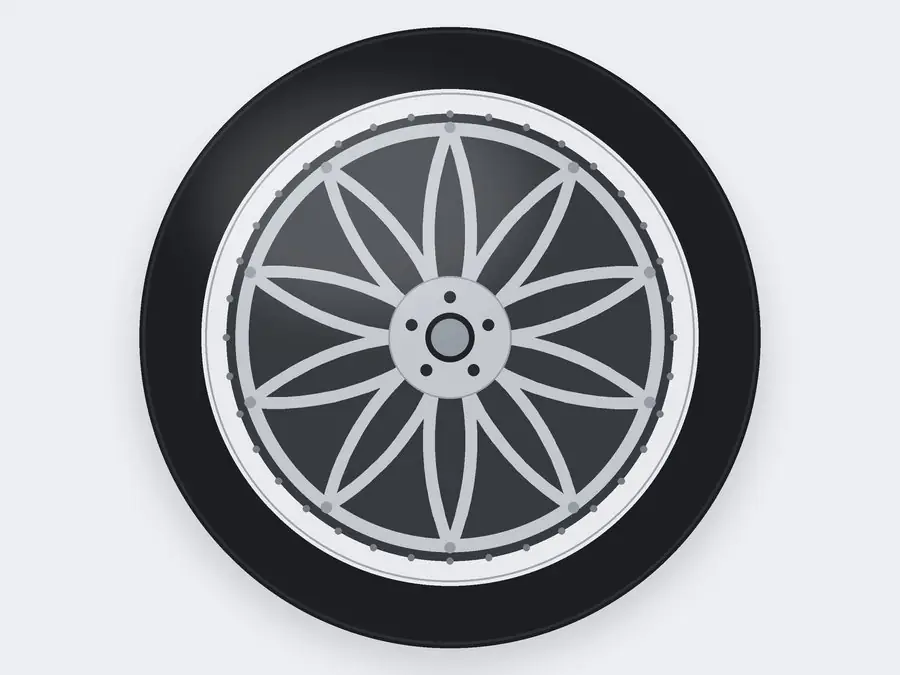
Cast one-piece mesh, 1990s
BBS RG wheels
The RG gave buyers the classic BBS cross-spoke look in a cast one-piece wheel at a lower price than the three-piece RS. It was sold widely in the aftermarket and as original equipment, so it turns up on everything from small hatchbacks to saloons.
- Construction
- One-piece cast aluminium
- Design
- Cross-spoke mesh
- Era
- 1990s to 2000s
- Sizes
- Mostly 15 to 17 inch; varied by market
- Successor
- RG-R (forged)
History
By the late 1980s the RS had made the BBS cross-spoke pattern famous, but a three-piece wheel was expensive to make and to buy. The RG put a similar face on a single casting. It kept the visual identity while dropping the assembly bolts, the separate lip and much of the cost.
The wheel sold in large numbers through the 1990s. BBS also supplied RG-style wheels to car makers as factory or dealer options, and the design became one of the most familiar BBS shapes of that decade. Our history of BBS places it alongside the other wheels of the period.
Design and construction
The RG is a low-pressure cast wheel. Molten aluminium is fed into a mould, cooled and then heat treated and machined. The face has the interlaced spokes of the classic mesh design, with a central cap and visible lug holes. There are no rim bolts around the edge, which is the quickest way to tell it from an RS or RS II at a glance.
A cast mesh needs more metal than a forged one to reach the same strength, so the RG is heavier than forged wheels of the same size. For road use this is rarely a problem. If weight matters most, the forged RG-R is the modern answer.
Typical cars
RG wheels were common on Volkswagen Golf and Jetta models, BMW 3 Series of the E30 and E36 era, Mercedes-Benz compacts and saloons, and Japanese cars such as the Honda Civic and Mazda MX-5. Fitment was produced in several bolt patterns, so a set from one car will not always bolt onto another.
Diameters were mostly in the 15 to 17 inch range, which suits these older cars and keeps tyre sidewalls generous. Sizes and offsets varied by market and by the car the wheel was made for.
Markings and identification
RG markings are cast into the back of the centre. You should find the BBS logo, a part code that includes the RG designation, the size and the ET offset. Wheels sold in Germany often carry TÜV or KBA references, and many have a small date wheel showing when the casting was made. RGs supplied to car makers may also carry that maker's own part number.
The mesh face was copied by many other firms in the 1990s, and plenty of those copies are still around. If the back is blank, or the logo and numbers are shallow and blurred, be cautious. A lost centre cap is common and does not make a wheel fake, but a BBS cap on a wheel with no markings proves nothing. Our identification guide shows typical marks.
Buying and restoring
Most RG sets on the market are twenty or thirty years old and have been refinished at least once. Check the crossing points of the mesh, where dirt and salt collect and corrosion starts under the paint. Bubbling paint is the early sign. Ask whether the wheels have been straightened; cast aluminium can be repaired by a good shop, but a crack in a cast wheel is a reason to walk away.
Stripping and repainting a full mesh takes many hours, so an inexpensive set in poor condition can cost more to restore than a good one. Fitment is the other trap. An RG made for an E30 BMW will not bolt straight onto a Golf. Read our offset guide before buying for a different car.
Running RGs today
On the older cars they were made for, RGs give a period look and leave room for a tyre with a decent sidewall, which helps ride comfort on rough roads. Check the bolt seat type before fitting new bolts, since cars of this era used both ball and conical seats.
Care
Mesh wheels collect brake dust in the corners where spokes cross. A soft detailing brush and a pH-neutral cleaner reach these areas without damaging the paint. Dry the wheels after washing in winter so salt does not sit in the joints. More tips are in caring for BBS wheels.
Frequently asked questions
Is the BBS RG a three-piece wheel?
No. It is a one-piece cast wheel that copies the mesh look of the three-piece RS.
How do I tell an RG from an RS?
An RS has a ring of small bolts joining the centre to the rim. The RG has no rim bolts because it is cast in one piece.
Is the RG the same as the RG-R?
No. The RG-R is a later forged wheel built in Japan with a different eight-spoke cross design. The name is shared but the construction is not.
Can RG wheels be refinished?
Yes. They respond well to stripping and repainting, though the mesh takes time to prepare properly.