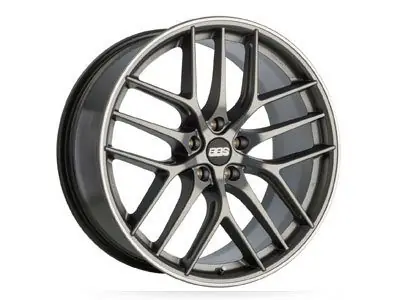
Cast BBS, AU buyers
BBS CC wheels for Australian buyers
Search for a BBS CC in Australia and most of what comes up is the later CC-R. The original CC is less documented, and sellers on local marketplaces often mix the two up. This page helps an Australian buyer work out which wheel is actually on offer, what the markings and centre caps do and do not prove, how wheel changes sit with state roadworthy rules, and what coastal air and old tyres can mean for a used set.
- Construction
- One-piece cast aluminium
- Later model
- CC-R
- Range
- BBS road wheel line
- Maker
- BBS
Buying a BBS CC in Australia
Listings for the CC on Gumtree, Facebook Marketplace and eBay Australia often use the name loosely. A set called "BBS CC" may be a CC-R, another cast BBS, or a copy with BBS caps. Ask for photos of the back of each wheel and check the brand name, model or part code, size and ET. Wheels imported from Germany may also carry an approval reference for that market. You do not need it here, but it helps confirm what the wheel is. Our guide to identifying BBS wheels covers the codes.
Caps and small parts
A centre cap proves very little on its own. In Australia the right caps, hub rings and bolts can take time to source for an older model. Before you pay, ask what comes with the set. If the correct caps, rings and locking bolts with their key are included, you will not have to hunt for them locally or order from overseas.
Fitting the wheels and the roadworthy side
Work through bolt pattern, centre bore, offset, width and brake clearance as described above. Then check how the change sits with your state's rules. Wheel and tyre changes in Australia are covered by state roadworthy and registration requirements, with national guidance in VSB 14 (National Code of Practice for Light Vehicle Construction and Modification), section LA. Ask your state transport authority, such as Transport for NSW, VicRoads or TMR in Queensland, and use an engineer or certifier if the change goes beyond what your state accepts. The offset guide helps with the numbers.
Coastal air and bead seats
Many Australian cars live near the coast, and salt air gets into chips in the lacquer and onto bead seats. A pitted bead seat can cause a slow leak that looks like a puncture, so ask the tyre fitter to check each one when the tyres go on. Rinse brake dust off often in hot weather so it does not bake onto the finish. More in caring for BBS wheels.
Tyres that come with the set
Tyres on a used or imported set may have sat in storage for years, and Australian heat and UV age rubber faster. Read the date codes, look for sidewall cracking and treat the tyres as part-worn at best. If you are choosing between a CC and a CC-R, the newer model is usually easier to find parts for and easier to sell on. See buying used BBS wheels before you commit.
CC and CC-R
BBS has reused base names with an added letter for newer models: CH and CH-R, CI and CI-R, CC and CC-R. The R versions are generally newer, flow-formed or otherwise updated designs. Search results now mostly show the CC-R, so a buyer looking for an older CC can easily end up with the wrong wheel in their basket. We have not been able to confirm the full details of the original CC, so we keep the facts on this page general.
Centre caps tell you less than you think
The centre cap is the first thing people look at, and it is the least reliable clue. BBS caps come in several diameters and styles and are sold separately, and sellers swap them freely. A cap with a BBS logo proves only that someone bought a BBS cap. Use it as a secondary check after the casting markings.
When you do need caps, measure the opening in the wheel and check how the cap is retained. Some BBS caps clip in, others are held by small screws or a retaining ring. Getting the right part avoids caps flying off at speed.
Markings on the back
Genuine BBS cast wheels normally show the brand name, a model or part code, size and ET on the back of the spokes or the inner barrel. Look for a manufacturing date stamp and, on wheels sold in Germany, an approval reference. Write all of this down when buying. It lets you check fitment and lets a parts supplier find the right caps, rings or bolts.
Fitting a CC to your car
Start with bolt pattern and centre bore, then offset and width, then brake clearance. Bigger front brakes on performance versions of a car can foul spokes that cleared the base model. A quick test is to fit the bare wheel to each hub, turn it by hand and check for contact with the caliper before mounting tyres. Tighten bolts in a star pattern to the car maker's torque figure.
Living with cast BBS wheels
Cast wheels like the CC are simple to look after. Wash them with a pH-neutral wheel cleaner, avoid acid cleaners that can attack the lacquer, and rinse brake dust off often so it does not bake on. If a wheel takes a hard pothole hit, check for vibration on the next drive and have it looked at. Bends are often repairable; cracks usually are not. More in caring for BBS wheels.
Prices and value
We do not quote prices because they change with condition, size and market. As a rule, the cast BBS models sell for much less than forged and multi-piece BBS wheels, and condition decides most of the value. A clean set with good tyres and the correct caps and rings is worth noticeably more than a set that needs refurbishment, because the cost of four refinishes, new tyres and missing parts adds up fast. If you are comparing a CC with a newer CC-R, the newer model is likely to have more parts support and be easier to sell on later. Check what accessories come with the set: caps, rings, locking bolts with their key, and valve stems all matter if you are about to fit the wheels yourself.
Tyre fitting on cast BBS wheels
Fitting tyres to a used CC set is routine, but a few points save trouble. Ask the fitter to check each bead seat for corrosion, since a pitted seat can cause slow leaks that look like a puncture. New rubber or metal valves are inexpensive and worth fitting every time tyres are changed. If the wheels have a polished or machined face, ask for the tyre machine's protective covers on the clamps. Once mounted, the wheels should balance with modest weights. A wheel that needs a lot of weight, or keeps vibrating after balancing, may have a bend in the barrel or a tyre fault, and a road-force balancer can usually tell which.
Old tyres that come with a used set are best treated as part-worn at most. Check the date codes and look for cracking in the sidewalls before trusting them.
Frequently asked questions
Why do most Australian searches for BBS CC show the CC-R?
The CC-R is the later and better-known model, so it dominates listings and search results. The older CC is less documented. If you want the original, check the markings and design in photos of the back of each wheel rather than relying on the listing title.
Do I need German approval marks on BBS wheels used in Australia?
No. German approval references relate to that market. In Australia, wheel and tyre changes fall under state roadworthy rules and the national VSB 14 guidance, section LA, so check with your state transport authority. The German marks are still useful for confirming what the wheel is.
Is the CC the same as the CC-R?
No. The CC-R is a later model. Check the markings and design before buying.
Can I identify a CC by its centre cap?
Not reliably. Caps are often swapped. Use the markings on the back of the wheel.
Is the CC forged?
No. It belongs to the BBS cast road range.
What torque should I use?
Use the figure your car maker specifies for its wheel bolts or nuts.