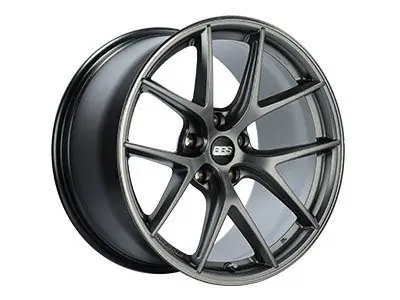
Cast BBS, AU buyers
BBS CI wheels for Australian drivers
The older BBS CI is often confused with the later CI-R, and in Australia that confusion carries into local listings and insurance quotes. This page is for Australian buyers and owners. It covers how to tell the two apart before you pay, what to tell your insurer, how wheel changes sit with state roadworthy rules and VSB 14, and how diamond-cut and painted finishes stand up to coastal salt air and strong sun.
- Construction
- One-piece cast aluminium
- Later model
- CI-R
- Range
- BBS road wheel line
- Maker
- BBS
The BBS CI in Australia
Check any set sold here as a "BBS CI" carefully, because the CI-R is far better known and many buyers recognise its split five-spoke from recent BMW and Audi fitments. If a listing on Gumtree, Facebook Marketplace or eBay Australia does not show the back of the wheels, ask for those photos and compare the spoke shape and markings with reliable references. Our guide to identifying BBS wheels helps.
Insurance in Australia
Australian insurers generally treat aftermarket wheels as a modification, even a well-known brand close to factory size. Tell your insurer before fitting, with the brand, model, size and value, and ask whether locking wheel bolts affect the policy. Keep photos of the markings and receipts, as they make a claim easier if the wheels are stolen or damaged.
Roadworthy rules
Wheel and tyre changes are covered by state roadworthy and registration rules, with national guidance in VSB 14, the National Code of Practice for Light Vehicle Construction and Modification, section LA. Your state transport authority, such as Transport for NSW, VicRoads or TMR in Queensland, can tell you what applies, and an engineer or certifier can assess changes that need approval. Staggered setups are common on BMWs, so check both axles. If you move a set to an M Sport or S line car with larger calipers, confirm brake clearance first. The offset guide covers the numbers.
Finishes in coastal air and sun
Diamond-cut faces suffer most near the coast. Once the lacquer is chipped, salt air gets under it and leaves white corrosion lines that cannot be touched up and need re-cutting on a lathe. Painted finishes are more forgiving. In strong sun, brake dust bakes on quickly, so wash often with a pH-neutral cleaner and a soft brush, and avoid strong acid or alkaline products. See caring for BBS wheels.
Checking a set before you pay
Look across each face at an angle for dents in the lip, check the inner barrel and ask to see each wheel on a balancer. Imported sets can pick up freight damage, so check them on arrival. Look at the bolt seats for damage from impact guns, and fit bolts by hand before finishing with a torque wrench. For the difference between cast, flow-formed and forged BBS wheels, see forged vs cast, and for a wider checklist, buying used BBS wheels.
The CI and the CI-R
The CI-R is a current-style BBS road wheel with a split five-spoke design that many buyers know from recent BMW and Audi fitments. The older CI shares part of the name. We have not confirmed enough about the original CI's design to describe it in detail, so if you have a listing in front of you, compare the spoke shape and markings with reliable photos of each model. Prices and availability differ a lot between the two.
Cast, flow-formed and forged
BBS uses several production methods. A plain cast wheel is poured into a mould and machined. Flow forming, which BBS and others use on some newer road wheels, spins the rim section under rollers after casting to thin and strengthen it, saving weight. Forged wheels are pressed from a solid billet. Our page on forged versus cast BBS wheels explains the differences. Advert text often gets this wrong, so check the BBS description for the exact model.
Five-spoke designs and brake dust
Open spoke designs like the split five-spoke show a lot of brake caliper and disc. That is part of their appeal, but it means brake dust is very visible. Cleaning is easy because there is plenty of room for a brush. On older wheels look closely at the spoke edges and the area round the bolt holes, where lacquer tends to fail first.
Checking a used set
With the wheel off the car, look across the face at an angle to spot dents in the outer lip. Then check the inner barrel, which you cannot see on the car. Ask for each wheel on a balancer. A small amount of runout is normal, but a wheel that needs a lot of weight to balance may be bent. Look at the bolt seats too: heavy over-tightening with an impact gun can deform them.
Fitment notes
Check PCD, centre bore, offset and width against your car. Wider rear wheels and staggered setups are common on BMWs. If you are moving a set from one model to another, confirm brake clearance, especially on M Sport or S line cars with larger calipers. See fitment and offset explained.
Care for machined and painted finishes
BBS has sold its road wheels in a range of finishes, from plain silver paint to black and diamond-cut faces. Each needs slightly different care. Painted finishes are the most forgiving and easiest to touch up. Diamond-cut faces are machined back to bare metal and then lacquered, and if the lacquer is damaged, moisture creeps under it and leaves white corrosion lines. These cannot be touched up properly and need re-cutting on a lathe. Avoid strong alkaline or acid cleaners on any finish. A pH-neutral cleaner, a soft brush and frequent washing will keep a CI looking right for years. For storage and seasonal advice see caring for BBS wheels.
Fit wheel bolts by hand first and finish with a torque wrench. Impact guns are the main cause of damaged bolt seats on alloy wheels.
Insurance and modifications
In many countries, changing to aftermarket wheels counts as a modification for insurance purposes, even if the wheels are a well-known brand and close to factory size. Tell your insurer about a set of CI wheels before fitting them, giving the brand, model, size and value. Failing to do so can cause problems if you make a claim later. Some insurers ask about locking wheel bolts as well.
Frequently asked questions
How can I tell a CI from a CI-R in an Australian listing?
Ask for photos of the back of each wheel and compare the markings and spoke shape with reliable references for each model. The CI-R has a split five-spoke design and a contrasting rim edge. If the seller cannot show the markings, treat the model name in the listing with caution.
Why do diamond-cut CI wheels corrode near the coast?
A diamond-cut face is bare machined metal under a clear lacquer. Once the lacquer chips, salt air gets in and leaves white corrosion lines. These cannot be touched up properly and need the face re-cut on a lathe, so protect the lacquer and wash the wheels often.
Is the CI the same wheel as the CI-R?
No. They share part of the name but are different models. Compare markings and spoke design.
Is the CI-R flow-formed?
Check the BBS description for the specific model and size, as production methods vary across the range.
How do I check for a bent wheel?
Spin it on a balancer and look for runout, and inspect the inner barrel for flat spots.
Can I fit CI wheels from another car?
Only if bolt pattern, centre bore, offset and brake clearance all suit your car.