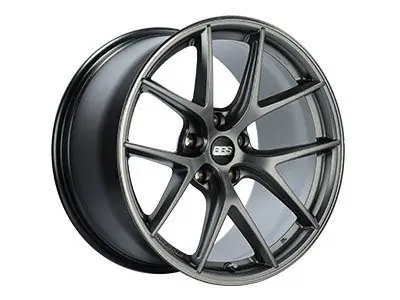
Cast road wheel
BBS CI wheels
The CI sits in the BBS cast range and is often confused with the later CI-R, which is far easier to find information on. Here is how to tell them apart and judge a used set.
- Construction
- One-piece cast aluminium
- Later model
- CI-R
- Range
- BBS road wheel line
- Maker
- BBS
The CI and the CI-R
The CI-R is a current-style BBS road wheel with a split five-spoke design that many buyers know from recent BMW and Audi fitments. The older CI shares part of the name. We have not confirmed enough about the original CI's design to describe it in detail, so if you have a listing in front of you, compare the spoke shape and markings with reliable photos of each model. Prices and availability differ a lot between the two.
Cast, flow-formed and forged
BBS uses several production methods. A plain cast wheel is poured into a mould and machined. Flow forming, which BBS and others use on some newer road wheels, spins the rim section under rollers after casting to thin and strengthen it, saving weight. Forged wheels are pressed from a solid billet. Our page on forged versus cast BBS wheels explains the differences. Advert text often gets this wrong, so check the BBS description for the exact model.
Five-spoke designs and brake dust
Open spoke designs like the split five-spoke show a lot of brake caliper and disc. That is part of their appeal, but it means brake dust is very visible. Cleaning is easy because there is plenty of room for a brush. On older wheels look closely at the spoke edges and the area round the bolt holes, where lacquer tends to fail first.
Checking a used set
With the wheel off the car, look across the face at an angle to spot dents in the outer lip. Then check the inner barrel, which you cannot see on the car. Ask for each wheel on a balancer. A small amount of runout is normal, but a wheel that needs a lot of weight to balance may be bent. Look at the bolt seats too: heavy over-tightening with an impact gun can deform them.
Fitment notes
Check PCD, centre bore, offset and width against your car. Wider rear wheels and staggered setups are common on BMWs. If you are moving a set from one model to another, confirm brake clearance, especially on M Sport or S line cars with larger calipers. See fitment and offset explained.
Care for machined and painted finishes
BBS has sold its road wheels in a range of finishes, from plain silver paint to black and diamond-cut faces. Each needs slightly different care. Painted finishes are the most forgiving and easiest to touch up. Diamond-cut faces are machined back to bare metal and then lacquered, and if the lacquer is damaged, moisture creeps under it and leaves white corrosion lines. These cannot be touched up properly and need re-cutting on a lathe. Avoid strong alkaline or acid cleaners on any finish. A pH-neutral cleaner, a soft brush and frequent washing will keep a CI looking right for years. For storage and seasonal advice see caring for BBS wheels.
Fit wheel bolts by hand first and finish with a torque wrench. Impact guns are the main cause of damaged bolt seats on alloy wheels.
Insurance and modifications
In many countries, changing to aftermarket wheels counts as a modification for insurance purposes, even if the wheels are a well-known brand and close to factory size. Tell your insurer about a set of CI wheels before fitting them, giving the brand, model, size and value. Failing to do so can cause problems if you make a claim later. Some insurers ask about locking wheel bolts as well.
Frequently asked questions
Is the CI the same wheel as the CI-R?
No. They share part of the name but are different models. Compare markings and spoke design.
Is the CI-R flow-formed?
Check the BBS description for the specific model and size, as production methods vary across the range.
How do I check for a bent wheel?
Spin it on a balancer and look for runout, and inspect the inner barrel for flat spots.
Can I fit CI wheels from another car?
Only if bolt pattern, centre bore, offset and brake clearance all suit your car.