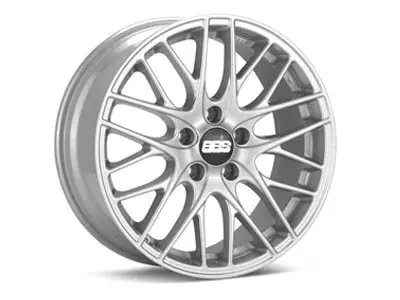
Cast one-piece
BBS CS wheels
The CS is a BBS cast road wheel. We have only limited confirmed detail on it, so this page focuses on the practical side: getting a used set to run smoothly and fit correctly.
- Construction
- One-piece cast aluminium (C-series)
- Documentation
- Limited; specs not confirmed here
- Maker
- BBS
The CS in context
BBS has sold cast wheels alongside its forged and multi-piece ranges for decades. The cast models use the brand's design language and engineering at a lower price, and many were sold through tuners, dealers and car makers' accessory catalogues. The CS is one of these. We have not been able to confirm a full specification from a source we trust, so we do not list sizes or years here. Readers with a set should rely on the markings and the advice below.
Diagnosing vibration
Vibration after fitting second-hand wheels is the most common complaint, and the wheel is rarely bent. Work through the likely causes in order:
- Missing or wrong hub rings, leaving the wheel off-centre on the hub.
- Dirt or corrosion on the hub face, so the wheel does not sit flat.
- Poor balancing, or weights that have fallen off.
- A tyre with a flat spot or internal damage from storage or a pothole.
- A bent wheel, which a balancer will show as runout.
A road-force balancer, which presses a roller against the tyre while it spins, can pick up problems a standard balancer misses.
Balance weights and finish
Stick-on weights on the inner barrel are kinder to the finish than clip-on weights on the rim edge, which can chip paint and let corrosion in. Ask your tyre fitter to use adhesive weights placed behind the spokes so they cannot be seen. Remove old adhesive with a plastic scraper and a suitable solvent, never a metal blade.
Fitment checks
Confirm PCD, centre bore, width and ET from the markings, then compare with your car. If you are moving from factory wheels, a change of a few millimetres in offset is usually fine; bigger changes may cause rubbing on full lock or under suspension compression. Test-fit before buying tyres if you can. The offset guide shows how to calculate the change in inner and outer clearance.
Inspecting a used CS set
Look for cracks at the spoke roots and around bolt holes, bends on the inner barrel, and kerb damage on the face. Check the valve holes for corrosion. Ask how the wheels have been stored. Wheels left stacked with heavy tyres for years can pick up flat spots in the tyres, though the wheels themselves are usually fine.
Finish options
When a cast set needs refinishing, you can choose almost any colour. BBS silver and gold have long been popular, but powder coating in a darker shade hides brake dust better on a daily car. Ask the refurbisher to keep the bolt seats and hub face free of coating. See caring for BBS wheels for upkeep afterwards.
Recording and selling
If you ever sell a CS set, good information makes it easier. Photograph each wheel face, the back with markings visible, and any damage. List the full size, ET, bolt pattern, centre bore, whether rings and caps are included, and tyre sizes and dates. Mention whether the wheels have been refurbished. Buyers of less common models are cautious, and an honest, complete listing usually sells faster and closer to the asking price than a vague one.
Pack wheels for shipping with cardboard over the faces and the tyres deflated slightly, and photograph them before handing them over.
Frequently asked questions
Why do my used BBS wheels vibrate?
Check hub rings, hub cleanliness, balance and tyres before assuming a bent wheel.
Should I use stick-on or clip-on weights?
Stick-on weights on the inner barrel protect the rim edge and are less visible.
Is the CS forged?
No. It is part of BBS's cast one-piece road range.
Can a CS be painted a different colour?
Yes. As a one-piece wheel it can be powder coated or wet painted in most colours.