RI-D in Australia
BBS RI-D duralumin wheels in Australia
The RI-D is one of the lightest road wheels BBS has made, forged by BBS Japan from a high-strength duralumin alloy. In Australia it is a rare, expensive wheel, mostly seen on time attack and track-focused cars. Its alloy is less resistant to corrosion than ordinary wheel alloys, a real concern near the coast and in humid regions. The Australian notes below cover corrosion, repairs, copies and state wheel rules, followed by the general RI-D guide.
- Construction
- One-piece forged
- Material
- Extra super duralumin alloy
- Made by
- BBS Japan
- Spoke style
- Thin twin spokes in a Y layout
- Positioning
- Top of the BBS forged range
The BBS RI-D in Australia
On a road car the weight saving over the RI-A is hard to feel, but on a car built for time attack or regular circuit days the gap is easier to justify. Australia has a strong time attack scene, with events such as World Time Attack Challenge drawing purpose-built cars from here and overseas, and those are the cars where an RI-D earns its price.
Corrosion in Australian conditions
High-strength aluminium alloys with copper content corrode more readily than the alloys used for most wheels, so the paint and clear coat do the protecting. Salt air on the coast and humid northern summers attack bare metal quickly, and strong UV wears down the clear coat that is meant to stop them, so a chip in the finish matters more on an RI-D than on an ordinary wheel. Touch in chips quickly, wash off salt and brake dust, and store spare wheels dry and bagged. When inspecting a used set, look for bubbling around the lug holes, the valve hole and the inner bead seat.
Repairs and refinishing
Many shops decline to weld or heat-straighten duralumin because it loses strength when heated. Cosmetic refinishing is fine if the shop keeps oven temperatures low, so ask what curing temperature they use before handing the wheels over. A bent RI-D is often a case for a replacement wheel. Only use a tyre shop with a touchless or protected machine, as a gouge through the finish is where corrosion starts. See caring for BBS wheels.
Buying used and spotting copies
RI-Ds are copied often because the face is simple and the original is expensive. Listings on Gumtree, Facebook Marketplace or eBay Australia that say "RI-D style" are not the real thing. A genuine wheel carries BBS Japan markings on the back, including the model name, size, offset, JWL and VIA marks and the material reference. Ask the seller to put a wheel on a scale; a cast copy is clearly heavier. Many sets come in from Japan, so inspect imports for freight damage. See identifying BBS wheels and forged vs cast.
Fitting and the rules
Thin spokes sit close to the calliper on some fitments, so check brake clearance with the correct template, and use the BBS Japan or importer listing for sizes. Wheel and tyre changes in Australia fall under state roadworthy and registration rules, with VSB 14 section LA as the national guidance. Check with your state transport authority, such as Transport for NSW, VicRoads or TMR, and an engineer or certifier where needed.
What makes the RI-D unusual
Most forged wheels are made from 6000-series aluminium alloys. The RI-D uses a duralumin alloy, an aluminium alloy with copper and zinc that reaches much higher strength. Higher strength allows thinner sections, which brings the weight down. The trade-off is cost: the alloy is harder to work, and forging and machining it takes more time. That puts the RI-D at the top of the BBS price list.
BBS Japan presented the wheel as a road wheel developed from its racing work. It sits above the RI-A, which follows a similar idea in standard forged aluminium.
Construction
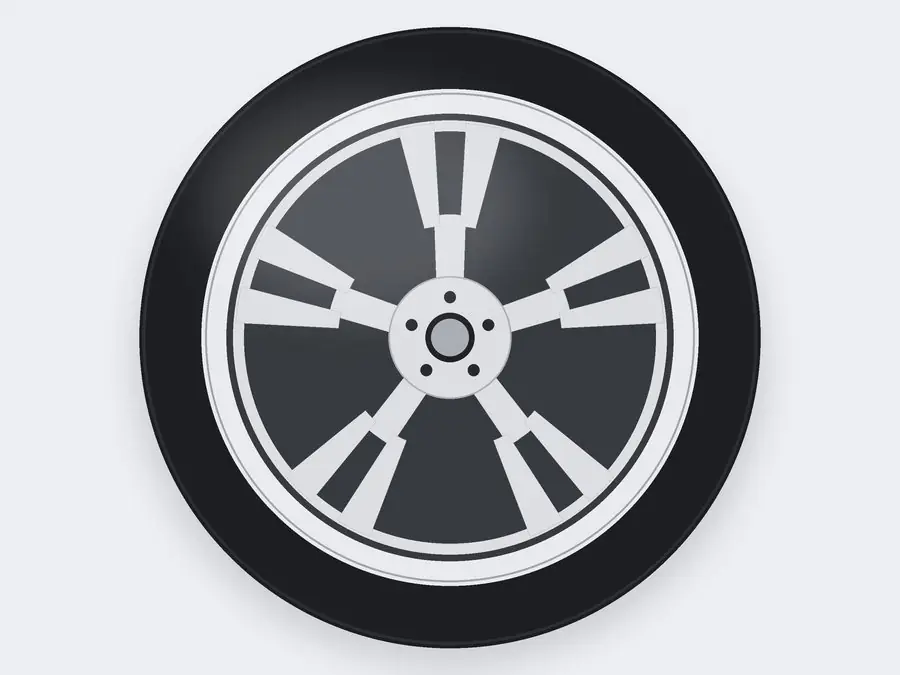
The wheel is forged as one piece and then machined. The spokes are slim and deep, joining in pairs near the centre, and the backs are milled out to remove weight. The rim is a single piece with the face, so there are no bolts or seals to maintain as there would be on a three-piece RS.
Finishes have usually been darker tones, with a machined or contrasting lip on some versions. Exact finishes changed over time and differ between markets.
Fitment
The RI-D has been offered for popular sports and performance cars, with sizes and offsets matched to specific hub patterns. Because the spokes are thin and close to the caliper on some fitments, brake clearance needs checking with the correct template. Sizes varied by market; the BBS Japan catalogue or an authorised importer will have the current list. Read the offset guide if you plan to change width or tyre size.
Checking an RI-D is genuine
The RI-D is copied often because the face is simple and the original is expensive. A genuine wheel carries BBS Japan markings on the back, including the model name, size, offset and JWL and VIA marks, and the material reference that sets it apart from the less costly RI-A. The weight gives most fakes away. Ask a seller to put a wheel on a scale; a cast copy in the same size will be clearly heavier. Listings using the words 'RI-D style' or 'RI-D copy' are, as the words say, not the real thing.
RI-D or RI-A?
For a car used mostly on the road, the extra cost of the RI-D over the RI-A buys a weight saving that few drivers will feel on a public road. On a car built for time attack or regular circuit days, where every kilogram at the corners is counted, the gap is easier to justify. The RI-A is also more forgiving if it gets damaged, since ordinary forged aluminium is easier to refinish and repair.
Corrosion and repair limits
High-strength aluminium alloys with copper content are less resistant to corrosion than the alloys used for most wheels. In practice the paint and clear coat do the protecting, so a chip in the finish matters more on an RI-D than on an ordinary cast wheel. When inspecting a used set, look for bubbling under the paint around the lug holes, the valve hole and the inner bead seat, which are the usual places for corrosion to start.
Many wheel shops decline to weld or heat-straighten duralumin because it loses strength when heated. Cosmetic refinishing is fine if the shop avoids high oven temperatures; ask what curing temperature they use before handing the wheels over. A bent RI-D is often a case for a replacement wheel rather than a repair.
Living with RI-D wheels
If the car is used through winter, a separate set of winter wheels saves the RI-Ds from road salt. Before storing them, wash and dry each wheel, touch in any chips, and keep them in bags away from damp. Fit tyres only at a shop with a touchless or protected machine, since a gouge through the finish is the start of the corrosion problem described above. Torque the nuts or bolts by hand with a wrench; impact guns can damage the seats on a light wheel.
Frequently asked questions
Are BBS RI-D wheels suitable for coastal areas in Australia?
They can be used there, but the duralumin alloy relies on its paint and clear coat for protection. Salt air and humidity attack any chip faster than on ordinary wheels. Wash regularly, touch in chips quickly, and store spare wheels dry and bagged away from damp.
Is an RI-D worth it over an RI-A for an Australian track car?
For a car used mostly on the road, the weight saving is hard to feel. For a dedicated time attack or regular circuit car, where every kilogram at the corners counts, the extra cost is easier to justify. The RI-A is also easier to refinish and repair.
Can an Australian wheel shop repair a bent RI-D?
Many shops will not weld or heat-straighten duralumin, because heat reduces its strength. Cosmetic refinishing is possible at low curing temperatures, so ask the shop what temperature it uses before handing over the wheels. A bent RI-D is often better replaced than repaired, and a touchless tyre machine helps avoid new damage.
What is duralumin?
It is a family of high-strength aluminium alloys containing copper and other elements, first developed for aircraft. Its strength lets the RI-D use thinner sections than a normal aluminium wheel.
Is the RI-D the lightest BBS wheel?
It is among the lightest road wheels BBS sells. Exact weights depend on size, so compare figures for the same size.
Can a damaged RI-D be repaired?
Minor cosmetic damage can be refinished. Structural repair such as welding is generally not advised for this alloy. Ask an expert.
Where is the RI-D made?
It is forged by BBS Japan.