Revised LM, 2010s onward
BBS LM-R wheels
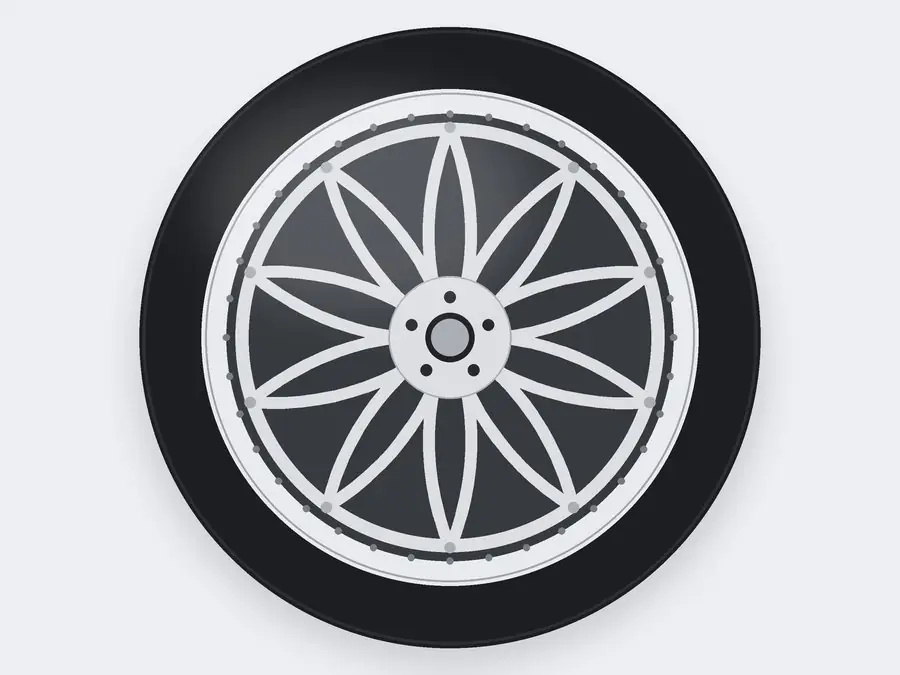
The LM-R is the later version of the BBS LM. It keeps the two-piece layout and mesh centre, with updated centre styling and details for newer cars.
- Construction
- Two-piece: mesh centre bolted to an outer rim
- Predecessor
- BBS LM
- Era
- 2010s onward
- Design
- Cross-spoke centre with a polished stepped lip
- Sizes
- Larger diameters suited to modern cars; varied by market
What the LM-R is
The original LM appeared around 2000 and became one of the best-selling multi-piece BBS designs. Cars grew in the years that followed, with bigger brakes and larger wheel diameters. The LM-R is the revision that brought the design up to date. It keeps the idea that made the LM popular, a mesh centre joined to a separate rim with a visible polished lip, and refines the centre styling.
Side by side, the two are clearly related, and many people only tell them apart by looking closely at the spokes and the centre area. If you are trying to decide which you are looking at, the markings on the back of the centre are the reliable answer.
Construction
Like the LM, the LM-R is a two-piece wheel. The centre carries the spokes, hub mount and bolt circle. The outer rim forms the barrel and lip. A ring of bolts joins the two, and the joint is sealed. There is one joint to look after, compared with two seals on a three-piece wheel such as the RS.
Exact materials and processes depend on where and when a given wheel was made, so check the paperwork or markings for the set you have. The forged and cast guide explains what those terms mean for weight and strength.
Fitment
The LM-R was offered in sizes suited to modern performance cars, with diameters, widths, offsets and bolt patterns that varied by market. Lip depth depends on width and offset, so two LM-Rs of the same diameter can look very different on the car.
- Read width, offset and PCD from the wheel markings.
- Check caliper clearance, particularly with aftermarket big brake kits.
- Confirm the centre bore and use hub-centric rings if needed.
The fitment and offset guide covers the calculations.
Identifying a genuine LM-R
The LM family is widely copied. A genuine LM-R carries clear factory markings on the back of the centre, typically including the BBS name, a model or part reference, the size and approval marks. The centre-to-rim bolts should be uniform and consistent across all four wheels. Spoke crossings on genuine wheels are cleanly shaped, and the lip is properly polished rather than painted silver.
Centre caps prove little on their own because they are sold separately. For a wider checklist, see identifying BBS wheels.
Buying used
Because the LM-R is newer than the LM, used sets are often in better condition, but check them just as carefully.
- Look for kerb damage on the lip, which sits proud on many sizes.
- Check spoke roots and bolt holes for cracks, especially on wheels used on track.
- Ask whether any wheel has been split, straightened or resealed, and by whom.
- Look at the seal line for lifting sealant or corrosion.
- Have the set balanced and checked for runout.
The used BBS buying guide has more detail.
Refurbishment and care
An expert can separate the centre from the rim, refinish both and reseal the joint with new hardware. This gives a better result than refinishing an assembled wheel, at a higher cost. The process is close to the one described in refurbishing multi-piece wheels.
For routine cleaning, use a soft brush and a pH-neutral cleaner to clear brake dust from the mesh corners. Avoid strong acids, which can mark the lip and the bolt finish. A bare polished lip will dull with time and needs occasional metal polish. See caring for BBS wheels.
LM or LM-R?
If you are building a car from the 2000s and want period-correct wheels, the original LM is the natural choice. For a newer car with larger brakes, the LM-R is more likely to be offered in a size that fits. Both share the same basic strengths and the same care needs. Neither one is simply better; the right one is the one that fits your car and budget.
Tyres and track use
Many LM-R owners use their wheels on track. Heat from braking reaches the centre and the seal, and repeated heat cycles can age the sealant. Check tyre pressures before each session and look for slow leaks afterwards. Inspect the centre-to-rim bolts periodically, using the torque figures an expert gives for that wheel. When fitting tyres, use a fitter who knows multi-piece wheels and protects the polished lip from the machine.
On the road, the polished lip is usually the first thing damaged. Choosing an offset that keeps the lip inside the arch line, and a tyre with some sidewall protection, reduces the risk of kerb rash.
Frequently asked questions
Is the LM-R the same as the LM?
No. The LM-R is a revised version of the LM with updated centre styling and details. Both are two-piece mesh wheels.
Is the LM-R a three-piece wheel?
No, it is a two-piece wheel with a mesh centre bolted to an outer rim.
Can LM-R wheels be refinished?
Yes. An expert can split the wheel, refinish centre and rim separately and reseal the joint.