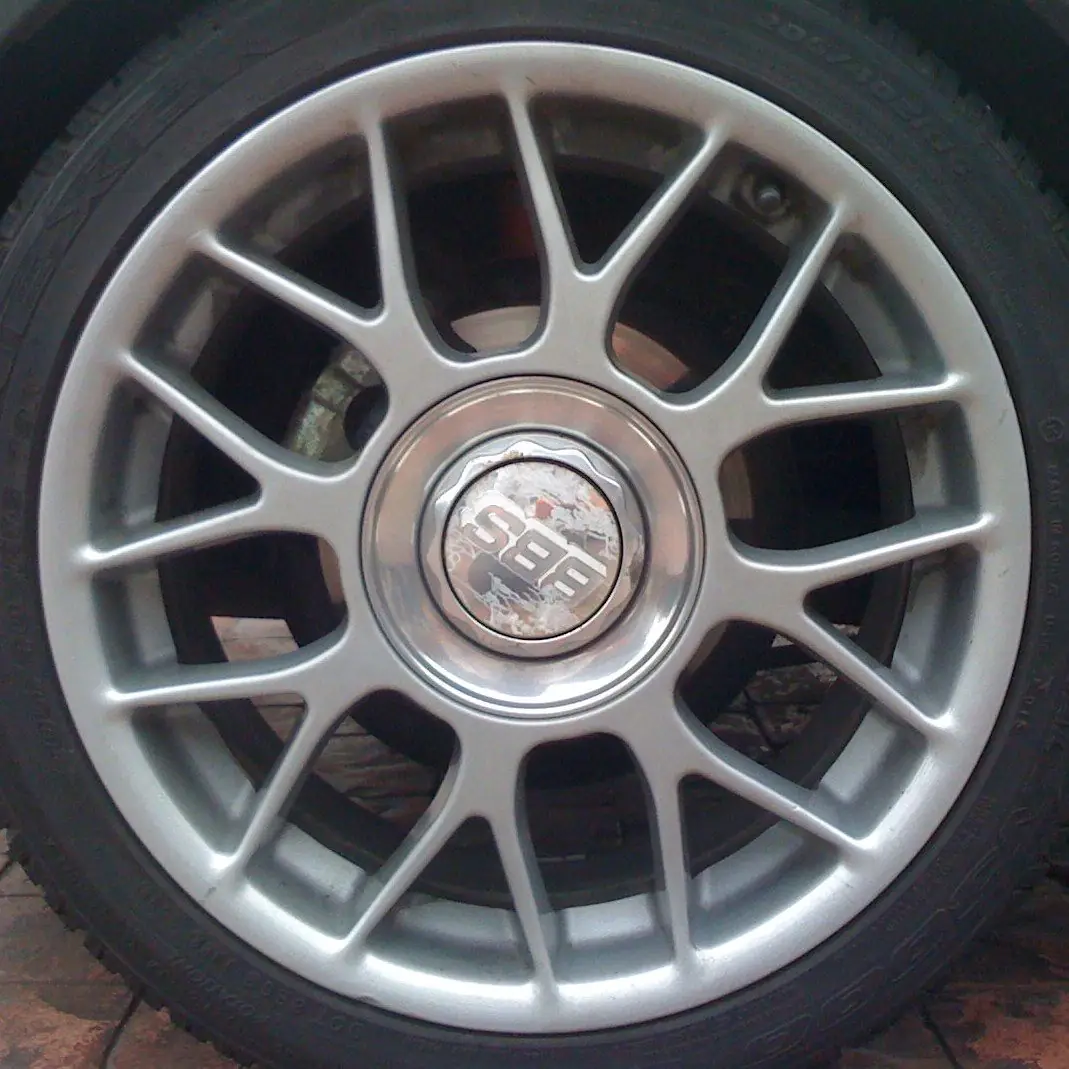

Cast one-piece, 1990s
BBS RC wheels
The RC is a cast one-piece BBS wheel sold in the 1990s next to the RG and RP. It was one of several simpler, less costly wheels BBS offered below the multi-piece RS.
- Construction
- One-piece cast aluminium
- Era
- 1990s
- Sizes
- Varied by market and fitment
Background
During the 1990s BBS sold a family of cast one-piece wheels for different budgets and car sizes. The RG was the best known, and the RP covered small cars. The RC belongs to the same group, priced below the three-piece RS.
Exact production dates and size ranges are not well recorded and differed between markets. Wheels in this group were sold both as aftermarket parts and through car makers, so markings on the back may include a car maker's part number.
Design and construction
The RC is cast in one piece, with a centre cap and no rim bolts. It is heavier than a forged wheel of the same size but simple to keep: there are no seals to leak and no assembly bolts to corrode. The width and offset are fixed.
If you want less weight, the forged RG-R and the LM family are worth a look. Our forged versus cast guide covers the trade-off.
Typical cars and fitment
Wheels of this type were common on European cars of the 1990s, including Volkswagen, Audi, BMW and Mercedes-Benz models. Each size was made for a particular bolt pattern and centre bore. Read the markings on each wheel and compare them with your car.
A wheel made for one car often fits another with hub rings, but offset matters more than many people expect. Too little offset pushes the tyre into the arch. Too much brings the wheel close to the suspension. Offset explained has worked examples.
Markings and identification
The quickest way to confirm an RC is the part code cast into the back of the centre. Next to it you should find the BBS logo, the size and the ET offset, and on German-market wheels a TÜV or KBA reference. A small date wheel showing the month and year of casting is common on BBS wheels of this age.
If the code points to a car maker rather than BBS, the wheel may be an OEM version. Those are genuine BBS products, but their size and offset were set for one car. See identifying BBS wheels.
Buying and restoring
An RC set will be decades old, so expect at least one previous refinish. Look under the paint near the bolt holes and around the lip for bubbling, which means corrosion has started. Check each wheel for run-out and ask about past straightening. Any crack ends the deal.
Price the refurbishment before you buy. A shop will strip, inspect and refinish the wheels, and the cost rises with how badly the old finish has failed. Our refurbishing guide explains what a good shop does, much of which applies to one-piece wheels too.
Seat types and wheel bolts
BBS wheels of this era were made with different bolt seat shapes depending on the car. Some European makers used ball or radius seats, and others used conical seats. The seat in the wheel must match the bolt or nut. A mismatch leaves only a thin ring of contact, and the wheel can work loose. Look into each bolt hole before fitting and buy bolts to match.
Bolt length also matters when moving wheels between cars. Too short and the thread engagement is weak. Too long and the bolt can hit parts behind the hub. A tyre shop or expert can check both quickly.
RC wheels on modern cars
Fitting a 1990s wheel to a newer car raises the same questions each time. The bolt pattern must match exactly, the centre bore must be equal to or larger than the hub, with a ring to take up any gap, and the inside of the rim must clear the brake calliper. Newer cars often have larger callipers than the cars these wheels were made for, so a test fit with the bare wheel is worth the time. Load rating is the other point; a wheel designed for a light 1990s car may not be rated for a heavier modern one.
Care
Wash regularly with a pH-neutral cleaner and a soft brush. Keep the finish intact; once paint chips, salt gets underneath and corrosion follows. See caring for BBS wheels.
Frequently asked questions
Is the BBS RC cast or forged?
It is a cast one-piece aluminium wheel.
How does the RC differ from the RG?
Both are cast one-piece BBS wheels from the same era. They differ in design and in the sizes and cars they were made for. The part code on the back tells you which you have.
Do RC wheels need hub rings?
Often, if they are fitted to a car other than the one they were made for. The ring fills the gap between the wheel centre bore and the hub so the wheel centres properly.
Are RC wheels worth restoring?
A straight, crack-free set refinishes well. Get a quote for the refurbishment first so you know the total cost.